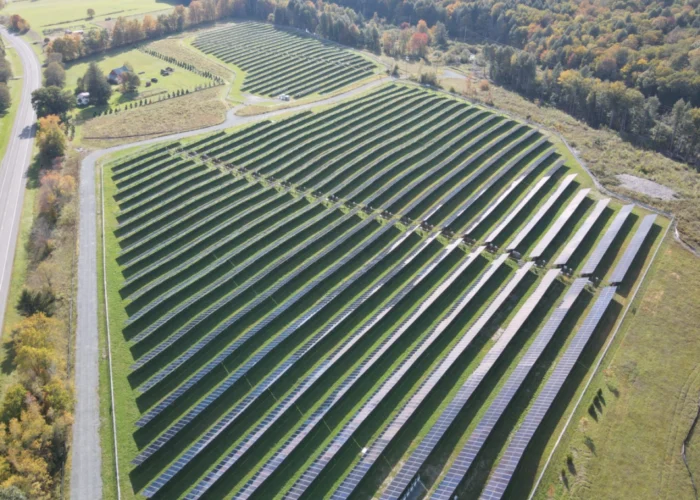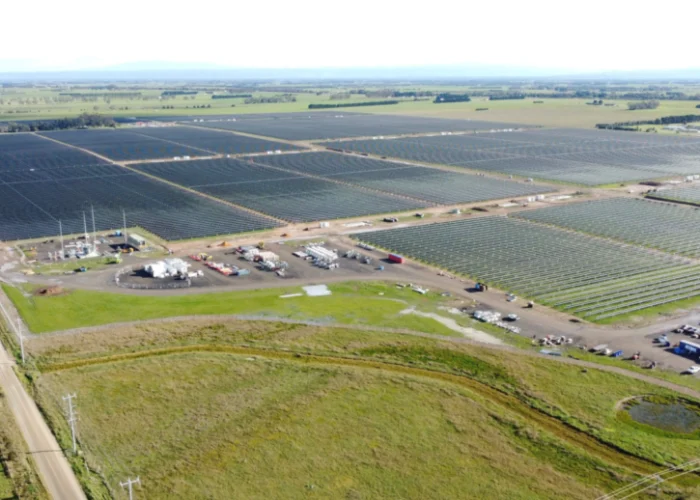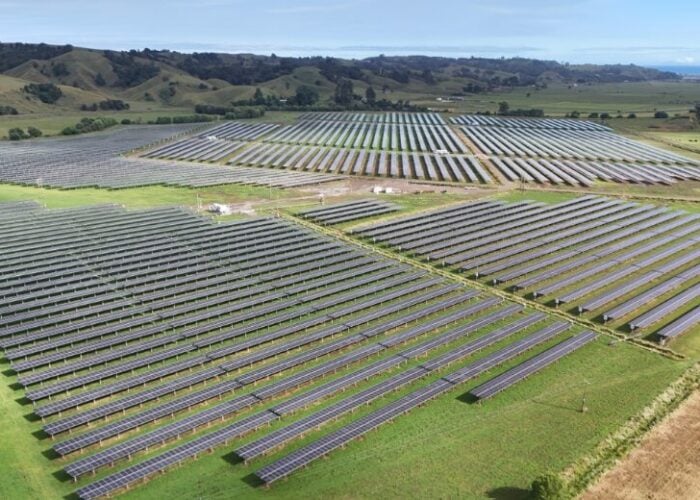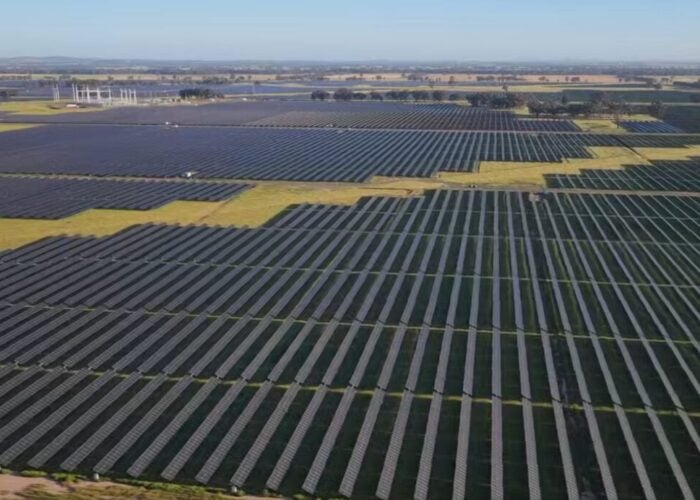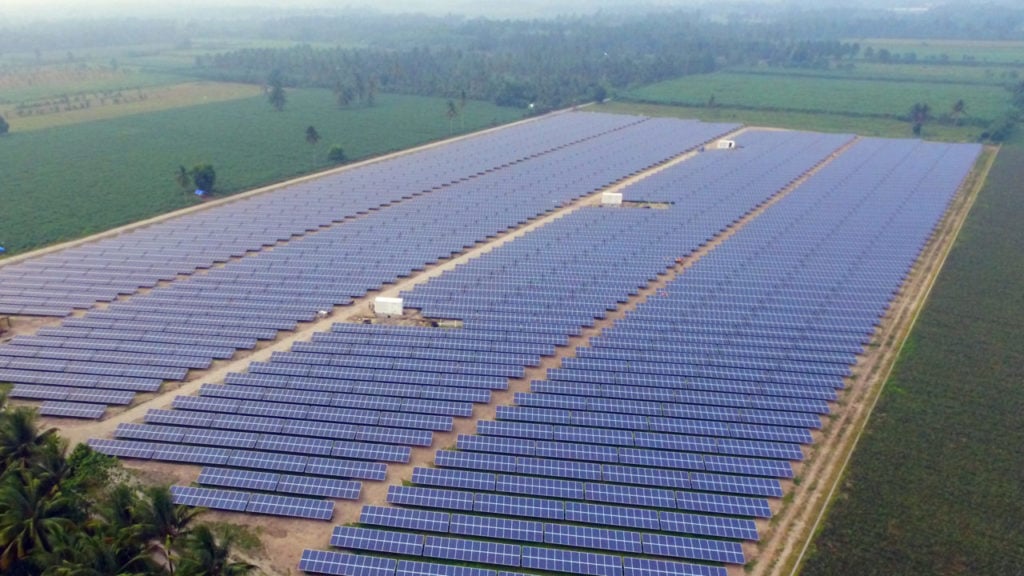
Tasmania’s George Town council approved plans for a 288MW solar PV power plant this week, which is being pursued in Australia by German renewable energy developer ib vogt.
Cimitiere Plains Solar Farm is being proposed 5km northeast of George Town, a large coastal town situated in the north of Tasmania, on the banks of the Tamar River.
Try Premium for just $1
- Full premium access for the first month at only $1
- Converts to an annual rate after 30 days unless cancelled
- Cancel anytime during the trial period
Premium Benefits
- Expert industry analysis and interviews
- Digital access to PV Tech Power journal
- Exclusive event discounts
Or get the full Premium subscription right away
Or continue reading this article for free
The project would connect to the National Electricity Market (NEM), which spans Australia’s eastern and southern coast and Tasmania via the sole 500MW Basslink interconnector. Plans are also in place to increase interconnectivity with mainland Australia via the proposed 1.5GW Marinus Link.
A 6km double-circuit transmission line on poles will connect the Cimitiere Plains Solar Farm to the Tasnetworks George Town substation.
The solar PV power plant will be located on 454 hectares of rural land predominantly used for dryland agriculture. Construction is set to commence in 2026, with the PV plant expected to be operational in 2028.
A planning application noted that the solar PV power plant would have an estimated annual generation capacity of 620GWh and thus would make a “significant contribution” to Tasmania’s renewable energy goals, such as hitting 200% renewable energy by 2040.
The solar PV power plant will be split between a western and eastern array, separated by Soldier Settlement Road. Approximately 600,000 solar PV modules will form the overall power plant.
The solar PV plant will be decommissioned at the end of its operational life. The connection to the electricity grid will be disconnected, and all solar plant components will be removed. Subsequently, the site will be rehabilitated and returned to agricultural use.
Tasmania’s renewable energy prowess and ‘Battery of the Nation’ plan
Readers of PV Tech may be aware that Tasmania is already 100% self-sufficient in renewable electricity generation and has been net zero in six out of the last seven years.
Most of the state’s renewable energy supply comes from hydro generation and storage schemes, with Tasmania holding 27% of Australia’s total freshwater dam storage capacity. Alongside this, the state gains significant contributions from Tasmanian wind farms, which benefit from the ‘Roaring Forties’, an area of the globe that continuously sees strong winds of around 15 to 30 knots all year round.
Because of this, solar has been limited to small-scale projects and provides just 1% of Tasmania’s electricity. However, the state government removed a ‘speed limit’ measure last year that has prevented state-owned utility Hydro Tasmania from developing large-scale renewable energy projects, such as solar, without a “cumbersome” Parliamentary process.
Creating the aforementioned Marinus Link will support Tasmania in achieving its “Battery of the Nation” plan, which would see the island state provide significant amounts of renewables to the NEM through pumped hydro and renewables.
State-owned utility Hydro Tasmania revealed in 2022 that it was exploring opportunities to develop a further 1,500MWh to 3,500MWh of pumped hydro energy storage (PHES) as a means to provide dispatchable capacity to the NEM.
Meanwhile, the large amount of wind generated in Tasmania could be used in Victoria to increase renewables in its electricity mix. As part of this, Victoria, backed by its vast arsenal of utility-scale solar PV power plants, could export solar-derived energy to Tasmania and increase its share in the electricity mix.