Australia has been ranked second only to the United States as an investment hotspot for data centre investment. As George Heynes reports, solar and battery storage are moving centre stage to meet the inevitable increase in demand for power they are creating.
Australia stands at a critical juncture in its digital infrastructure development. According to Knight Frank’s Data Centres Global Forecast Report, the nation has emerged as the second-most attractive global destination for data centre investment, trailing only the US.
Try Premium for just $1
- Full premium access for the first month at only $1
- Converts to an annual rate after 30 days unless cancelled
- Cancel anytime during the trial period
Premium Benefits
- Expert industry analysis and interviews
- Digital access to PV Tech Power journal
- Exclusive event discounts
Or get the full Premium subscription right away
Or continue reading this article for free
Yet, this rapid expansion is colliding with an electricity grid undergoing its most significant transformation in decades.
As artificial intelligence (AI) drives unprecedented demand for computing power, Australia faces a complex challenge: how to accommodate exponential growth in data centre capacity while simultaneously accelerating its renewable energy transition and maintaining affordable, reliable electricity for households and businesses.
Data centres currently consume approximately 3.9TWh of energy annually, representing 2% of Australia’s total electricity consumption. However, projections indicate this could surge to 32TWh by 2050, which is equivalent to 12% of national consumption.
More immediately, the International Energy Agency (IEA) forecasts that global electricity demand from data centres will more than double by 2030 to exceed 945TWh annually, with AI-optimised facilities driving a more than fourfold increase in the same period.
“One of the most exciting shifts we’re seeing in Australia right now is how quickly our customers are turning grid constraints, such as connection challenges and system security limits, into growth opportunities, particularly with the expansion of data centres and the accelerating digitalisation of the economy,” says Jeff Monday, SVP and chief growth officer for system integrator Fluence.
The AI revolution is driving unprecedented demand
The primary catalyst behind this dramatic expansion is AI. AI workloads are fundamentally different from traditional digital services, requiring significantly more computational power. AI-based workloads are expected to rise from an estimated 54% of global data centre capacity demand today to around 70% by 2030.
“Data centres sit at the heart of the digital economy,” Monday says. “They power cloud services, AI and the tools that underpin productivity across every sector. But as electricity demand from the digital economy accelerates, one reality is becoming unavoidable: access to reliable, secure electricity supply is becoming the single most significant barrier to scaling the digital economy and the data centres that underpin it.”
AI adoption is expected to deliver AU$115 billion (US$83 billion) in annual economic gains by 2030, largely through productivity improvements across sectors such as healthcare, logistics and financial services.
Data centres represent the physical infrastructure that enables this productivity uplift, positioning them as strategic assets rather than merely commercial facilities.
Geographic concentration creates localised grid pressure
While Australia has sufficient energy generation capacity at a national scale, the impacts of data centre expansion are not felt evenly across the grid. Development is heavily concentrated in New South Wales (NSW) and Victoria, particularly in and around metropolitan Sydney and Melbourne, which host around 80% of the country’s data centre capacity.
“In Australia, this challenge is particularly acute,” Monday says. “Data centres already consume around 2% of electricity in the National Electricity Market (NEM), and multiple independent forecasts show that share rising sharply through the 2030s as AI and cloud adoption accelerate.”
In NSW, data centres currently account for 4% of the state’s grid-supplied electricity and are expected to rise to 11% by 2030.
In 2025, the NSW government approved or received state-significant development applications for 22 additional data centre facilities with a combined capacity of 3.67GW, which is roughly equivalent to the electricity needed to power more than 3 million households for a year.
Victoria faces a similar pattern. Data centre demand in Melbourne currently accounts for 2% of Victoria’s grid-supplied electricity and is projected to rise to 8% by 2030. AusNet, Victoria’s transmission operator, has reported assessing more than 10GW of additional data centre connection requests in the pipeline.
South Australia presents a particularly instructive case study. According to ElectraNet, the state’s principal electricity transmission network service provider, South Australia is experiencing a dramatic reversal of decades of flat electricity demand.
Peak load is projected to double from 3.3GW today to potentially 6.5-7GW by 2040, driven by unprecedented industrial expansion that could see annual energy consumption triple to 50TWh under high-growth scenarios.
ElectraNet’s 2026 Transmission Annual Planning Report reveals that over 75 prospective projects across 41 proponents are currently in discussions to connect to the South Australian transmission network, representing multiple times the state’s current peak demand in potential new load.
Data centres are explicitly identified as a key demand driver, alongside critical minerals processing, green steel production and hydrogen production facilities.
The Australian Industry Group has warned that the power grid is currently “not ready for the projected growth in power demands for data centres”, citing potentially severe consequences for homes and businesses. The NSW Legislative Council has also launched a parliamentary inquiry to examine the pace and location of data centre development amid concerns over environmental, land and infrastructure impacts.
The infrastructure timing mismatch and connection bottleneck
A fundamental challenge lies in the misalignment between data centre development timelines and the delivery of energy infrastructure. Traditional data centre facilities can move from planning approval to operation within 18 to 24 months. By contrast, new transmission lines and major network augmentations typically require five to ten years or more to plan and deliver.
“Across Australia, interconnection is no longer just about how much power a data centre needs, but how that load behaves and the impact on essential system services,” Monday says. “Network service providers must assess ramp rates, variability and response to disturbances, especially as AI workloads introduce sharper and less predictable demand profiles.”
This timing challenge directly intersects with Australia’s trajectory of emissions reduction. The Australian government’s 2035 emissions target of a 62-70% reduction below 2005 levels reflects the complexity of managing multiple transition pressures simultaneously.
Two-thirds of Australia’s remaining coal-fired power stations are expected to retire by the mid-2030s.
In 2024, renewable energy sources accounted for 40% of total electricity generation nationally, meaning the majority of dispatched generation still came from coal and natural gas.
Many Australian data centre operators have committed to sourcing 100% renewable energy by 2030, often achieved through power purchase agreements (PPAs) and large-scale generation certificates (LGCs). However, these instruments do not guarantee that renewable energy is physically powering facilities at all times; in practice, data centres draw from the prevailing grid mix.
Battery storage as a solution to connection challenges
Battery energy storage systems are emerging as a critical tool to address the interconnection bottleneck and accelerate data centre deployment.
“Battery energy storage systems (BESS) change that equation,” Monday says. “By smoothing load variability, enforcing ramp rate limits, and applying point-of-interconnection controls, BESS allows data centres to present a predictable, grid-compliant electrical profile that networks can plan around with confidence.”
This flexibility has practical implications for project timelines. “This flexibility unlocks connection pathways that might otherwise be delayed or denied,” Monday says. “For the grid, it reduces risk at a time when connection queues and planning uncertainty are growing across major urban load centres.”
Speed to market has become a defining competitive advantage. “In the AI economy, time-to-power defines market leadership,” Monday says. “That’s why our customers are increasingly prioritising battery storage systems designed for faster delivery and simpler installation, including modular, high-density platforms, built to accelerate deployment while making better use of constrained sites.”
Energy storage systems can be installed and commissioned far quicker than new transmission infrastructure, while still delivering the reliability that data centre operators require.
“Rather than waiting years for full grid upgrades, developers are increasingly looking at ways to bring sites online earlier by using battery storage to manage load variability, support commissioning, and provide operational flexibility from day one,” Monday says.
“In some cases, this creates optional pathways to rethink where batteries sit in the architecture, not as a one-for-one replacement for generation assets, but as a complementary asset that enables earlier energisation and more resilient operations.”
The approach represents a fundamental rethinking of data centre power architecture.
“The opportunity in front of data centre developers is not simply about replacing diesel generators,” Monday says.
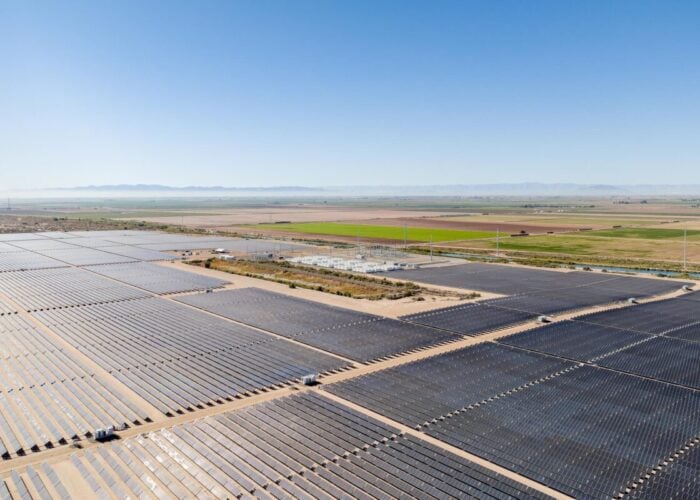
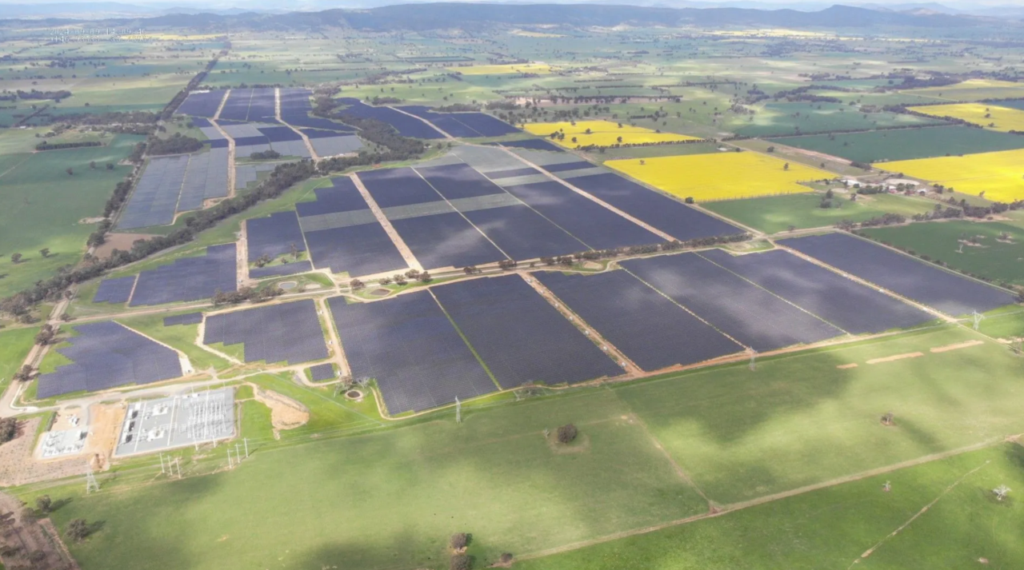
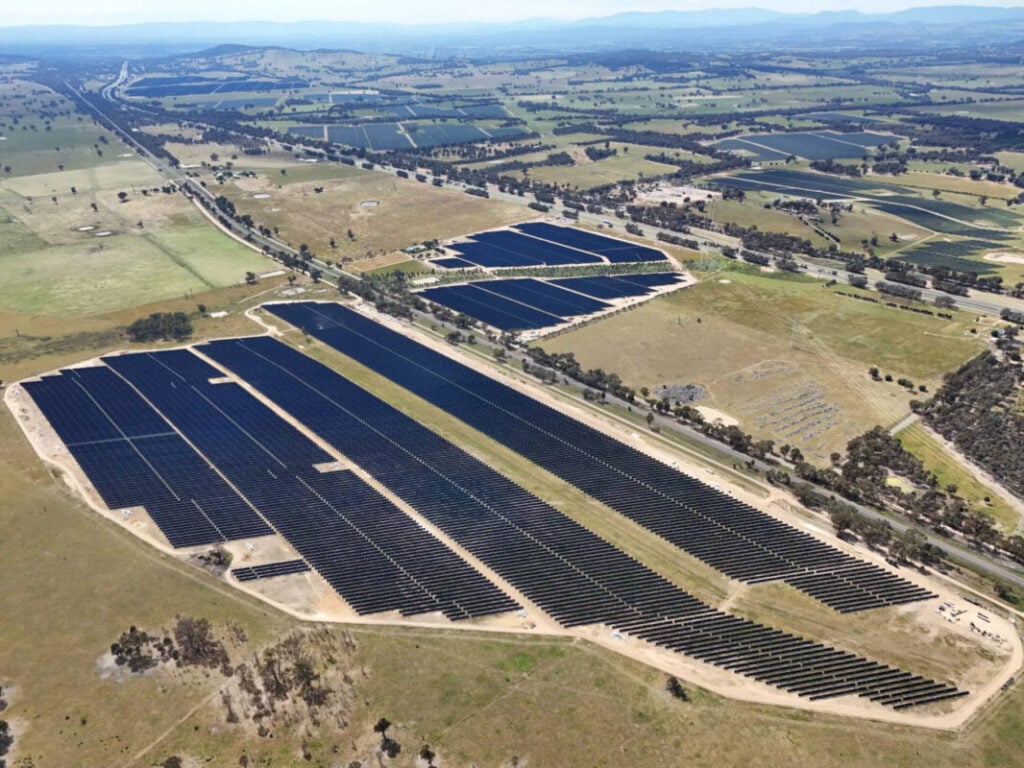
“In practice, diesel gensets remain a cost-effective way to provide long-duration backup, and they are unlikely to disappear from designs any time soon. What is changing is how power architectures are being refactored to accelerate speed to service European Energy’s 58MW Mokoan PV plant in Victoria supplies energy to Amazon via a PPA. Data centre growth could increase wholesale electricity prices by 23% in the state by 2035 and reduce dependence on immediate grid availability.”
Monday emphasises that this creates strategic optionality for operators. “As server power supplies continue to evolve, some of the load-smoothing requirements that batteries address today may diminish over time,” he says.
“More forward-leaning developers are planning for that future now, intentionally building in flexibility so battery assets can shift roles as needs change, moving from load management and speed to service toward grid interaction and market participation where appropriate.”
Beyond transmission capacity, data centres present unique technical challenges for grid stability. Most data centres use inverter-based technology similar to wind and solar PV power plants, which can suddenly disconnect during grid disturbances.
In July 2024, 60 data centres in Virginia pulled 1,500MW off the grid during a single fault, causing cascading failures and grid instability. Similar incidents in Ireland and Texas have prompted some jurisdictions to halt new data centre connections entirely.
“Data centres aren’t passive loads anymore; they’re active grid participants,” Anna Collyer, chair of the Australian Energy Market Commission (AEMC) has previously declared.
“When they fail to ride through faults, it has the potential to trigger cascading failures and blackouts. We have seen this happen overseas, and it can cost consumers billions in lost electricity supply or emergency network upgrades.”
Earlier this year, the AEMC released draft technical standards requiring large data centres to remain connected during grid faults. The new standards would require large data centres to meet specific disturbance ride-through requirements, staying connected during voltage and frequency disturbances and recovering power within defined timeframes.
A spokesperson from Australian Energy Market Operator (AEMO) touches on this, stating that “to help network service providers and data centre developers understand and prepare for the proposed rule change, AEMO is preparing to publish interim guidelines in May”.
“Developed through the access standards technical working group process, the guidelines will support consistent assessment approaches across NEM while the final rule is being finalised,” the spokesperson adds.
Monday notes that maintaining stable power quality is becoming just as important as avoiding outages.
“Issues such as voltage fluctuations or harmonics can affect sensitive AI infrastructure if left unmanaged, but they are increasingly being addressed through coordinated solutions across the grid,” Monday adds.
“Utility-scale BESS dynamically modulates active and reactive power, which can stabilise voltage during grid events and dampen oscillations caused by fast-ramping AI loads. This isn’t just about supporting the grid. It’s about protecting customer assets and safeguarding long-term performance in a more volatile power system.”
The price impact question
The energy intensity of data centres has raised legitimate concerns about potential impacts on power prices. In parts of the United States located near significant data centre activity, wholesale electricity costs have risen by as much as 267% over the past five years.
Australia’s regulatory framework requires new facilities connecting to the grid to pay for the infrastructure costs directly caused by that connection. Between 2020 and 2025, the sector invested A$3.1 billion in grid infrastructure, including A$500 million in excess capacity that can enhance local network resilience.
However, this does not eliminate the broader risk of rising electricity prices across the market. When demand rises and cheaper renewable energy generation is insufficient, more expensive gas-fired generators are brought online to fill the gap.
Modelling by the Clean Energy Finance Corporation quantifies the risk. Without additional renewable energy generation and storage, data centre growth could increase wholesale electricity prices by 26% in NSW and 23% in Victoria by 2035 under a central scenario.
The primary driver is increased reliance on gas peaking generation.
These potential impacts are not inevitable. The extent of price effects will ultimately depend on how quickly new generation, storage, and transmission capacity are delivered alongside energy demand growth.
Major technology companies are demonstrating how data centre expansion can align with clean energy development.
Amazon’s AU$20 billion investment in Australian data centres represents one of the largest commitments to renewable powered digital infrastructure in the country.
The investment, spanning 2025 to 2029, includes 11 renewable energy projects across NSW, Queensland and Victoria. Once operational, these projects are expected to deliver 1.4 million megawatt hours of carbon-free electricity annually, sufficient to power 290,000 Australian homes.
Microsoft has also secured a 15-year power purchase agreement with developer Fotowatio Renewable Ventures (FRV) Australia for a 353MW solar plant in New South Wales. Total investment by data centres into grid infrastructure is projected to reach A$7.2 billion by 2030.
Turning digital growth into grid growth
Australia remains a competitive destination for data centre investment, supported by abundant renewable energy potential, political stability, robust privacy protections and proximity to Indo-Pacific markets.
The constraint is not capital or investor appetite; major technology companies have demonstrated willingness to invest billions in Australian data centre infrastructure and associated renewable energy projects. Rather, the constraints are the network’s pace and coordination, as well as the transmission and connection infrastructure upgrades required to support new energy loads.
Uncoordinated growth, particularly in already constrained metropolitan regions, increases the likelihood of higher system costs, trade-offs in emissions, and community resistance.
Coordinated growth, by contrast, can enable data centre investment to reinforce the renewable energy transition, underwriting new generation and transmission capacity, providing long-term revenue certainty for renewable energy projects and potentially offering grid support services that enhance overall system resilience.
As AI continues to transform the global economy, Australia faces a choice: whether to manage data centre growth reactively, addressing constraints as they emerge, or proactively, integrating digital infrastructure planning with energy system transformation.
With A$20 billion investments already committed and dozens of additional projects in various stages of planning, that choice is becoming increasingly urgent.