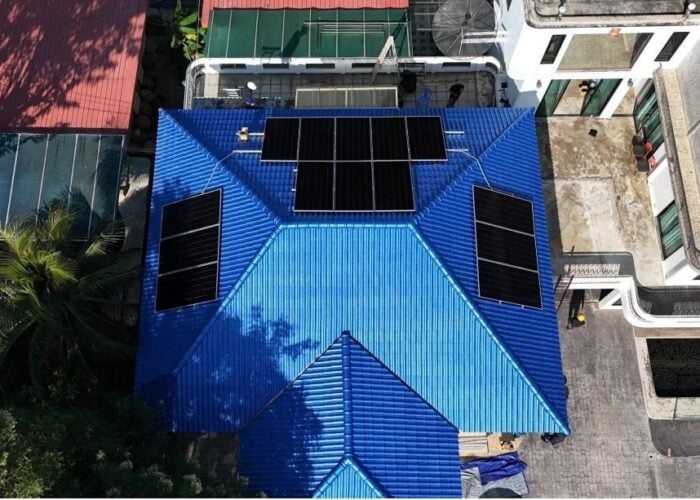
As rooftop solar in India surges, the country’s Ministry of New and Renewable Energy (MNRE) is providing financial support of up to INR300 million (US$3.2 million) to 15 power distribution utilities to deploy Distributed Energy Resource Management Systems (DERMS).
The initiative is intended to help discoms monitor, forecast and manage rooftop solar and other distributed energy resources in their networks.
Try Premium for just $1
- Full premium access for the first month at only $1
- Converts to an annual rate after 30 days unless cancelled
- Cancel anytime during the trial period
Premium Benefits
- Expert industry analysis and interviews
- Digital access to PV Tech Power journal
- Exclusive event discounts
Or get the full Premium subscription right away
Or continue reading this article for free
Under a call for proposals issued by the National Institute of Solar Energy (NISE) on 20 November 2026, the ministry will fund up to 60% of approved project costs, subject to a maximum grant of INR20 million per distribution company (discom). Participating utilities must meet the remaining costs.
The programme falls under the Innovative Projects Component of the PM Surya Ghar: Muft Bijli Yojana (PMSGMBY). Applications must be submitted by 20 December 2026, with 15 proposals to be selected based on merit, budget availability and approval.
According to government data presented in the parliament, India had installed 9.56GW of rooftop solar capacity under the PMSGMBY as of March 20, 2026.
According to the MNRE, monthly rooftop installations have surged from a mere 7,000 before the scheme’s introduction to over 300,000, while the time taken to add a hundred thousand beneficiary households has fallen from 118 days to fewer than eight.
Managing growing distributed energy resources
The initiative comes amid increasing deployment of distributed energy resources (DERs), including rooftop solar, solar pumps, battery storage, EV charging infrastructure and demand response systems.
According to the call for proposals, PM Surya Ghar installations are exceeding 13,000 per day nationally. MNRE said distribution companies need digital platforms to monitor, manage and optimise these assets as their penetration across electricity networks increases.
Each participating discom must propose a pilot covering at least one distribution division. Implementation at a higher operational level, such as a circle, is also permitted where the area demonstrates significant DER penetration and innovation potential.
Eligible applicants include state, private and joint venture discoms, as well as power departments operating distribution networks in India. Only one proposal will be accepted from each discom or power department.
Speaking to PV Tech Premium in June, Gaurav Upadhyay, energy finance specialist for India sustainable finance in South Asia at the Institute for Energy Economics and Financial Analysis (IEEFA), said that while the PMSGMBY scheme has accelerated residential rooftop solar adoption, financing constraints, uneven state-level implementation and delays in approvals remain key barriers to sustained growth [subscription required].
Grid management and system requirements
The proposed systems are expected to provide real-time visibility of distributed energy resources, renewable generation forecasting, grid balancing, voltage regulation, congestion management and dynamic hosting capacity assessment.
Other identified solution areas include battery dispatch optimisation, virtual power plants, managed EV charging, vehicle-to-grid integration, artificial intelligence-based forecasting and digital twins.
Selected utilities will have six months from the date of the sanction letter to deploy and commission their systems in the pilot areas. Projects must include system integration, operational dashboards, forecasting and analytics, followed by performance demonstrations and measurement of key performance indicators against established baselines.
In January 2026, energy think-tank Ember said solar curtailment in India was emerging as an early indicator of insufficient grid flexibility, despite non-fossil fuel sources accounting for around 50% of installed power generation capacity in 2025.
Last month, research and analysis firm JMK reported that India curtailed 118.6GW of renewable energy generation in September 2026, equivalent to 1.28% of total renewable generation, with solar accounting for 96.9GW of the curtailed output.
The report attributed curtailment primarily to supply-demand mismatches and insufficient grid flexibility, identifying Gujarat and Rajasthan as the source of 79% of curtailed energy and highlighting the need for battery energy storage systems (BESS), transmission upgrades and improved forecasting.
Proposal evaluation and funding structure
Proposals will be assessed against five criteria. Innovation and technical feasibility carry the highest weighting at 30%, followed by expected impact on grid operations and scalability and replicability at 20% each. Consumer benefits and cost effectiveness account for 15% each.
Financial assistance will cover eligible expenditure on equipment and field hardware, software, system integration, analytics, consumer interface development and demonstration activities. Advisory, consultancy, project management consultancy and detailed project report preparation costs are excluded.
The MNRE grant, excluding organisational overheads, will be released in two instalments. The first will cover 50% of the approved grant and will be released with the sanction letter. The remaining amount will be released against specified milestones, including the system becoming operational in the pilot area and submission of the utilisation certificate for the first instalment.
Organisational overheads are capped at 8% of the total project cost, excluding overheads, subject to a maximum of INR 1.5 million. These will be released after project completion and submission of the required completion and audited utilisation reports.