The CEO of US thin-film PV manufacturer First Solar has called for bipartisan policy support for US tariff programmes and praised the measures introduced by the Trump administration to limit non-US solar companies’ access to the US market.
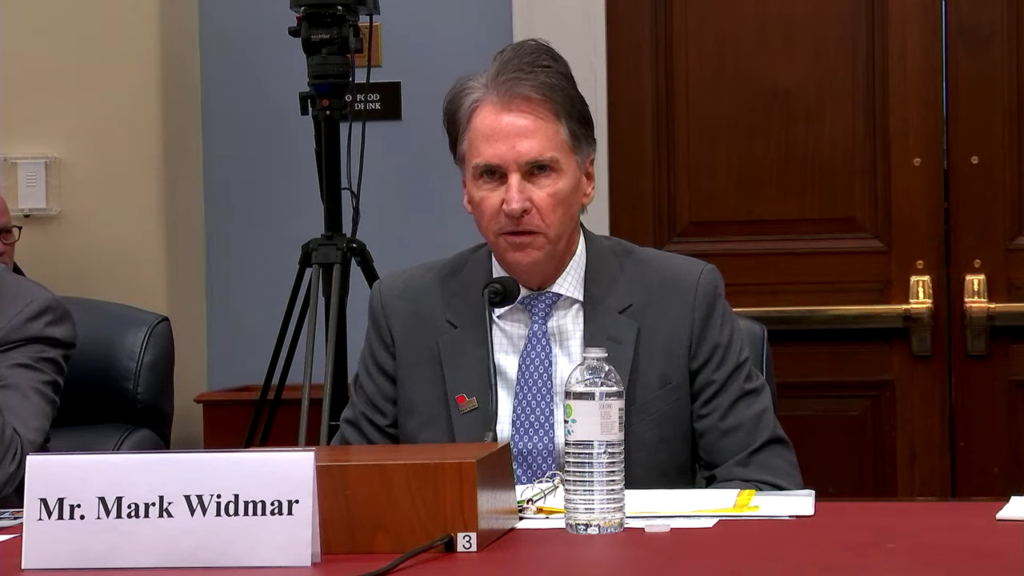
Speaking at a US House Select Committee hearing on industrial competition with China last week, Mark Widmar said: “Industrial strategy must be bipartisan. When the rules hold from one Administration and Congress to the next, entire markets can grow, and domestic manufacturers can invest with certainty in the United States.
Try Premium for just $1
- Full premium access for the first month at only $1
- Converts to an annual rate after 30 days unless cancelled
- Cancel anytime during the trial period
Premium Benefits
- Expert industry analysis and interviews
- Digital access to PV Tech Power journal
- Exclusive event discounts
Or get the full Premium subscription right away
Or continue reading this article for free
“On behalf of all of our American workers, I thank President Trump and Secretary Lutnick for the first true acknowledgment that the solar supply chain is a national security issue,” Widmar said.
His comments follow this month’s US midterm elections, which saw the Democrats retake control of both the House of Representatives and the Senate in a sweeping victory over the incumbent Republican Party.
Widmar praised the Section 232 polysilicon import tariffs due to come into force next month and the Prohibited Foreign Entity (PFE) measures introduced in 2025, saying they would strengthen US solar manufacturing and reduce reliance on Chinese equipment.
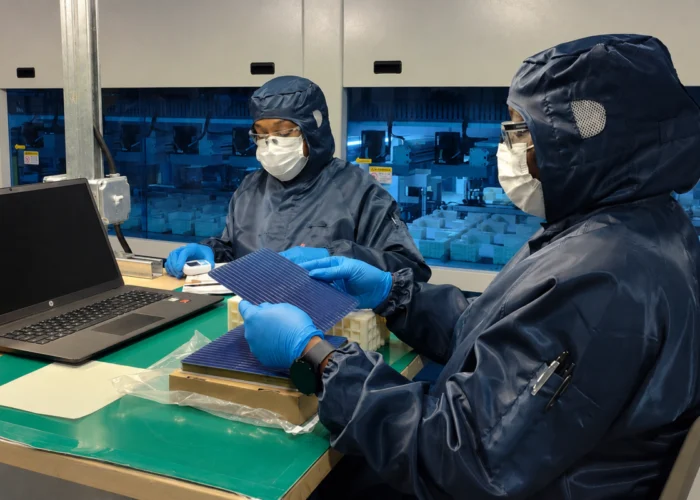
First Solar produces cadmium telluride (CdTe) thin-film solar modules from six US manufacturing facilities, as well as overseas sites in India and Southeast Asia. Widmar said his company has invested “approximately US$5 billion” in domestic manufacturing to date and is “proof that America can rebuild manufacturing capacity”.
He appeared in the hearing, titled ‘Outproducing the CCP: Restoring American Manufacturing’, alongside the heads of an AI startup, Playground Global, and an aviation firm, JetZero.
As well as praising Section 232, he called for “stringent” final regulations for the PFE measures, which would examine a “web of dependencies” between US solar manufacturing and Chinese-backed or owned companies. US solar companies have to comply with PFE and Foreign Entity of Concern (FEOC) restrictions introduced in 2025’s “One, Big Beautiful Bill” act.
The overwhelming majority of global solar PV is based on crystalline silicon technology, and China dominates manufacturing capacity. Rules on import prices under Section 232 and restrictions on material and equipment usage under PFE will undoubtedly raise production costs and prices for US c-Si solar manufacturers. Last week, Anza Renewables reported that US module prices had surged ahead of the 4 December start of Section 232 duties.
As a CdTe thin-film manufacturer, First Solar would be relatively unaffected by Section 232 and PFE regulations, compared with US-based crystalline silicon solar manufacturers. Widmar has previously said he believes First Solar is “structurally positioned to benefit from” the current policy environment.
In June, shareholders brought a class action lawsuit against First Solar over allegedly “misleading” claims over the company’s resilience to US tariffs and trade barriers. That case regarded President Trump’s “reciprocal” global tariff regime and its relation to First Solar’s projected performance.
Will tariffs help the US solar manufacturing industry?
The midterm elections marked a dividing line between the first and second halves of the Trump administration. The newly Democrat-controlled House and Senate will likely be more favourable towards renewables and clean energy than has been the case over the last two years.
However, landmark policies such as Section 232 and PFE restrictions are unlikely to be reversed, according to industry experts (subscription required). What may emerge over time is more certainty and fewer direct attacks on the renewable energy industries.
But opinions differ on whether Section 232 tariffs are of particular benefit to the broad US solar manufacturing industry.
When the tariff rates were announced in August, analysts from Intertek CEA said that the measures were “unlikely” to spur any new solar cell production in the US, as the incentives to build US capacity, like the domestic content bonus and 45X manufacturing credit, would begin to disappear by the time new factories came online.
There is a big gap between US solar module capacity (around 60GW) and US cell capacity (around 11GW), with even less silicon wafer capacity currently operational. If that gap does not close, US module manufacturers will be reliant on increasingly expensive overseas inputs to meet demand. Thin-film producers like First Solar do not face the same challenge.
Tim Pawlenty, CEO of the Solar Energy Industries Association (SEIA), said in August that “Imposing tariffs and price floors on solar materials will create new challenges for American manufacturers”.
But others have said that the current policy landscape heralds “good news” for the industry. Hasan Nazar, head of policy at Crux, told PV Tech Premium that Section 232 could spur demand for domestic sources of polysilicon and wafer supply if companies invest in establishing it. And Aaron Hall, president of Anza, told us he thought Section 232 was “a very strong domestic manufacturing policy”.