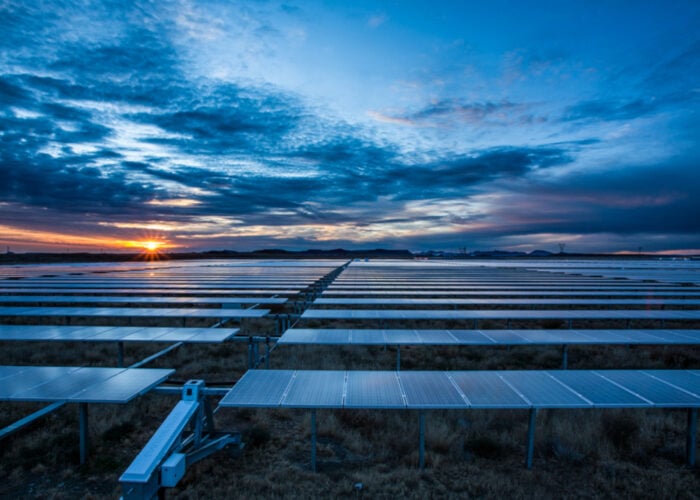
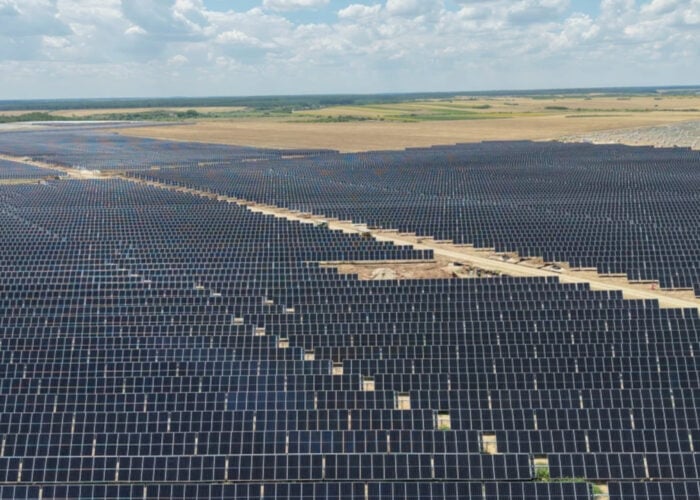
Australia’s first commercial solar plant used to displace diesel has commenced operation at mining giant Rio Tinto’s Weipa bauxite mine in Queensland.
US-based PV manufacturer and developer First Solar’s 1.7MW capacity plant is expected to generate 2.8GWh of electricity each year. It will provide up to 20% of the daytime electricity demand of the remote mine’s township and processing facilities on the Western Cape York Peninsula in Queensland.
Try Premium for just $1
- Full premium access for the first month at only $1
- Converts to an annual rate after 30 days unless cancelled
- Cancel anytime during the trial period
Premium Benefits
- Expert industry analysis and interviews
- Digital access to PV Tech Power journal
- Exclusive event discounts
Or get the full Premium subscription right away
Or continue reading this article for free
The electricity generated from the solar plant will be used to reduce diesel usage at Weipa’s power stations, with an aim to save up to 600,000 litres of diesel per year.
Rio Tinto signed a 15-year PPA with First Solar for the electricity produced from its 18,000 modules at the plant, which have been connected to the mining company’s existing mini-grid.
The plant also uses First Solar’s FuelSmart solutions, which combine PV generation with a fossil fuel engine generator to optimise the amount of fuel saved whilst also ensuring the system’s reliability.
The Australian Renewable Energy Agency (ARENA) provided AU$3.5 million (US$2.4 million) for the first phase of the project. Depending on the success of stage one, ARENA will also provide up to AU$7.8 million for a second phase to expand the plant to 6.7MW capacity, and introduce an energy storage component.
Jack Curtis, First Solar’s regional manager for Asia Pacific, said the project represents a significant step forward for the solar industry as it enters the natural resources sector, which has typically been “very conservative” about adopting renewables.
He added: “It is already widely acknowledged that solar electricity is typically cheaper than diesel-powered electricity, particularly in remote locations. The significance of the Weipa Solar Plant is that it provides the opportunity to demonstrate that PV-diesel hybrid projects can also be as reliable as stand-alone diesel-powered generation.”
“In recent years, attention has been focused on the technical challenges of high-penetration PV-diesel hybrids. At the Weipa Solar Plant, First Solar is seeking to deliver a reliable electricity supply without diverting capital costs away from Rio Tinto’s critical mine operations. Proving this commercial model has the potential to be a watershed moment for the diesel hybrid application globally.”
ARENA chief executive Ivor Frischknecht also said that this project has the potential to boost the mining industry’s confidence in renewable energy as a reliable off-grid power source.
He added: “Similar ARENA-supported projects now underway, or in the pipeline, will build on this landmark project to further prove the reliability of integrating renewable energy solutions in off-grid locations while helping to drive down costs and the need for subsidy.”