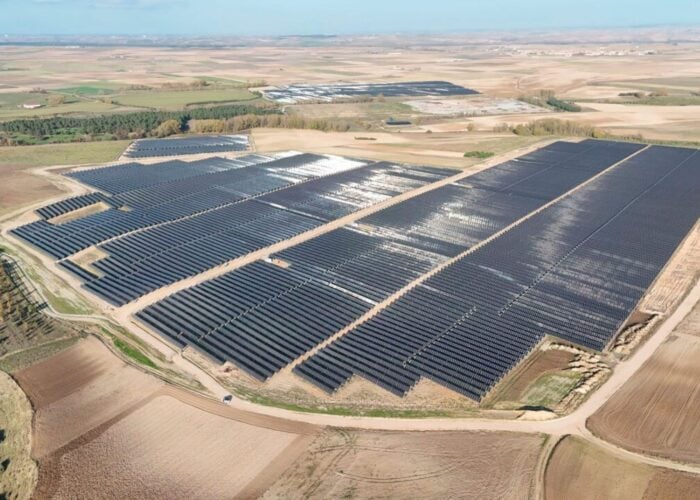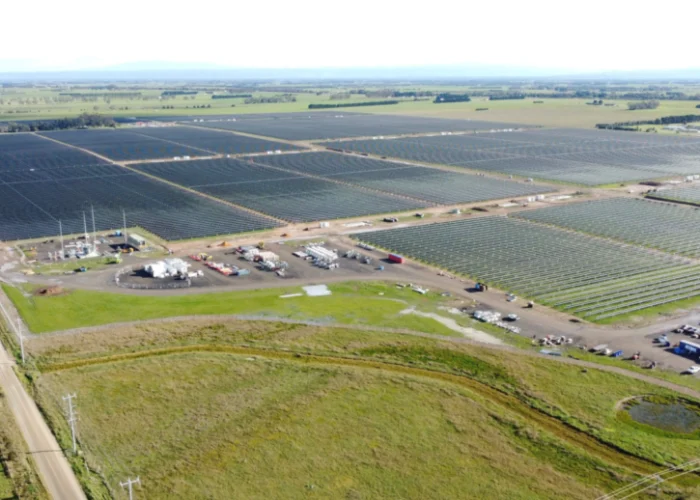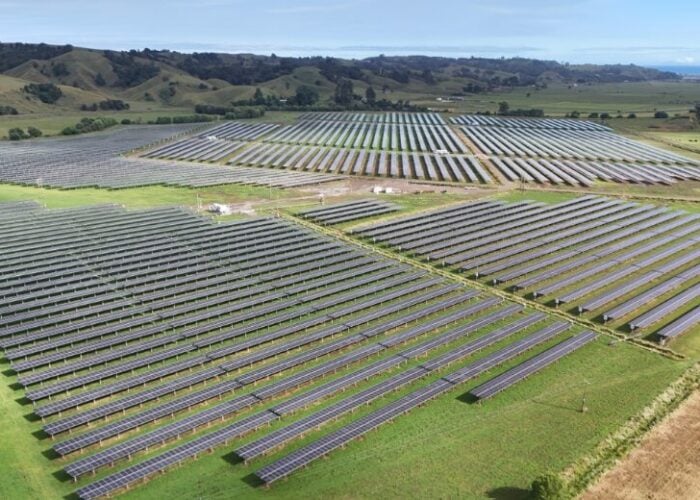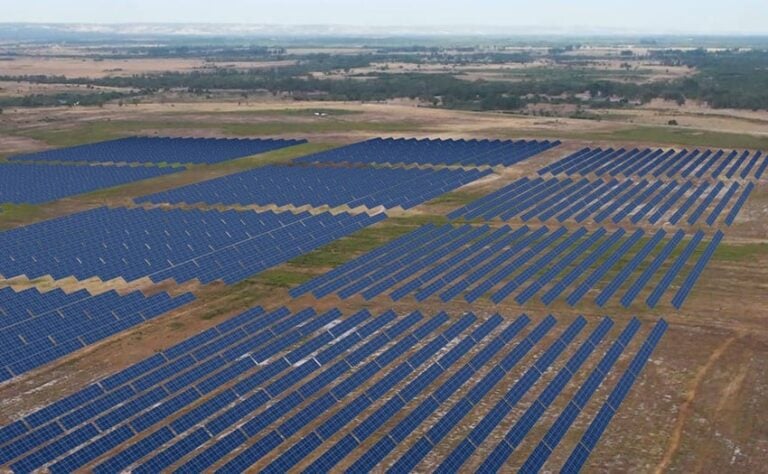
Frontier Energy has secured firm commitments for an AU$110 million (US$78 million) equity raising from institutional and sophisticated investors to fund the 132MW first stage of its Waroona Renewable Energy Project in Western Australia (WA).
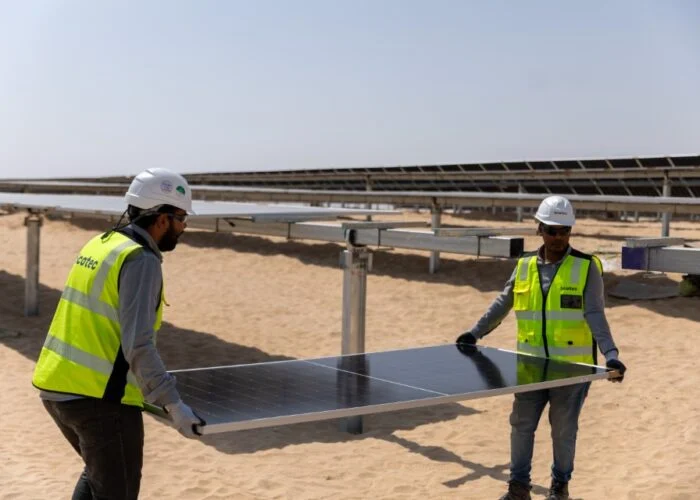
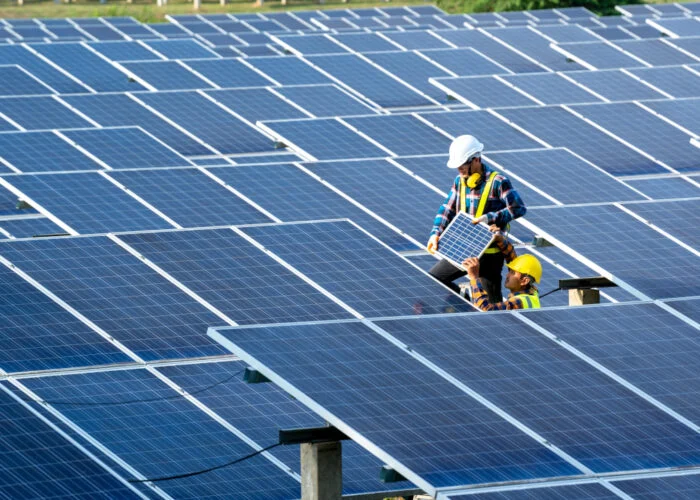
The ASX-listed developer said that the solar PV power plant in Stage One of the facility has grown from 120MW to 132MW through the adoption of higher-efficiency 660W modules, up from 610W, with approximately 200,000 modules and 1,855 trackers.
Try Premium for just $1
- Full premium access for the first month at only $1
- Converts to an annual rate after 30 days unless cancelled
- Cancel anytime during the trial period
Premium Benefits
- Expert industry analysis and interviews
- Digital access to PV Tech Power journal
- Exclusive event discounts
Or get the full Premium subscription right away
Or continue reading this article for free
Frontier also confirmed that the proposed battery energy storage system (BESS) has been extended from 80MW at 4.75-hour to 81.5MW at 6.9-hour duration, delivering 562MWh of storage.
The longer duration was required to comply with reserve capacity obligations, which impose a minimum 6-hour BESS requirement, while also allowing greater flexibility to maximise energy sales during peak demand periods.
The conditional placement comprises 550 million new shares at AU$0.20 per share, representing a 23.1% discount to the last closing price of AU$0.260 on 1 June 2026.
All Frontier directors have also committed AU$3.3 million to the raising, subject to shareholder approval at a general meeting scheduled for 10 July 2026. Canaccord Genuity is acting as lead manager, with Yelverton Capital and CPS Capital Group as co-managers.
The placement arrives after an extended development journey for the Waroona project, which has been through several iterations since Frontier first assembled the site by acquiring Waroona Energy in late 2023 to create a combined 335MW solar portfolio.
The project was temporarily halted in October 2024 after Frontier failed to secure Reserve Capacity Credits from the Australian Energy Market Operator (AEMO), which had been expected to underpin up to AU$27 million in revenue per annum during the project’s first five years.
The loss of those credits effectively required the company to restructure the project’s financing and revenue assumptions before returning to market.
The updated total capital cost, including contingency, is AU$327 million. Stage one infrastructure will include an engineering, procurement and construction (EPC) contract for the solar and BESS facility, an EPC contract for a new 330kV Waroona substation, and a Western Power Interconnection works contract.
Monford Group has been appointed as the PEC contractor, which has completed an early contractor involvement process to refine costs and minimise construction risk.
Credit-approved senior debt commitments are targeted for receipt in July 2026, with the debt facility expected to cover up to 70% of total stage one funding, carry a tenor of up to 20 years, and price at margins consistent with infrastructure project finance.
Executive Chairman Jamie Cullen said the raising would allow stage one to advance to financial close.
“We will then be ready to commence building Stage One and continue development work on Stage Two,” Cullen said, adding that the interest from new institutional investors and WA-based family offices “highlights both the quality of our Stage One project and the pipeline for future development at Waroona to create a major renewable energy precinct in the South West of WA.”
A multi-stage development horizon
Frontier Energy is targeting commercial operations in October 2027 for the first stage of the renewable energy project, positioning it to contribute to Western Australia’s South West Interconnected System (SWIS) as ageing coal and gas capacity exits the market before 2031.
Frontier has outlined a multi-stage expansion to approximately 1GW of solar generation and 660MW of battery storage by 2031, with the development strategy designed to avoid reliance on major new transmission infrastructure by connecting via the existing Landwehr Terminal, 0.5km from the site.
Stage two, which holds development approval, mirrors the first stage by targeting approximately 120MW of solar and 80MW of battery storage, and is expected to advance its definitive feasibility study during 2026.
The AU$110 million equity placing, once settled, will also fund early works on the stage two expansion, ensuring development momentum continues in parallel with stage one construction.
A notice of general meeting is expected to be released in the coming days, with the settlement of new shares scheduled for 15 July 2026, subject to shareholder approval.