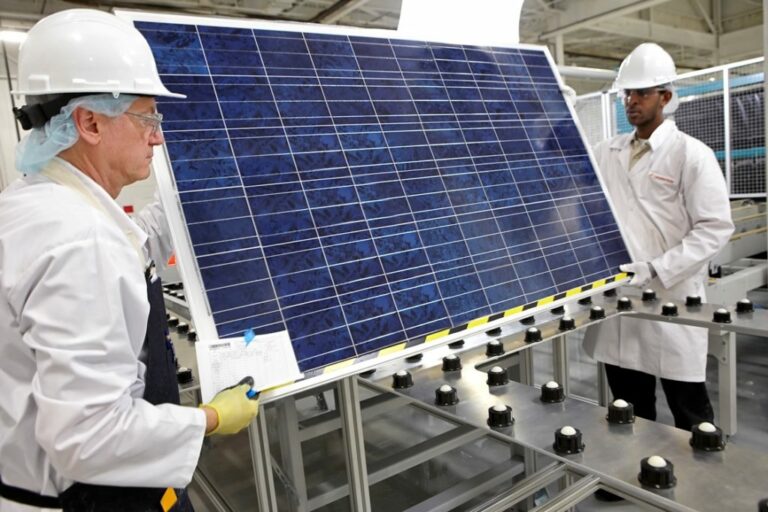
International solar manufacturer Canadian Solar has launched a TOPCon 3.0 module, which has a power output of 670W and a conversion efficiency of 24.8%.
The company noted that the new module is bifacial—delivering up to 0.5% additional “system-level energy gain”—and has a temperature coefficient of 0.26% per degree Celsius. Canadian Solar also expects module degradation of less than 1% in the first year and 0.35% annually in subsequent years.
Try Premium for just $1
- Full premium access for the first month at only $1
- Converts to an annual rate after 30 days unless cancelled
- Cancel anytime during the trial period
Premium Benefits
- Expert industry analysis and interviews
- Digital access to PV Tech Power journal
- Exclusive event discounts
Or get the full Premium subscription right away
Or continue reading this article for free
The new module uses M10 (182mm) cell wafers, and has slightly improved performance metrics over the company’s earlier module of the same type, the Gen2 182 Pro; this module has a maximum power output of 660W and a conversion efficiency of 24.4%. Dr Shawn Qu, who moved to executive chairman and CTO last month, said the module demonstrates the company’s commitment to “advance high-efficiency PV technology”.
Today’s announcement comes just before the start of this year’s Intersolar Europe event, in Munich from 23-25 June, and the company said that it would showcase the module at the summit. This follows the same pattern of module announcement made last year, when Canadian Solar unveiled the second generation of its TOPCon module at the 2025 edition of Intersolar Europe.
The company plans to begin global shipments of the modules this August, although it did not provide further details on either the destinations for shipments of the TOPCon 3.0 module or where they would be manufactured. Canadian Solar, as is the case with many module manufacturers that sell to the US, has made an effort to shift its manufacturing capacity to the US, so that its products are not exposed to the tariffs introduced on overseas goods by President Donald Trump.
This has contributed to a decline in Canadian Solar’s module shipments earlier this year, where it noted that efforts to “accelerate relocation” of manufacturing capacity led to the breaking of a seven-quarter streak of sustained increases in module shipments.
However, Canadian Solar’s US focus has yielded more positive results for the company. Notably, Canadian Solar has invested in a solar cell manufacturing plant in Jeffersonville, Indiana, and expects to begin full-scale production at the facility by the end of the month. This plant will also produce heterojunction (HJT) cells, which has become the cell technology of choice in the US as the International Trade Commission (ITC) investigated a number of lawsuits of alleged copyright infringement pertaining to TOPCon cells in particular.
Navigating the policy landscape is a key challenge for the US solar industry as a whole, and the cell sector in particular. Solar Media’s PV CellTech USA Conference in San Francisco, on 13-14 October 2026, will include sessions on securing cell supply chains, global trends in cell research and design and innovative manufacturing practices, among other topics. Read the full agenda here and book tickets on the event website.