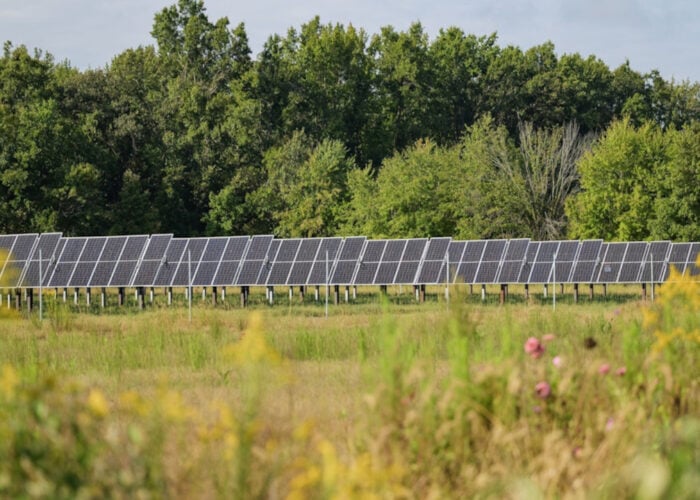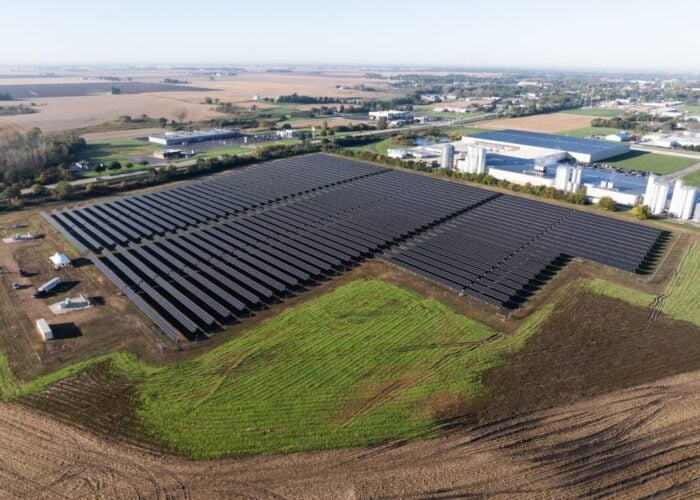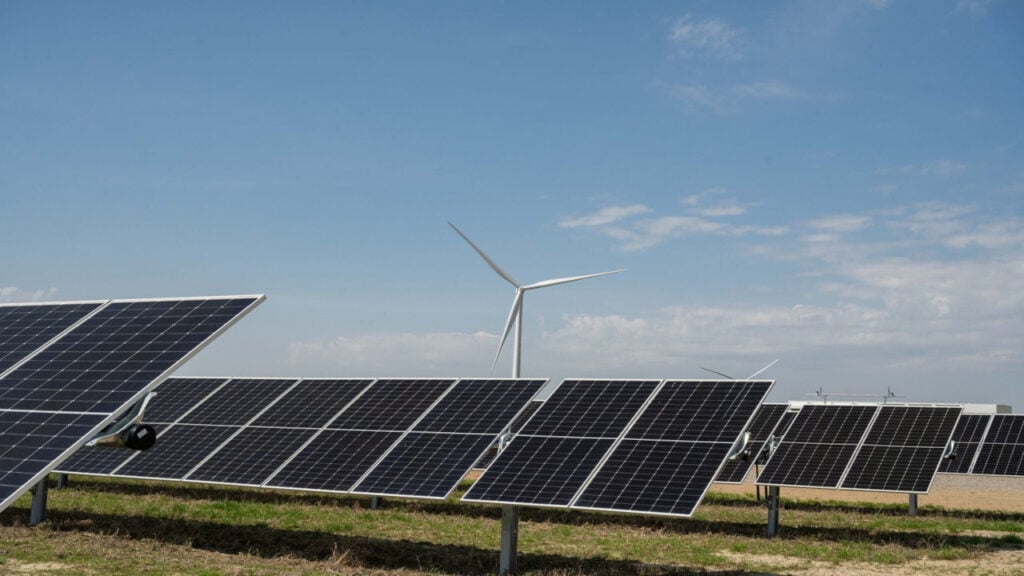
Michigan utility DTE Energy has announced the operational status of its 132MW Fish Creek Solar Park near Sheridan, Michigan.
Construction of the facility was completed in August this year and the US$268 million development was entirely funded by participants in DTE’s MIGreenPower programme.
Try Premium for just $1
- Full premium access for the first month at only $1
- Converts to an annual rate after 30 days unless cancelled
- Cancel anytime during the trial period
Premium Benefits
- Expert industry analysis and interviews
- Digital access to PV Tech Power journal
- Exclusive event discounts
Or get the full Premium subscription right away
Or continue reading this article for free
Under the programme, Michigan residents can pay a fixed (US$1 or US$2) or variable dollar amount each month to the utility to support clean energy deployments in the state, in exchange for being able to attribute a percentage of their energy use to renewable energy. The programme is also open to businesses in the state, with the Ford Motor Company a notable contributor.
The MIGreenPower programme also provided funds to DTE Energy’s Cold Creek Solar Park in the state at which the utility completed construction earlier this month.
The project is subject to a power purchase agreement (PPA) agreement with Ford Motors, which, at the time of its signing in 2022, was the largest such agreement to offtake renewable energy from a utility company in the US. Ford had set a 2025 target for all its Michigan operations to be 100% renewable-powered, but this deadline has since been extended to 2027 or 2028.
Matt Paul, president and chief operating officer, DTE Electric, a subsidiary of DTE Energy, said: “Fish Creek adds more Michigan-made energy to our system while supporting local jobs, generating new tax revenue and delivering lasting benefits for the communities that helped make this project possible.”
DTE Energy operates 37 solar parks in Michigan, and the company’s Integrated Resource Plan (IRP) aims to being online an additional 15GW of renewable energy capacity by 2042, the majority of it being solar. Additionally, the utility aims to add 4.5GW of battery energy storage systems (BESS) to the power infrastructure in the state between 2027 and 2046.