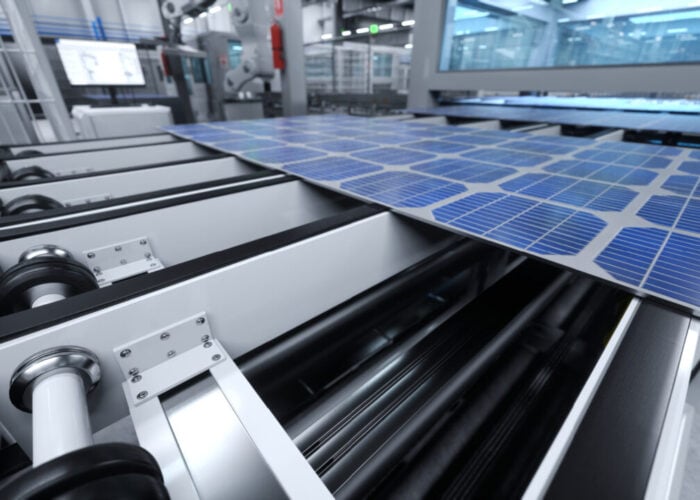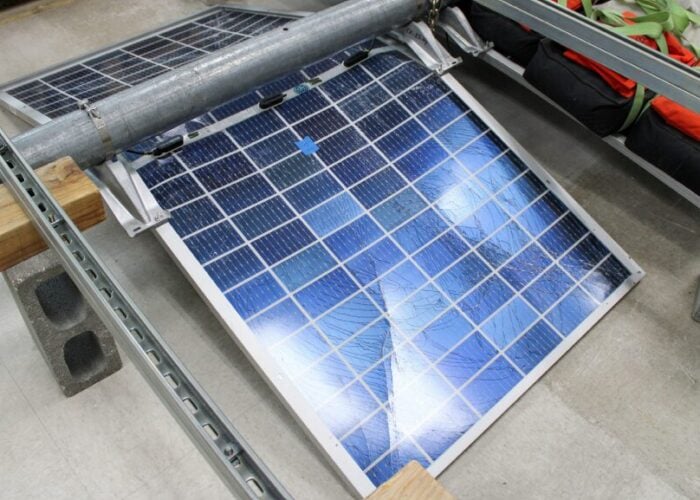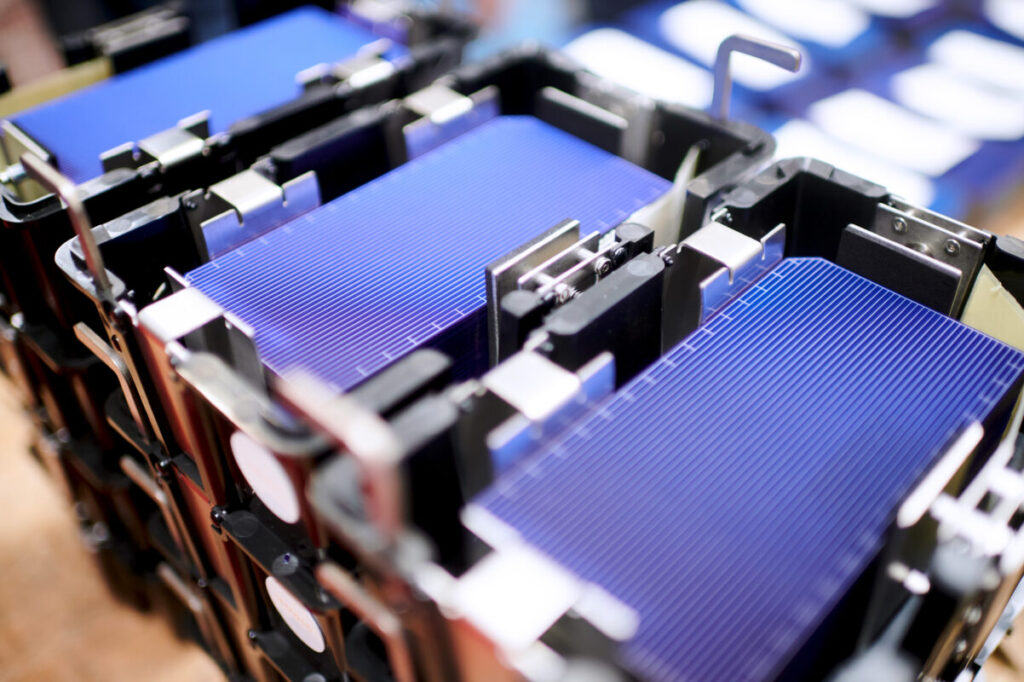
The number of defects related to so-called creepage distance has increased significantly in recent years following the introduction of M10R solar cells, according to solar technical advisors Kiwa PI Berlin.
Solar cell creepage refers to the minimum spacing required between components within a solar module to prevent short circuits, including pathways such as the cells to the glass edge, between adjacent cells and between cell strings.
Try Premium for just $1
- Full premium access for the first month at only $1
- Converts to an annual rate after 30 days unless cancelled
- Cancel anytime during the trial period
Premium Benefits
- Expert industry analysis and interviews
- Digital access to PV Tech Power journal
- Exclusive event discounts
Or get the full Premium subscription right away
Or continue reading this article for free
Chris Gabel, account manager at Kiwa PI Berlin, told PV Tech that adequate cell spacing is critical to module safety, as cells that are too close within a module can cause short circuits that lead to thermal and electrical damage. “In the worst case, they can lead to a fire,” he said.
Gabel added that it was vital for module producers to follow UL safety standards, which regulate minimum cell spacing through what are called “minimum creepage and clearance distances”.
“As the wafer market shifted toward the larger M10R cells, manufacturers began adopting larger cells while maintaining the same glass and frame dimensions. As a result, the only way to accommodate the larger cells was to reduce edge cell-to-glass, cell-to-cell and string-to-string spacing, often bringing these gaps close to, or even below, the minimum UL requirements,” explained Gabel.
He added that another contributing factor is the dimensional tolerances associated with cells, glass and manufacturing equipment.
“Manufacturers rarely consider the combined impact of these tolerances during the NPI [new product introduction] process, making it difficult to consistently control spacing during production.”
Gabel explained that to address these high-risk safety and reliability issues, manufacturers need to consider the nominal dimensions and tolerances of all materials and equipment during module design.
“The module design should account for the worst-case tolerance stack-up to ensure that the required spacing is maintained throughout production. Unfortunately, this is not always the case,” added Gabel.
According to Kiwa PI Berlin, several manufacturers either do not fully understand the safety standard requirements or the risks associated with these defects and don’t classify them as an appropriate severity level or establish proper specs.
“Addressing this issue will require improving industry-wide awareness and technical understanding, as well as applying clear and consistent acceptance criteria based on applicable UL and IEC requirements,” concluded Gabel.
These findings come as the company recently launched a white paper examining new factories – those operational for less than two years – and comparing them with more mature factories.
During a webinar on the white paper held by Kiwa PI Berlin, one of the emerging production oversight quality findings observed across several factories concerned cell spacing, as highlighted above.
Overall, newer factories have more critical findings than more mature ones, as explained in this article accessible to our Premium subscribers.