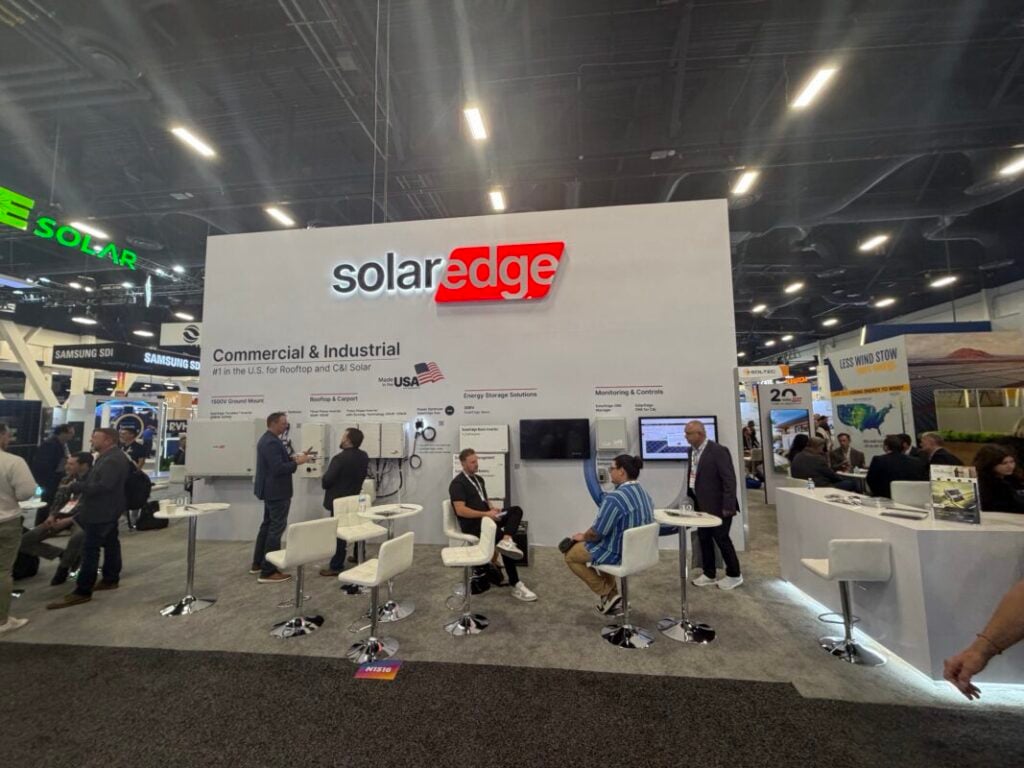
Taking place two months later in the year than the 2025 edition, the RE+ trade show in Las Vegas, Nevada, remains a tentpole event for the global solar industry. This year, a number of companies unveiled new products at the conference, including a new optimiser from SolarEdge, new electrical balance of system (eBOS) products from Voltage Energy and Tesla and a range of new software and monitoring tools.
SolarEdge unveils Duo Power Optimizer for C&I solar
Israeli inverter and energy storage manufacturer SolarEdge has unveiled its Duo Power Optimizer for the commercial and industrial (C&I) sector in US solar at this year’s trade show.
Try Premium for just $1
- Full premium access for the first month at only $1
- Converts to an annual rate after 30 days unless cancelled
- Cancel anytime during the trial period
Premium Benefits
- Expert industry analysis and interviews
- Digital access to PV Tech Power journal
- Exclusive event discounts
Or get the full Premium subscription right away
Or continue reading this article for free
The optimiser connects to two modules with an independent maximum power point tracker (MPPT) for each, and SolarEdge says that its “2:1 architecture” enables the Duo to operate at the level of a one-to-one power optimiser with half as many components and connections. It also uses SolarEdge’s ‘Sense Connect’ monitoring technology across every input and output connector, enabling it to identify changes in temperature and potential faults before connectors overheat.
“With the Duo, installers get module-level visibility with 50% fewer optimisers than one-to-one designs like the C651U,” said Aaron Wilson, CEO of US-based installer Solar One. “Being able to monitor performance down to the individual module gives us greater confidence in the system’s long-term output and makes troubleshooting far more precise when we do need to return to the site.”
SolarEdge also specified that the optimiser will be manufactured in Florida and is designed to meet domestic content and foreign entity of concern (FEOC) requirements, and that all of its inverters available for purchase in the US have either been authorised by the Federal Communications Commission (FCC) or fall outside of the commission’s restrictions on foreign-produced inverters, which was announced over the summer.
The origin of components and products has become an increasingly influential topic in procurement in US solar, as the industry looks to minimise its reliance on goods produced overseas in general, and in China, specifically. Deep Patel, CEO of California-based Gigawatt Inc wrote a guest blog for PV Tech on the additional supply chain challenges posed by the current US policy landscape earlier this year.
The Duo optimiser is available for purchase now, and SolarEdge expects to begin shipments both domestically and internationally in 2027.
Voltage Energy launches solar-plus-storage microgrid, new eBOS hardware
US eBOS equipment manufacturer Voltage Energy launched its ‘Microgrid System’ (MGS) at this year’s RE+ event, which combines solar generation and a battery energy storage system (BESS) in a modular system.
MGS includes solar and BESS equipment, alongside foldable PV racking and a pre-assembled power skid that includes an inverter and a backup diesel generator. The solar system has a capacity of 64kW and Voltage says that the system can be installed by a three-person team in under 24 hours “under suitable installation conditions.”
It is intended to provide power for temporary mission-critical systems, where there is a lack of access to power infrastructure, such as machinery to install solar projects or construct data centres.
Voltage also unveiled two new eBOS systems at the event, a load break disconnect box (LBD) and a combiner box, which it calls CBX. Both products support trunk bus and multi-string architectures and can be used with existing products the LYNX PLUS and IBEX and IBEX PLUS range of solutions. All of these wiring solutions can integrate with 2kV systems, and received certifications from testing company UL Solutions last year.
Earlier this year, Voltage was involved in a patent dispute lawsuit with fellow eBOS manufacturer Shoals and a North Carolina court ruled that Voltage had infringed on Shoals’ patents, and would have to pay US$96 million in damages. Voltage’s LYNX trunk bus was at the centre of this dispute, and during our reporting into the lawsuit, PV Tech Premium heard that Voltage was shifting its focus away from this product to the LYNX PLUS, and this is reflected in its compatibility with the company’s new LBD and CBX.
Terabase Energy and PVcase debut new project software
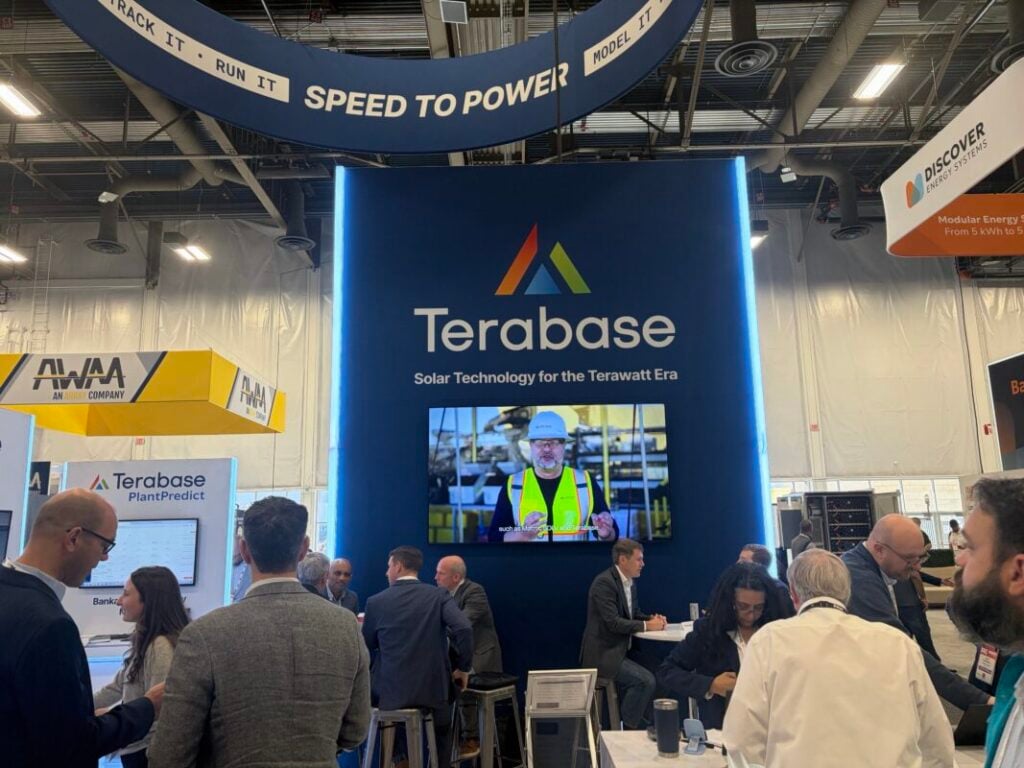
US solar technology company Terabase Energy also launched the latest edition of its Terabase Construct software for utility-scale solar PV, wind and BESS projects.
The new platform uses what the company calls an “AI construction execution system” that uses an AI agent to draw on data from drone images, field data from crews and live data from equipment trackers to provide asset managers with information to make decisions on project performance. Amit Nadkarni, COO of Pennsylvania-based developer and independent power producer (IPP) Doral Renewables, said that receiving and processing this kind of information in a timely manner is vital for asset managers.
“Our pipeline is growing quickly, and delivering it on time takes real visibility,” said Nadkarni. “With every project in one portfolio view, our team works from the same data, spots issues early and manages more projects without adding layers of reporting.”
The platform is Terabase’s latest generation of solar project planning and management technology, following the completion of work at the second generation of its Terafab construction platform last year.
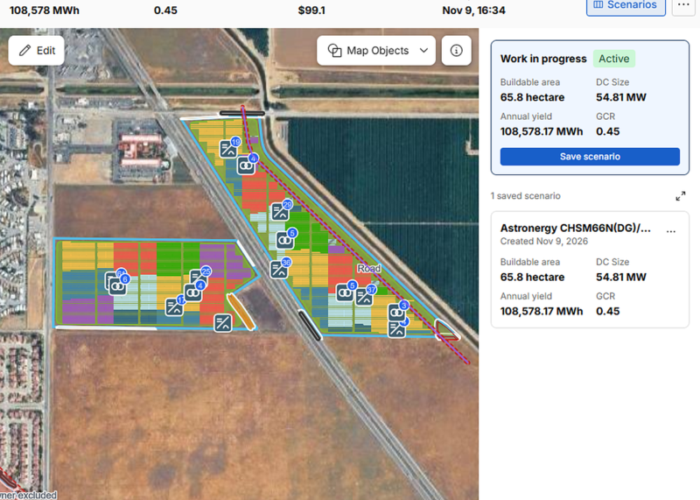
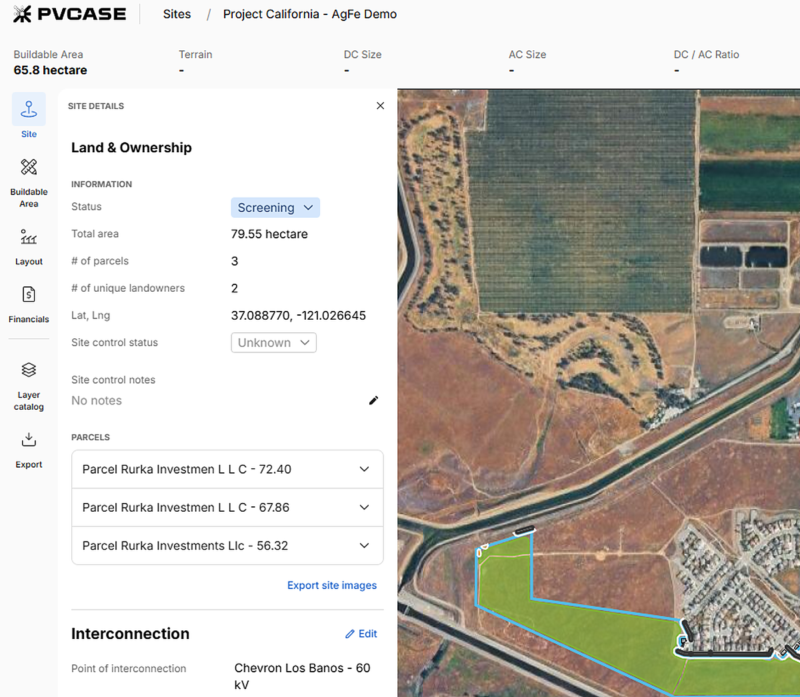
Terabase was not the only company to launch a new software tool at RE+; Lithuanian software developer PVcase launched its Concept platform, to aid developers in the site feasibility assessment phase of utility-scale solar project development, on Monday.
PV Tech Premium spoke to PVcase chief sales officer Douglas Geist exclusively about the platform, and how better use of planning tools can help developers reach a ‘no’ decision earlier in a project’s lifecycle, and ultimately save them money.
“The longer they get along with a project, the more this will cost them in terms of real money, and in terms of opportunity cost, they could have spent working on something that could have actually seen the light of day,” said Geist.
Tracker manufacturers FTC Solar and OMCO Solar launch AI analysis, wireless tracker products
US tracker manufacturer FTC Solar also unveiled its ‘construction intelligence’ product, FieldIQ, at RE+. The product uses AI to analyse drone and camera imagery to provide real-time updates on tracker installation, and delivers end-of-day productivity reports.
The platform can be used for both conventional and robotic installation, comparing installation efficiency for both with industry benchmarks.
“Whether installation is performed by crews, robots or a combination of both, teams can track progress, compare productivity against benchmarks and use that data across their portfolio of FTC Solar tracker projects,” said FTC vice president of software Andrew Morse. “Our role is to make the information accessible and useful within the way our customers manage their work.”
The news follows strong financial results from the company, which included US$32.8 million in revenue in the third quarter of this year, the highest third quarter revenue reported in the last five years.
Fellow tracker manufacturer OMCO Solar also updated its Star tracker system at the trade show. The company first launched the wireless tracker at last year’s RE+ event, and this year has added “all-weather battery packs” to the trackers, which can be charged from solar modules, to deliver a robust energy supply that the company calls “solar powered by solar”.
“Our industry has solved so many problems as we have grown—we’re now the leading source for new electric energy capacity in the US,” said OMCO Solar vice president of solar technology Matt Kesler. “This addition to the OMCO Star product line solves one more—how to protect modules if there’s no AC power to the site even for a short time.”
OMCO suggested that the solar-powered trackers would be best used in sites that experience extreme weather, which can disrupt the supply of AC power to a site. Earlier this year, Pablo Caballero of Solargis wrote a piece for PV Tech Power in which he described how this summer’s string of extreme weather events could change how asset managers operate solar projects in such extreme weather conditions moving forward.