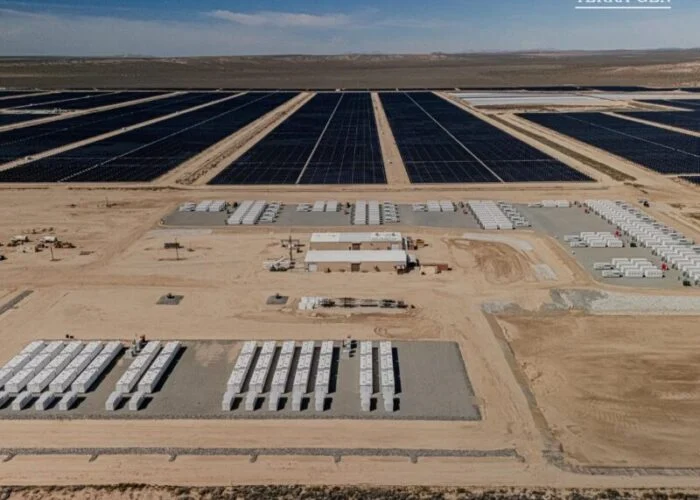
US utility Duke Energy should refile its 2020 integrated resource plan (IRP) to effectively allow for the diversity benefits of solar and storage to be captured, it has been argued by energy consulting firm E3.
A new report from the consultancy said that Duke’s capacity expansion methodology considers solar and storage independently, at different steps of the process, ignoring the synergistic benefits that exist between the two, meaning the IRP “likely fails to identify a least-cost solution for its ratepayers”.
Try Premium for just $1
- Full premium access for the first month at only $1
- Converts to an annual rate after 30 days unless cancelled
- Cancel anytime during the trial period
Premium Benefits
- Expert industry analysis and interviews
- Digital access to PV Tech Power journal
- Exclusive event discounts
Or get the full Premium subscription right away
Or continue reading this article for free
E3 said IRP portfolio optimisation should be carried out in a single step, in which all components of the capacity expansion are optimised at the same time, as opposed to sequentially. This is so that the interactive effects of renewable and storage resources can be captured when they are evaluated simultaneously.
Duke’s sequential approach that analyses firm retirements, renewable additions and storage additions in isolation from one another “fails to capture” key benefits that the model can only recognise when these resources are evaluated jointly, according to E3, meaning the approach “artificially reduces the amount of solar and storage built on the system as the model is unable to accurately account for the synergistic effects”.
Meanwhile, evaluating the benefits of solar and storage at separate points in the capacity expansion process could lead to other technologies being chosen at a higher cost, the report claimed.
Details of the IRP were announced last September, revealing six paths for the utility’s power generation portfolio up to 2035. The models put solar capacity anywhere between 8,650MW and 16,400MW, while the energy storage fleet is expected to reach between 1GW and 7.4GW depending on the renewables adoption rate.
The E3 report recommends that Duke re-run the capacity expansion component of its IRP using a single-step optimisation methodology that co-optimises all resources and policy constraints simultaneously. “This is the only way to ensure that the synergistic properties of solar and storage be represented, and a true least-cost solution can be found,” the report reads.
Over the next five years, Duke’s capital plan foresees the utility spending US$59 billion, of which 70% will be focused on investments in clean energy and the grid infrastructure that supports it. Speaking in a conference call with investors last week, CEO Lynn Good said the capital plan places the firm “at the forefront of clean energy at scale”.
Duke is aiming to cut carbon emissions by at least 50% by 2030 and achieve net zero status by 2050.