The European solar sector will lose around 5% of its jobs in 2025, the first contraction in employment for the sector in nearly a decade.
The latest Solar Jobs Report from European trade body SolarPower Europe (SPE) shows that employment in the sector has followed broad market trends. Remarkable growth in solar installations over 2022-2024 saw “extraordinary” expansion in the sector’s employment base, SPE said, making solar “Europe’s most powerful job engine”.
Try Premium for just $1
- Full premium access for the first month at only $1
- Converts to an annual rate after 30 days unless cancelled
- Cancel anytime during the trial period
Premium Benefits
- Expert industry analysis and interviews
- Digital access to PV Tech Power journal
- Exclusive event discounts
Or get the full Premium subscription right away
Or continue reading this article for free
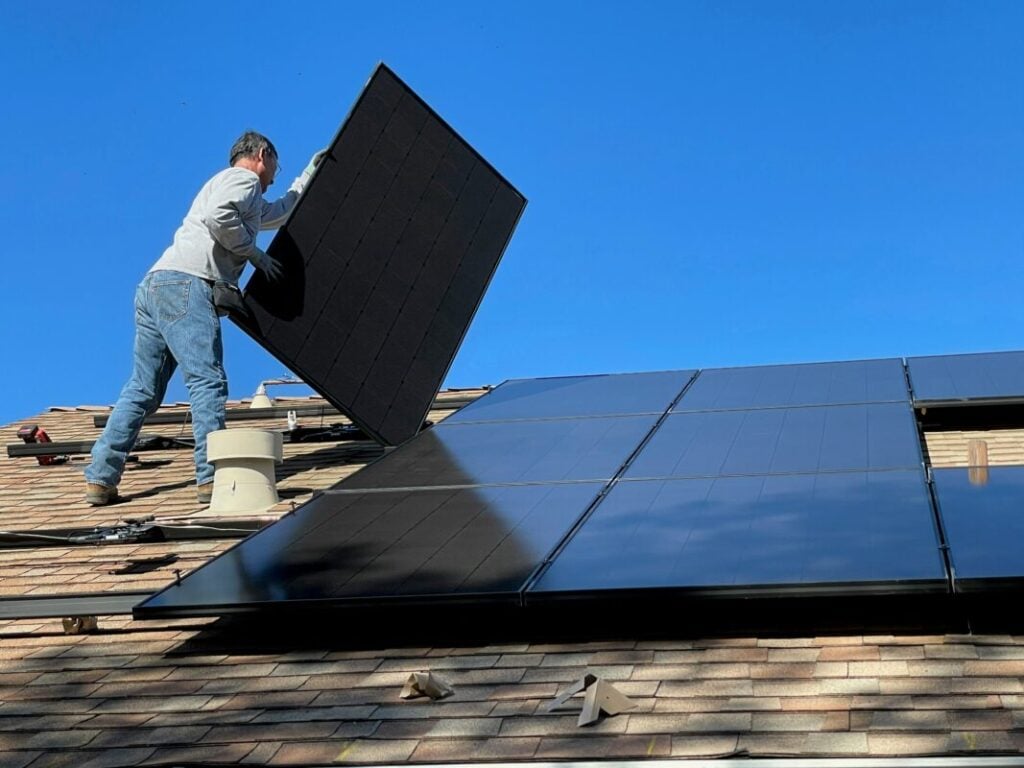
But 2025 has seen a slowing of market growth, primarily from the rooftop and residential sector, which is the most “job-intensive” part of the solar industry. Solar installations grew by just 3.3% in 2024, compared with between 30%-50% annual growth in the preceding three years. In 2024, the number of solar jobs continued to increase by 5% – notably higher than the 0.8% growth in the general EU labour market – though SPE forecasts a contraction this year.
Around 40,000 jobs are likely to be lost in the solar sector in 2025, the report said, falling from 865,000 to around 825,000.
“This setback reflects both policy frameworks that fail to sufficiently attract solar investment and meet consumer demand in the post-energy crisis environment, and global production overcapacity, where European manufacturers face immense competitive pressure,” SPE’s report said.
“Yet this is not necessarily the start of a story of decline,” the report’s authors wrote. It said that EU-wide policy for solar and storage, including fostering new entrants into the solar job market and developing training schemes, could see the sector recover.
“In fact, the medium-term outlook still foresees employment recovering from 2026 onwards, reaching more than 916,000 jobs by 2029,” the report said.
Solar job market breakdown
Most solar jobs are in deployment, SPE said; around 744,000 of the 864,000 total jobs in 2024 were in deployment roles.

Operations and maintenance (O&M) roles reached around 66,000, manufacturing around 40,000 and the emerging decommissioning and recycling sector supported about 14,000 jobs last year.
“The predominance of deployment jobs over O&M roles reflects the labour-intensive nature of installing solar panels on rooftops and in fields,” the report said. The relatively stable nature of solar installations means that there is lower demand for O%M jobs, and SPE forecast that AI, automation and digital monitoring technologies could further reduce the opportunities for O&M employment.
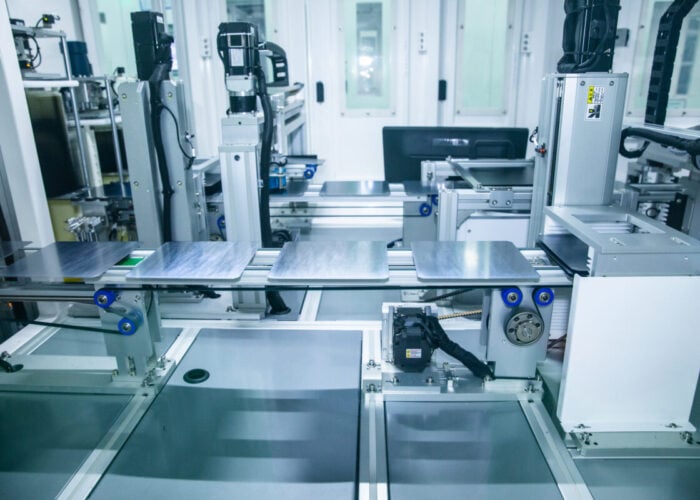
On the manufacturing front, the struggles of the European industry are reflected in job figures. The manufacturing sector lost 2,000 full-time jobs in 2024 and 5,000 in 2023, the most of which were lost in the module production sector, thanks to closures at a number of EU producers “including Meyer Burger, Solarwatt, Systovi, Exasun, Energetica, and Recom Sillia, whose shutdowns directly translated into both lost production capacity and employment,” the report said.
Most manufacturing jobs remain in the inverter and polysilicon production sectors, where Europe still has meaningful production capacity. 80% of manufacturing jobs are at inverter companies, SPE said; around 32,000 full-time roles, around 5,000 more than in 2023.
“However, this headline growth masks the challenges faced by many EU inverter manufacturers, some of which were forced to lay off staff in 2024,” SPE said. “High inventories among wholesalers, weaker-than-expected market demand due to falling energy prices, subsidy uncertainties, and aggressive pricing from global competitors all contributed to a difficult operating environment for domestic producers.”
Polysilicon also accounted for 10% of EU solar manufacturing roles.