At last month’s Renewables Procurement & Revenue summit, hosted by PV Tech publisher Solar Media in London, PV Tech Premium heard that, in general, the UK renewable energy investment landscape is “quite good”.
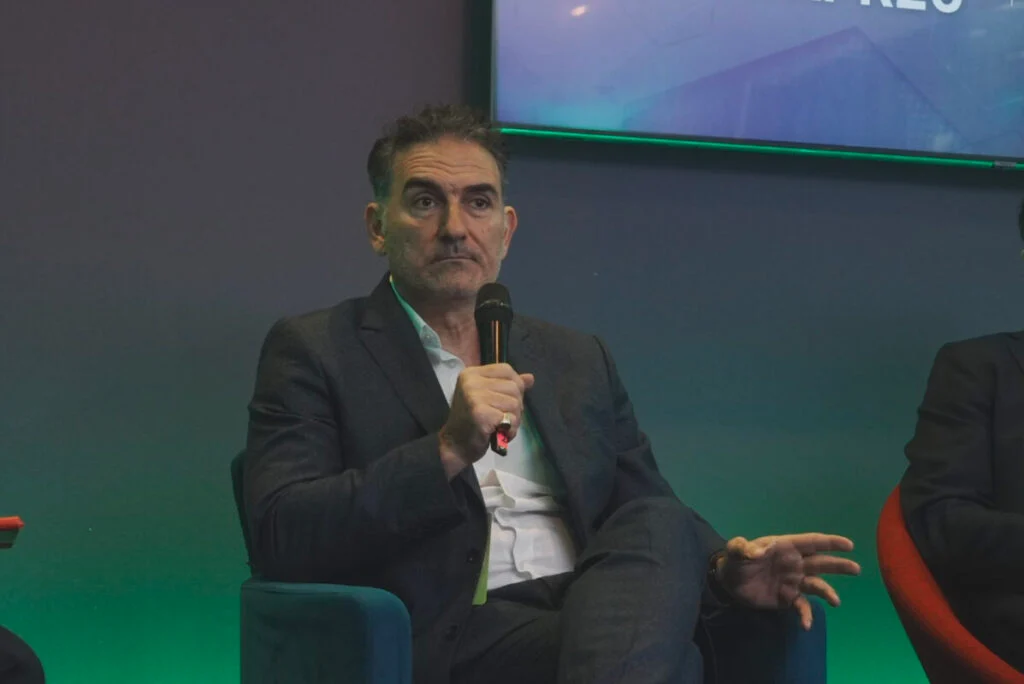
This was the opinion of Anastasios Christakis, COO at Queequeg Renewables, who spoke to PV Tech Premium during the event, following his appearance at a panel discussion on solar-plus-storage financing on the second day of the conference. His optimism echoed that of Bob Psaradellis, CEO of Island Green Power, who called the UK’s auction programme in particular the “gold standard” for solar investment opportunities at an earlier Solar Media event this year, reflecting a longstanding opinion in the industry that the UK is something of a leader in the European renewable energy space.
Try Premium for just $1
- Full premium access for the first month at only $1
- Converts to an annual rate after 30 days unless cancelled
- Cancel anytime during the trial period
Premium Benefits
- Expert industry analysis and interviews
- Digital access to PV Tech Power journal
- Exclusive event discounts
Or get the full Premium subscription right away
Or continue reading this article for free
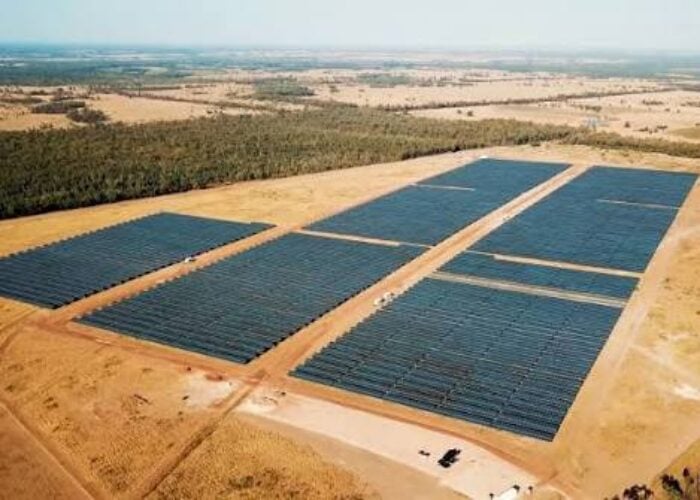
Indeed, the last twelve months have seen a number of successes for the UK renewable energy sector. Last July, the UK’s largest solar project, Cleve Hill, entered commercial operation, demonstrating the efficacy of both constructing large-scale solar-plus-storage projects, and working through the nationally significant infrastructure programme (NSIP) in the UK.
In the year since, a mammoth 800MW solar PV project has been approved in Lincolnshire and the distributed solar sector will benefit from the introduction of new legislation regarding low carbon housing, set to come into force in 2028. While European renewables face a wave of long-term political uncertainty, the UK’s supportive policy framework continues to attract investors and developers to its energy transition.
Industry supportive of the UK’s CfD scheme
“The landscape, in general, is quite good in terms of how it can evolve and how it can develop,” Christakis told PV Tech Premium during the event. “Of course, we’ll need policy support for that, and also legislative support.”
A lot of his optimism comes from the efficacy of the UK’s Contracts for Difference (CfD) scheme, which was a frequent topic of conversation during the summit. The programme allows developers to secure an offtake agreement where the length is measured in decades and the counterparty risk is minimised by working with a national government, and developers throughout the event discussed the attractiveness of the programme.
“We see the CfD scheme as very attractive, from the generator’s perspective, for different reasons,” agreed Francisco del Rio, head of power sales Europe at NTR plc, who also spoke to PV Tech Premium during the event. “One of them is [that the contracts are] long-term, up to 20 years, which provides stable cash inflows and predictability and stability in terms of price.
“That opens the door for financing and raising debt, as well, and with low margins on interest rates. Additionally, indexation is also attractive because it’s a hedge on the opex, which is normally linked to inflation long-term.”

The sheer scale of the scheme is something to behold; its most recent round, allocation round 7a, saw CfDs awarded to a record 155 individual solar PV projects with 4.9GW of capacity, at a price 10% lower than was awarded in the last round.
“[It’s] a good scheme and it has helped to create bankability for the projects that we have,” said Christakis. “Obviously it has its limitations, but in general terms we see that it is working [and] has been working, and helpfully can take the learnings from the previous rounds and apply them to the next rounds, to make it even better.”
Other experts at the summit suggested that the CfD scheme is of the greatest benefit in the long-term, as fundamentally changing the UK’s energy mix from one reliant on fossil fuels to one reliant on clean energy will simply take time, and processes like the CfD scheme have enabled that transition to be financially viable for developers and investors.
“There’s a short-term and a long-term,” said Matt Parry, head of power and energy demand at REA, who spoke during the first panel of the summit. “[The UK government] is doing quite a good job in the long-term, so encouraging investment in renewables and building out battery storage and long-duration energy storage (LDES).”
Political and market uncertainty looms amid energy transition
However, Parry argued that the financial mechanisms affecting UK energy prices, in particular, are “very complicated”, and that for all the optimism about the UK’s long-term energy future, it is likely that the country’s already-high power prices will rise.
This complicated economic background, where the UK is caught between the old fossil fuel energy system and the more distributed, renewables-led mix of the future, means that renewable energy can sometimes not take into account the range of factors that affect a project’s valuation and, ultimately, its bottom line.
In response, Christakis said that project financing needs to become more complex, so that projects are able to compete for both CfD contracts and private offtake agreements, sometimes simultaneously.
“We reached the point where a lot of these projects purely rely on the auctions and the tariffs we get, but we can see a mix where we can guarantee a partial supply to the grid in order to qualify for the auction and get the tariffs, and the other part is merchant, so it’s more like a hybrid model that investors are looking at,” explained Christakis.
“You try to have a private PPA with a private offtaker, like a big utility, [but] the market is not as advanced in this regard, compared to other markets in Europe, but there is a good track record in order to grow even bigger.”
“The longer tenors of the CfDs makes corporate PPAs more challenging, so I think it’s sometimes difficult to find the angle to structure a PPA with a corporate,” added del Rio, suggesting that the popularity and the prevalence of the CfD scheme means that signing deals outside of its parameters can prove difficult.
“They normally want to have shorter tenors than the CfDs, but there are compatible ways to have different commercial schemes in place for different assets, when we’re talking about investors or generators that have a wide portfolio of assets.”
Speakers at the event also suggested that the CfD scheme has a fundamental weakness, in that its continued function is reliant on the sustained support of a government that wants to advance the energy transition. A number of speakers referred to the recent strong performance of the Reform UK party in polls, which is openly more hostile to renewables than the current Labour government, suggesting that this supportive legislative framework could be undone in the event of a new government.
Learning from other markets
Indeed, del Rio went on to say that some of the political uncertainty that is affecting the UK is something that governments “all across Europe” are having to contend with at present.
“In terms of uncertainty, all across Europe, the governments have implemented some action items, specifically for vulnerable consumers,” he told PV Tech Premium. “That’s something that we see all across Europe recently that has been exacerbated by the recent conflict in the Middle East, so that’s something that all the governments have different actions but in the same direction.”
“Sometimes we might have been surprised because the UK, historically, didn’t have this kind of political or regulatory uncertainty,” he continued, suggesting that this scale of uncertainty is a new kind of risk for actors in the UK. The UK, therefore, compares unfavourably to countries like Ireland, which BNRG’s David Maguire told PV Tech Premium ahead of the event was a notably “stable” political landscape that facilitated long-term dealmaking.
“Given the geopolitical uncertainty, I think this is something that’s new for the vast majority of countries across Europe,” del Rio added.

Christakis said, however, that this widespread uncertainty means the UK has plenty of opportunities to learn about how to navigate this kind of environment from its European neighbours.
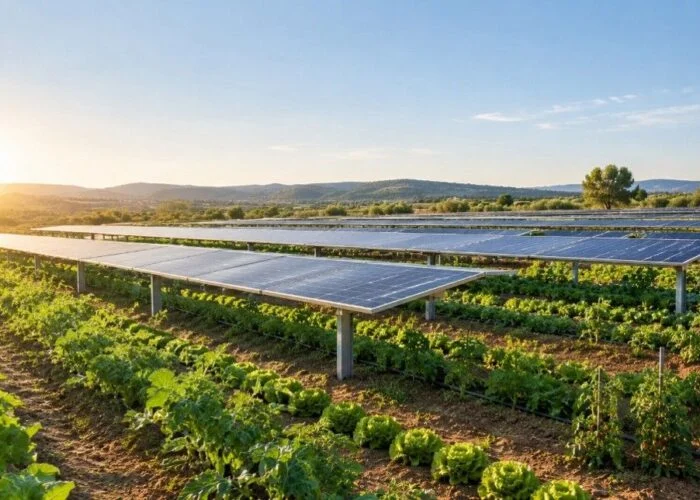
“There are some good things that the UK market can adopt from other countries,” he told PV Tech Premium. “I was thinking [how] in Italy they’ve done a very good job of integrating agrivoltaics, and because the solar industry has suffered quite a lot here in the UK with a bit of resistance from those who own the land and communities—rightly or not, based on the way the industry presents itself—and by implementing rules about agrivoltaics, you accentuate the benefits of solar, because [now] this can create biodiversity.
“With regards to the routes to market, which is the auction system, the UK has the CfD system [and] compared to Italy, a market I know very well, the Italian market is more flexible. In Italy, the authority is waiting for the market to tell what they would like to have, so they can secure more capacity into a system, whereas in the UK they put a ceiling on capacity.”
He added that the UK could do with better embedding small-scale solar generation, such as agrivoltaics, “into our business case” to ensure that the sector is not entirely reliant on a single kind of project size, such as utility-scale solar.
“The other thing is that we don’t need to underestimate the power of the smaller producers—those below 1MW,” he added. “The energy communities framework has worked very well in many European countries, so probably you can implement it here, because there are a lot of small developers that are going to make a difference by creating these projects, plus embracing the communities close to these projects.”
However, del Rio concluded by saying that, while the UK could benefit from a more diversified offtake space, in the manner of other European countries, the CfD scheme remains a “really attractive” programme that is the driving force behind UK solar.
“The governmental schemes—the CfD scheme in the UK or the RESS scheme in Ireland—are really attractive from the generators’ perspective in terms of certainty and price stability in the long run,” he said.
The CP2030 Summit is hosted by our Solar Media colleagues on 30 June-1 July in London. The summit provides an opportunity to connect with key decision-makers, explore investment opportunities, and collaborate on solutions to navigate complex supply chains and policy frameworks. View the agenda and book tickets on the event website.