The European Commission (EC) has announced its European Solar Charter, a package intended to support domestic European solar manufacturing.
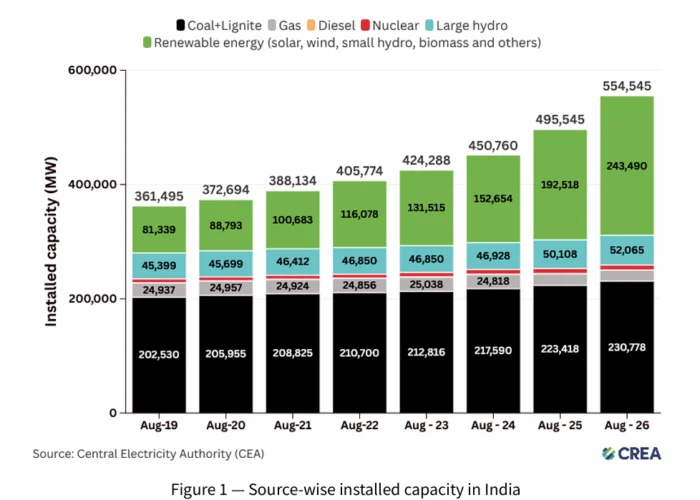
It joins the group of major global economies – most notably the US and India – looking to spur a domestic solar manufacturing industry to reduce reliance on the Chinese supply chain which dominates the solar landscape.
Try Premium for just $1
- Full premium access for the first month at only $1
- Converts to an annual rate after 30 days unless cancelled
- Cancel anytime during the trial period
Premium Benefits
- Expert industry analysis and interviews
- Digital access to PV Tech Power journal
- Exclusive event discounts
Or get the full Premium subscription right away
Or continue reading this article for free
The Charter was first announced in March, when Commissioner for Energy Kadri Simson said that the PV manufacturing industry faced a “very fragile situation”. It followed consistent calls from trade bodies for support for Europe’s manufacturers.
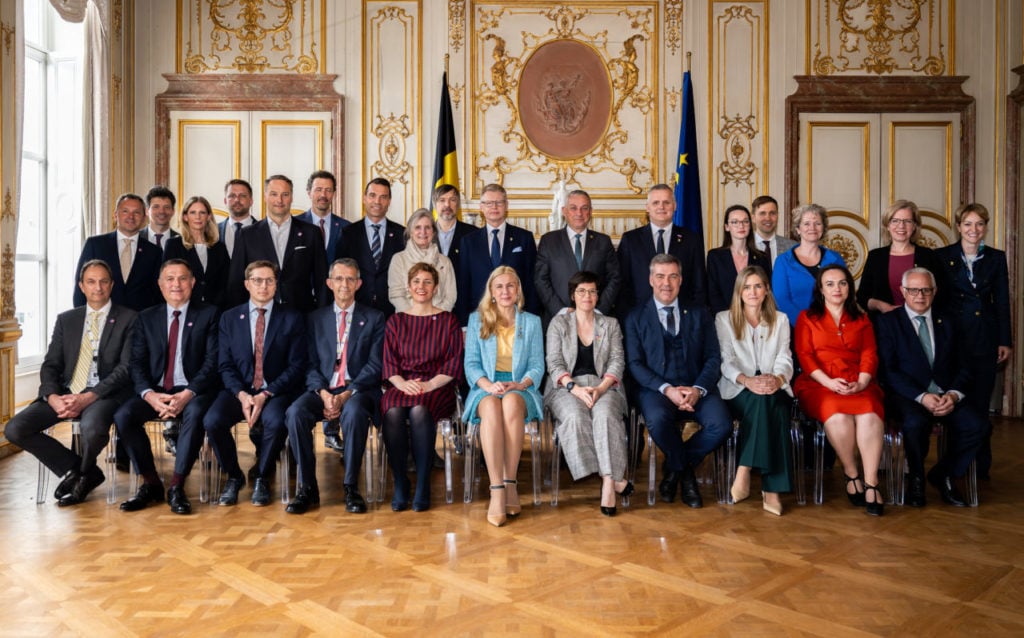
The long-awaited Charter was signed yesterday (15th April) by the 23 EU member states, the EC and Europe’s two main solar trade bodies, the European Solar Manufacturing Council (ESMC) and SolarPower Europe.
Under the Charter, member states and the solar industry bodies will “commit” to a number of measures “supporting the competitiveness of the European PV manufacturing industry and promoting the creation of a market for high-quality products meeting high sustainability and resilience criteria.”
The EC also signed a number of clauses which it “intends” to execute.
Public procurement and non-price criteria
Most notably, the Charter – which can be read in full here – emphasises “ambitious non-price criteria” for public solar auctions as a way to stimulate domestic production.
Non-price criteria include “resilience, sustainability, responsible business conduct, ‘ability to deliver’, innovation and cybersecurity criteria”. These were proposed under the Net Zero Industry Act (NZIA) when it was adopted by the European Parliament in November. The Solar Charter requires member states and industry bodies to adopt non-price criteria through “rapid early implementation of the relevant provisions in the NZIA”.
These same criteria will also apply to solar PV product offtakers, who will have to incorporate non-price criteria into their strategies.
The charter will also see “the promotion of innovative forms of solar energy deployment, such as agri-PV, floating solar, infrastructure-integrated PV, vehicle-integrated PV or building-integrated PV”. This will be made possible either by the removal of permitting and regulatory barriers or through public support schemes for these technologies.
Beyond non-price criteria, the Charter says that member states must “Consider using all available EU funding opportunities” to support new solar manufacturing capacity and investments.
European Commission ‘intentions’
The EC will “intend” to “further facilitate access to EU funding for solar PV manufacturing projects” under its various financing vehicles, including the Recovery and Resilience Facility.

It will also continue to support the European Solar PV Industry Alliance – which it established in 2022 – in its goals to support new domestic manufacturing capacity. In addition, the EC will “cooperate with third countries” outside the EU “to enhance the resilience and diversification of supply chains”.
The EU passed a law banning products with forced labour in their supply chains from entering the market earlier this year, which requires the EC to investigate companies in third countries which are exposed to suspected forced labour.
Solar industry reactions
Following the signing, CEO of SolarPower Europe, Walburga Hemetsberger said that the Charter “reinforces the reality that solar PV is now a mainstream energy technology.”
She called the document “an important moment of recognition”, but said that the bloc still needs “rapid action and concrete measures at national and EU level to support manufacturers. This means rolling out resilience criteria in public procurement and auctions as soon as possible, unlocking subsidy support, and establishing dedicated EU financing for solar.”
She concluded that “the EU Solar Charter is one chapter in Europe’s solar story. Delivering accelerated solar deployment growth is key to ensuring a market for European solar manufacturers.”
The ESMC – which represents many non-Chinese solar manufacturers – was also congratulatory; its secretary general, Johan Lindahl said: “The European Solar Charter marks a crucial moment, drawing much-needed political attention to our domestic solar industry.”
He continued: “While the Charter alone is not sufficient to rebuild a robust European photovoltaic value chain, we hope it will work as a rallying point for accelerating concrete measures and serve as a signal that the European Union is not yet ready to hand in a walk-over in the competition with China, the US and India.”
Last month, Lindahl told PV Tech Premium that any possible Solar Charter should support existing EU manufacturers with OPEX.
The ESMC made three policy recommendations for the Charter to be effective:
- Member States’ commitment to quantitative off-take targets of resilient EU PV modules – the ESMC recommends that member states commit to specific off-take targets by June 2024.
- Dialogue with off-takers followed by the concrete commitments – the ESMC encourages dialogues for off-takers to “include defined percentages of resilient EU PV modules in their portfolios”
- Bridge funding to secure Final Investment Decisions – the ESMC says that financing is needed to “close the financing gap” and achieve 10GW of investment decisions by 2025.