Anything from duties to a minimum import price (MIP) on solar imports are being sought by India’s anti-dumping petitioners, but there are concerns around circumvention of an MIP if introduced, according to a person close to the issue.
The Indian Solar Manufacturers Association (ISMA) filed a petition – led by Indosolar, Jupiter Solar, and now also Websol – against solar cell and module imports from China, Taiwan and Malaysia with the Ministry of Trade and Commerce, on 5 June. The petition is now with Directorate General of Anti-dumping & Allied Duties (DGAD), which will make a decision on whether there is a prima facie case with which to initiate proceedings, although no formal notice has been released. Other ISMA members also supported the petition.
Try Premium for just $1
- Full premium access for the first month at only $1
- Converts to an annual rate after 30 days unless cancelled
- Cancel anytime during the trial period
Premium Benefits
- Expert industry analysis and interviews
- Digital access to PV Tech Power journal
- Exclusive event discounts
Or get the full Premium subscription right away
Or continue reading this article for free
The source said that options available could be “either punitive in the form of a percentage, or in the form of a fixed amount, or in the form of MIP”, adding that it was too early to specify which measures would be considered, but “everything is on the table”.
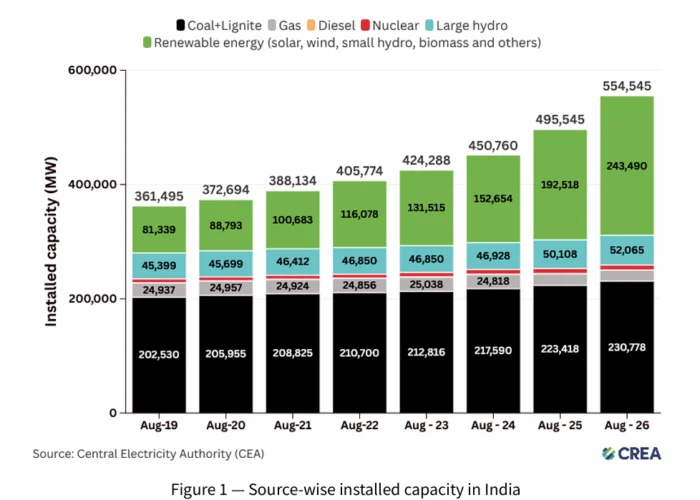
Indian solar analysts from Bridge to India and Mercom Capital Group have both already made known their expectations that the Indian government drive to deploy solar, and the dependence on Chinese imports so great, that the government is unlikely to take on this latest anti-dumping case. Policy makers are also keen to keep solar tariffs lows.
It’s worth noting that Bridge to India’s latest ‘India Solar Map’ tabbed domestic manufacturers as having just 10.6% of market share within India in the last fiscal year.
The source said the petition is no different than the cases seen in the US, Europe and more recently Turkey, in a global solar environment where under WTO norms there is “blatant” dumping of solar equipment taking place. As a result the petitioners are seeking protective duties under the belief that local Indian manufacturers cannot survive without them.
If a form of MIP was taken on, then there are concerns from the petitioners about a repeat of the circumvention seen in Europe, which led to on-going controversy about its efficacy, added the source.
The petitioners’ argument comes at a time when roughly 85% of total cell and module capacity globally is controlled by China, or Chinese-owned companies in Southeast Asia. The recent manufacturing spring in Southeast Asia was also partly driven by firms seeking to circumvent anti-dumping regulations in both Europe and the US.
The source said: “The issue in India is that we are not a relatively smaller economy like Taiwan and Singapore and we have another 300 million people coming into the job pool over the next 10 years. So [in] this country we need manufacturing and we would be at a geopolitical risk as well to simply change our oil imports into panel imports from China.”
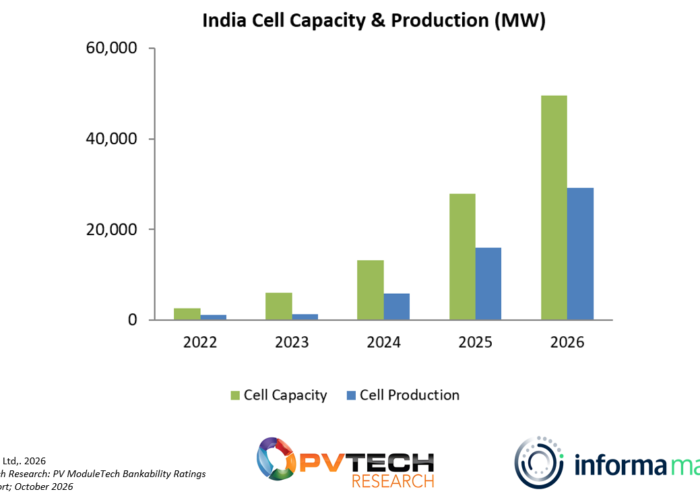
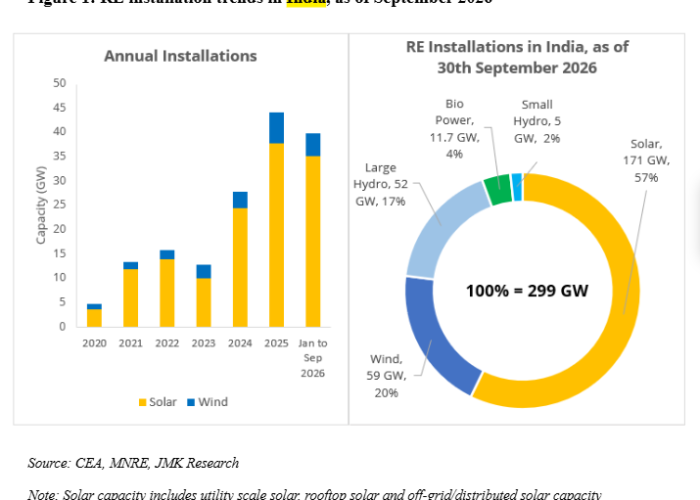
The argument is then not only for the need to maintain and grow Indian employment in manufacturing, but also to drive R&D, and improve energy security. With 8GW of PV predicted to come online in the coming fiscal year and targets for +12GW on an annual basis for the foreseeable future, the sector also represents a major opportunity. Yet, domestic manufacturing capacity remains far too small to satisfy the downstream appetite.
India’s ‘Make in India’ programme to promote manufacturing was certainly announced with plenty of conviction, but has more or less failed to provide any tangible advantage to domestic solar firms. Meanwhile, solar tariffs have reached such lows of late that any duties would surely drive up costs and result in an uptick in future prices after 12-18 months – the time it would take for any anti-dumping measures to be brought in.
The source said that while manufacturing is taking off in Brazil, South Africa and Turkey, the case successfully brought to the WTO by US company First Solar had derailed India's domestic content rules. India has faced similar issues with both the telecoms and electronics sectors, the person added.
Ministry of New and Renewable Energy (MNRE) was unable to provide PV Tech with comment. However, an MNRE official told Mercom Capital Group: “We believe in the people getting benefits, whichever way the people get cheap power it’s okay with us, and we know this administration up till now has made some good decisions, we are hoping whatever will be done, it will benefit the consumers as well as everyone else involved in the sector.”
This article has been updated to say that Websol is now one of the three firms leading the petition.