Indian solar manufacturer Vikram Solar added approximately 1.7GW of new orders in the second quarter of FY27, while its 9GW n-type tunnel oxide passivated contact (TOPCon) solar cell manufacturing facility in Tamil Nadu remains on track to produce its first cells in December 2026.
The Kolkata-based solar PV module manufacturer reported a 37% quarter-on-quarter (QoQ) improvement in absolute earnings before interest, taxes, depreciation, and amortisation (EBITDA) per watt despite lower quarterly volumes, supported by a shift towards domestic content requirement (DCR) sales and distribution and retail segments.
Try Premium for just $1
- Full premium access for the first month at only $1
- Converts to an annual rate after 30 days unless cancelled
- Cancel anytime during the trial period
Premium Benefits
- Expert industry analysis and interviews
- Digital access to PV Tech Power journal
- Exclusive event discounts
Or get the full Premium subscription right away
Or continue reading this article for free
Vikram Solar reported revenue from operations of INR10.77 billion (US$114.6 million) in Q2 FY27, down 2.93% year-on-year (YoY) from INR11.09 billion in Q2 FY26. Revenue also declined 31.07% sequentially from INR15.63 billion in Q1 FY27. Profit for the quarter fell 70% YoY to INR59.3 million from INR197.8 million, while declining 95.38% QoQ from INR1,284.9 million.
For the first half of FY27, Vikram reported revenue of INR26.4051 billion, an increase of 17.7% from INR22.4348 billion in H1 FY26. However, profit for the period declined 90.18% YoY to INR257.1 million from INR 2.6185 billion.
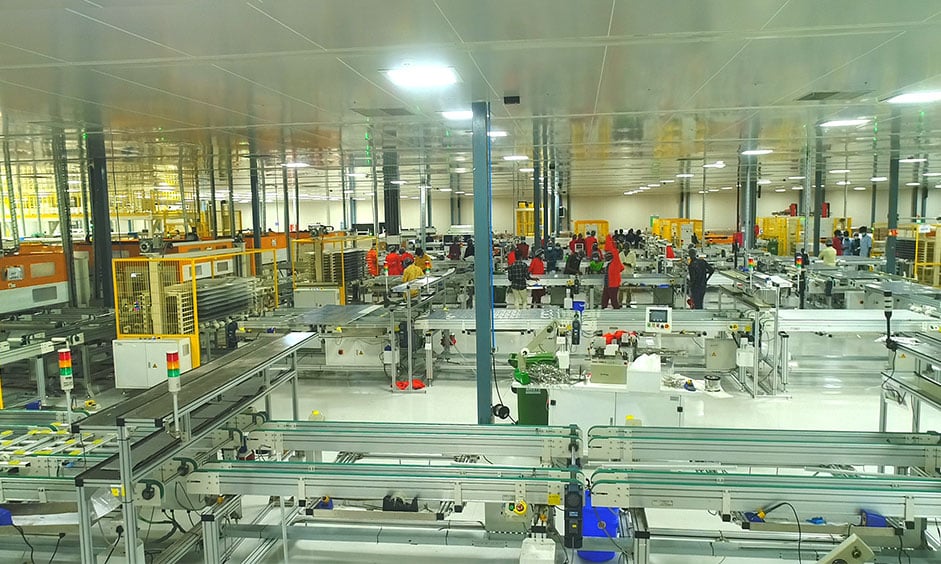
Vikram Solar attributed the sharp decline in profit to what it described as “transitory headwinds”, citing its reliance on externally procured solar cells, intense pricing pressure in the non-DCR module market amid industry overcapacity and lower capacity utilisation. Quarterly module volumes fell to 591MW, resulting in weaker fixed-cost absorption alongside higher depreciation and finance charges linked to ongoing expansions. The company also pointed to monsoon-related delays in project execution across India and customer deferrals in module offtake as additional factors weighing on quarterly performance.
Business mix and operating performance
The company added approximately 1.7GW of new orders during Q2 FY27, compared with 0.8GW in the preceding quarter. The orders span engineering, procurement and construction (EPC), government, independent power producer (IPP), commercial and industrial (C&I), and mid-market customers.
Vikram Solar’s DCR contribution increased from 7.5% in Q1 FY27 to 22% in Q2 FY27, while distribution and retail accounted for 44% of volumes, compared with 14% in the previous quarter. The company said the shift towards these segments supported better realisations and shorter cash cycles.
Despite lower quarterly volumes, absolute EBITDA per watt improved by approximately 37% sequentially. The company attributed the improvement to a better revenue mix, including higher DCR and distribution and retail contributions.
9GW TOPCon cell facility on track
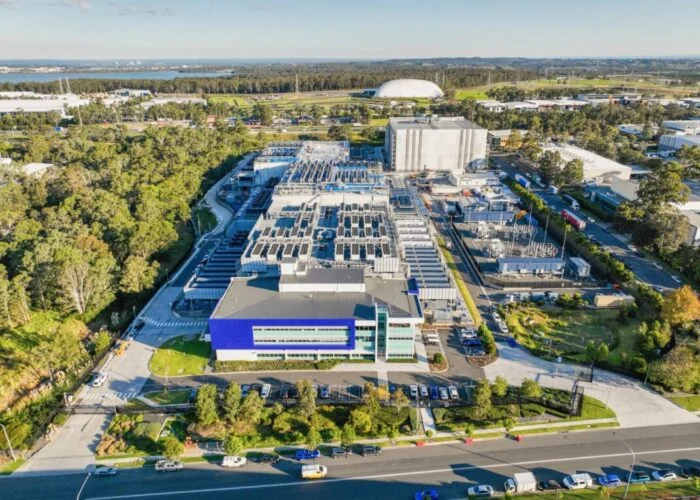
Vikram Solar’s 9GW N-type TOPCon solar cell manufacturing facility at Gangaikondan, Tamil Nadu, is on schedule to produce its first cells in December 2026. The full capacity will be commissioned in phases thereafter.
The cell facility forms part of the company’s backward integration strategy, aimed at strengthening supply-chain control, supporting future DCR volumes and reducing dependence on imported solar cells.
The company also plans to establish 9GW of ingot and wafer manufacturing capacity at the same site by FY29, extending its proposed manufacturing operations across modules, cells, wafers and ingots.
BESS facility planned for April 2027 operations
Separately, Vikram Solar’s wholly owned subsidiary, VSL PowerHive, is establishing a 7.5GWh-per-annum battery energy storage system (BESS) assembly facility at Oragadam, near Chennai, Tamil Nadu. Spread across approximately 165,000 square-foot, the facility is designed to scale up to 15GWh in subsequent phases.
The plant is scheduled for inauguration in January 2027, with commercial operations expected to begin in April 2027. VSL PowerHive also plans to enter battery cell manufacturing with 7.5GWh of capacity from 2028.
Commenting on the results, Gyanesh Chaudhary, chairman and managing director of Vikram Solar, said the company would focus on converting executable orders, improving asset utilisation, increasing DCR volumes and commissioning the cell project during the second half of FY27.
The company said it would measure its progress through execution and cash generation, while maintaining its focus on the long-term opportunity in the solar manufacturing sector.