First Solar has launched a new evolution of its Series 3 CdTe thin-film PV module platform. The ‘Series 3 Black’ is said to incorporate First Solar's latest advances in conversion efficiency as well as additional features to enhance its performance in utility-scale power plants.
Problem
According to First Solar, around 90% of a PV power plant’s are located in hot temperature climates where module temperatures are above 25°C. Due to temperature coefficient impacts on module yields, limiting the temperature impact provides operators and owners with the best possible plant yield. Providing further enhancements due harsh desert environments could increase the reliability of the modules.
Try Premium for just $1
- Full premium access for the first month at only $1
- Converts to an annual rate after 30 days unless cancelled
- Cancel anytime during the trial period
Premium Benefits
- Expert industry analysis and interviews
- Digital access to PV Tech Power journal
- Exclusive event discounts
Or get the full Premium subscription right away
Or continue reading this article for free
Solution
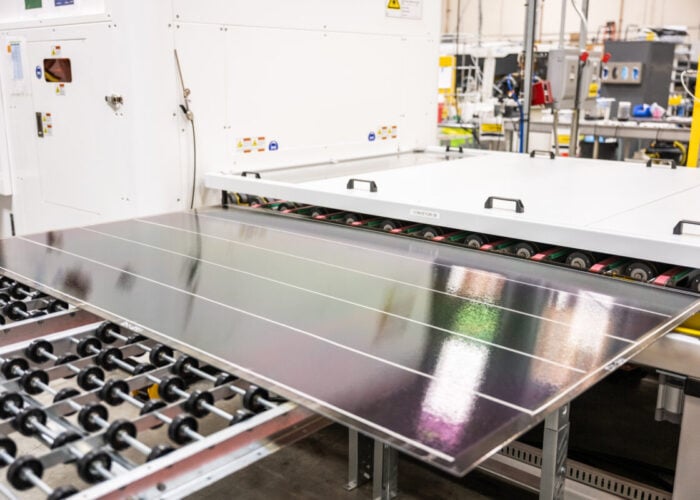
The all-black module's change in appearance results from the use of an advanced, all-black edge seal technology combined with an innovative encapsulation material that further enhances its field durability and demonstrates improvements in accelerated life testing results. Tighter scribe lines at the module edge are used. The Series 3 Black's performance in a wide range of operating environments is further validated by its new IEC 60068-2-68 “sand and dust test” certification, which measures durability in harsh desert environments characterized by blowing abrasive sand. First Solar retains its energy yield advantage in high temperature climates (temperature coefficient) where 90% of a PV plant’s generation can occur when module temperatures are above 25°C. The Series 3 Black is expected to have module conversion efficiencies of 12.9% to 13% plus.
Applications
Industrial and utility-scale PV power plants.
Platform
The certification complements existing IEC salt mist and ammonia certifications to provide a comprehensive range of independent testing that reflects world-class durability and performance in the harshest operating conditions. The Series 3 Black module maintains all the existing IEC certifications and UL listings for the Series 3 family which enable the 1000-volt system designs that typify the utility-scale power plants.
Availability
First Solar began to implement the Series 3 Black enhancements in production modules earlier this year.