Hanwha Q CELLS to launch first mono PERC and half-cut cell modules in major product update

September 9, 2016
Facebook
Twitter
LinkedIn
Reddit
Email
Hanwha Q CELLS is planning to introduce its first ever monocrystalline modules, which will use its PERC (Passivated Emitter Rear Contact) cell technology. Image: Hanhwa Q CELLS

‘Silicon Module Super League’ (SMSL) member Hanwha Q CELLS is planning to introduce its first ever monocrystalline modules, which will use its PERC (Passivated Emitter Rear Contact) cell technology. New and prototype products will be showcased at Solar Power International (SPI) in Las Vegas next week.

The introduction of mono PERC modules is a major move by Hanwha Q CELLS, having previously been dedicated to high-efficiency multicrystalline modules, more recently with PERC cell technology. 

This article requires Premium SubscriptionBasic (FREE) Subscription

Try Premium for just $1

  • Full premium access for the first month at only $1
  • Converts to an annual rate after 30 days unless cancelled
  • Cancel anytime during the trial period

Premium Benefits

  • Expert industry analysis and interviews
  • Digital access to PV Tech Power journal
  • Exclusive event discounts

Or get the full Premium subscription right away

Or continue reading this article for free

The new mono-PERC module series is being called ‘Q.PEAK’ and will be made available in 60-cell and 72-cell form factors with up to 305Wp and 370Wp respectively. 

The 60-cell version is expected to be made available in the first quarter of 2017, while the 72-cell version is to appear in the third quarter of 2017.

Hanwha Q CELLS also noted that prototype products include new Q.PEAK modules using half-cut cells and double glass technologies. The company noted that offering mono PERC modules provided a more complete solar portfolio.

Seong Woo Nam, Chairman and CEO of Hanwha Q CELLS said, “Our new, enhanced and 'Engineered in Germany' Q.ANTUM product portfolio is set to meet and exceed the expectations of PV customers and investors in the USA.”

The new product series covers residential, commercial and utility-scale markets. The Q.PEAK BLK-G4.1 is based on monocrystalline wafers using Q.ANTUM (PERC) technology. This 60-cell all black module reaches up to 300Wp power output and will be available starting in Q1 2017 with a white back sheet option reaching up to 305Wp. 
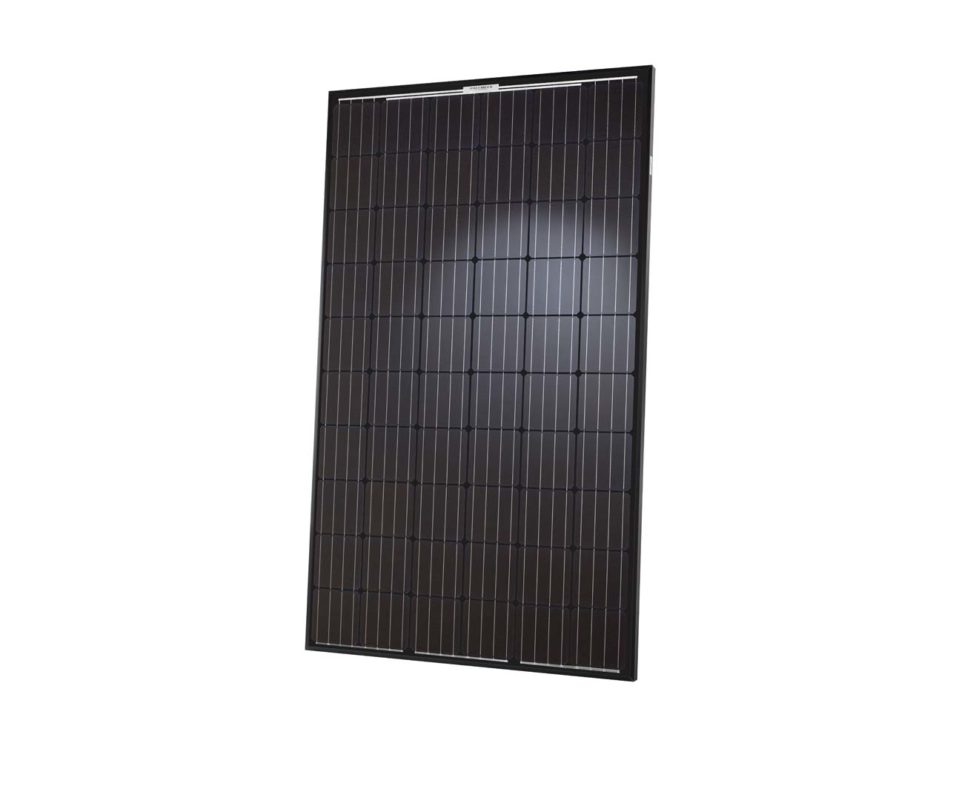
 

The Q.PEAK BLK-G4.1 is based on monocrystalline wafers using Q.ANTUM (PERC) technology.

The Q.PEAK L-G4.2 is based on monocrystalline wafers featuring 72-black cells, a white back sheet, a silver frame, and reaches up to 370Wp power output with availability starting in Q3 2017.
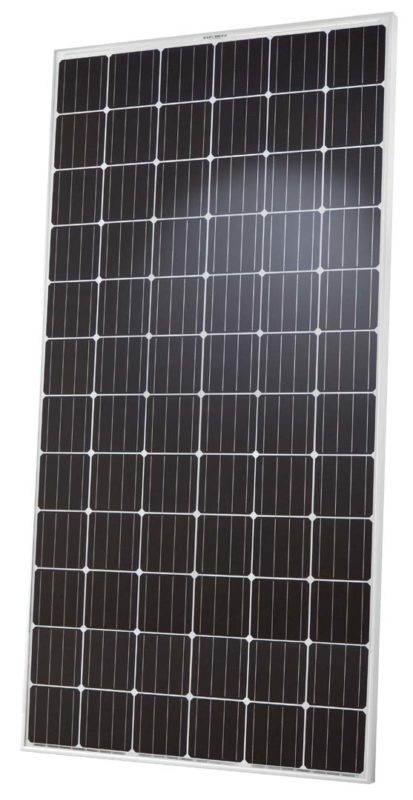
The Q.PEAK L-G4.2

The Q.PEAK-G4.1/MAX combines the advantages of cell-string optimizers with Q.ANTUM technology, while the Q.PEAK-G4.1/H and the Q.PEAK BLK-G4.1/H prototypes come in a black and white appearance. However, both products add half-cut cell technology to the Q.PEAK module series, boosting power output to up to 315 watts from a 60-cell solar module. 

The Q.PEAK-G4.1

Finally, the Q.PEAK L-G4.2/GH prototype combines half-cell and double glass technologies on monocrystalline Q.ANTUM (PERC) cell technology for durability in harsh climates with up to 380Wp power output. 
16 June 2026
Napa, USA
PV Tech has been running PV ModuleTech Conferences since 2017. PV ModuleTech USA, on 16-17 June 2026, will be our fifth PV ModulelTech conference dedicated to the U.S. utility scale solar sector. The event will gather the key stakeholders from solar developers, solar asset owners and investors, PV manufacturing, policy-making and and all interested downstream channels and third-party entities. The goal is simple: to map out the PV module supply channels to the U.S. out to 2028 and beyond.
13 October 2026
San Francisco Bay Area, USA
PV Tech has been running an annual PV CellTech Conference since 2016. PV CellTech USA, on 13-14 October 2026 is our third PV CellTech conference dedicated to the U.S. manufacturing sector. The events in 2023, 2024 and 2025 were a sell out success and 2026 will once again gather the key stakeholders from PV manufacturing, equipment/materials, policy-making and strategy, capital equipment investment and all interested downstream channels and third-party entities. The goal is simple: to map out PV manufacturing in the U.S. out to 2030 and beyond.

Read Next

April 10, 2026
India has become the third-largest country by installed renewable energy capacity, reaching 274.68, with over 150GW of solar PV capacity, according to statistics from the Ministry of New and Renewable Energy (MNRE).
April 8, 2026
PV manufacturing capital expenditure is expected to rebound this year, following two years in the doldrums as the industry weathered a global oversupply of modules, new figures show.
Premium
April 8, 2026
After a sharp decline in 2023, PV manufacturing capital expenditure is set to bounce back this year, and not just in China, writes Moustafa Ramadan.
April 7, 2026
Sangam Solar One, a subsidiary of Indian solar PV manufacturer Waaree Energies, has commissioned a 3GW PV module manufacturing facility in Samakhiali, Kutch, Gujarat.
April 2, 2026
Monocrystalline passivated emitter rear contact (PERC) modules saw a 20% increase in average price in the US, according to Anza.
Premium
April 2, 2026
Analysis: Some in the US solar industry are positioning tariffs as a silver bullet for manufacturers, but it may not be as straightforward as that.

Upcoming Events

Solar Media Events
April 15, 2026
Milan, Italy
Solar Media Events
June 16, 2026
Napa, USA
Solar Media Events
October 13, 2026
San Francisco Bay Area, USA
Solar Media Events
November 3, 2026
Málaga, Spain
Solar Media Events
November 24, 2026
Warsaw, Poland