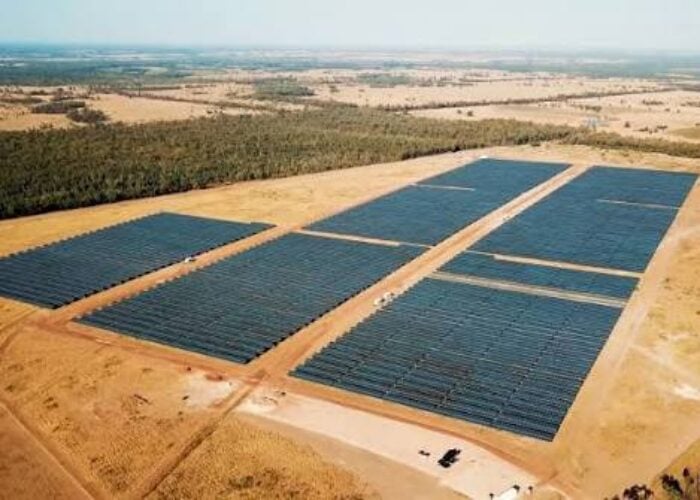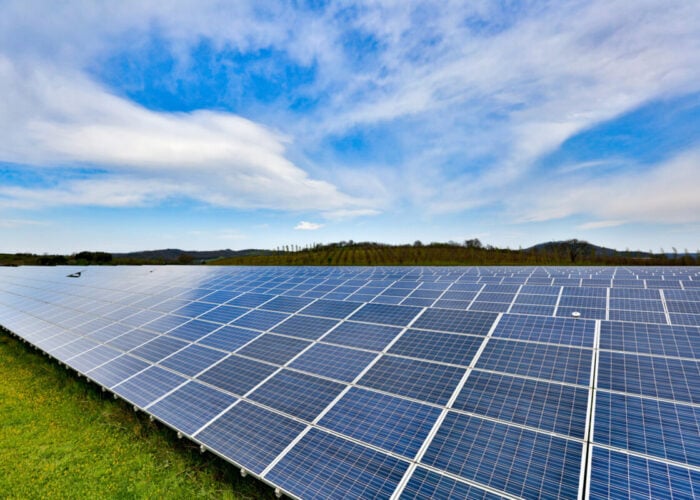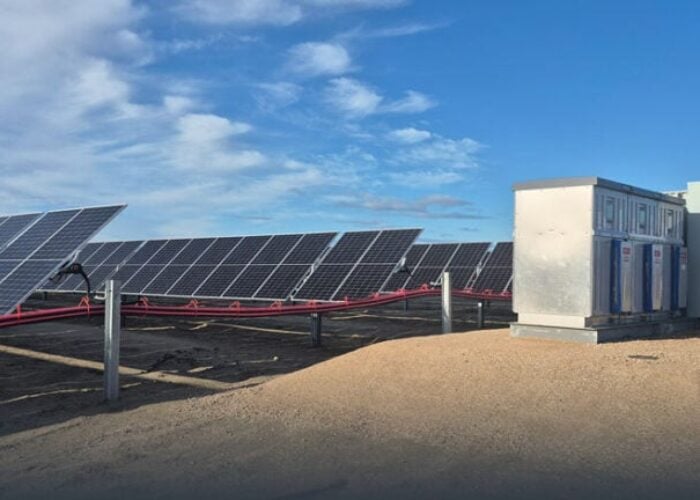
A new study has shown that dramatic reductions in the cost of PV systems in the past 50 years are the result of a complex web of innovations, many originating outside the immediate PV industry.
A paper published this week by the Massachusetts Institute of Technology (MIT) used a new modelling approach to trace 81 separate advances that have influenced PV system costs since the 1970s.
Try Premium for just $1
- Full premium access for the first month at only $1
- Converts to an annual rate after 30 days unless cancelled
- Cancel anytime during the trial period
Premium Benefits
- Expert industry analysis and interviews
- Digital access to PV Tech Power journal
- Exclusive event discounts
Or get the full Premium subscription right away
Or continue reading this article for free
Many of these were found to have come from domains outside the solar sector, such as oil and gas drilling, construction processes and legal practices, as well as related technology spheres such as metallurgy, glass manufacturing and semiconductor production.
Professor Jessika Trancik, the study’s senior author, said: “Our results show just how intricate the process of cost improvement is, and how much scientific and engineering advances, often at a very basic level, are at the heart of these cost reductions. A lot of knowledge was drawn from different domains and industries, and this network of knowledge is what makes these technologies improve.”
The MIT team combined quantitative modelling of technical innovations with detailed qualitative analysis to ascertain how these advances affected costs.
“Our quantitative cost model guided the qualitative analysis, allowing us to look closely at innovations in areas that are hard to measure due to a lack of quantitative data,” said the report’s co-lead author, Goksin Kavlak.
The research also separated PV module costs from balance-of-system (BOS) costs, such as mounting, wiring and inverters, to understand the different characteristics of the cost reductions historically seen in each area.
“By examining innovations both at the BOS level and within the modules, we identify the different types of innovations that have emerged in these two parts of PV technology,” Kavlak said.
Broadly, this revealed that module innovations often reduced costs by advancing manufacturing tools and processes that improved material quality, while many BOS innovations reduced costs through a combination of component design changes, integration, automation, digitalisation and standardisation.
“Both module and BOS hardware innovations show the benefits of PV’s position within an ‘ecosystem’ of continuously advancing technologies in many industries, in particular semiconductors and electronics, and also point to the importance of public institutions for accelerating testing, permitting and training,” the paper said.
Looking ahead, the researchers identified advances in computing power, AI and robotics as promising future drivers of cost reductions. This is particularly the case in BOS, where advances in automated engineering review systems and remote site assessment software show strong potential.
“In terms of knowledge spillovers, what we’ve seen so far in PV may really just be the beginning,” added fellow report co-author Magdalena Klemun.
The publication of the report follows a sustained fall in the levelised cost of electricity (LCOE) for the global solar sector, with figures from Lazard showing that this fell to US$38-78/MWh in 2025.