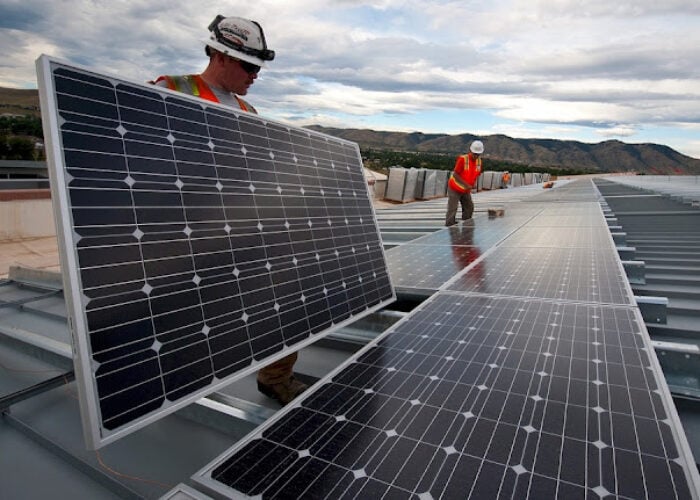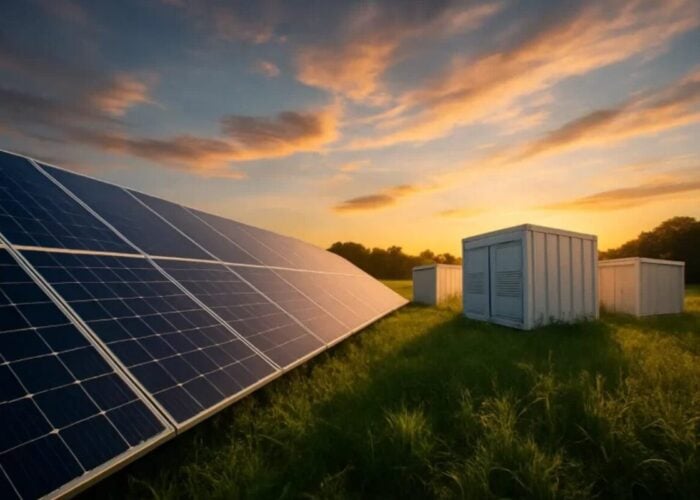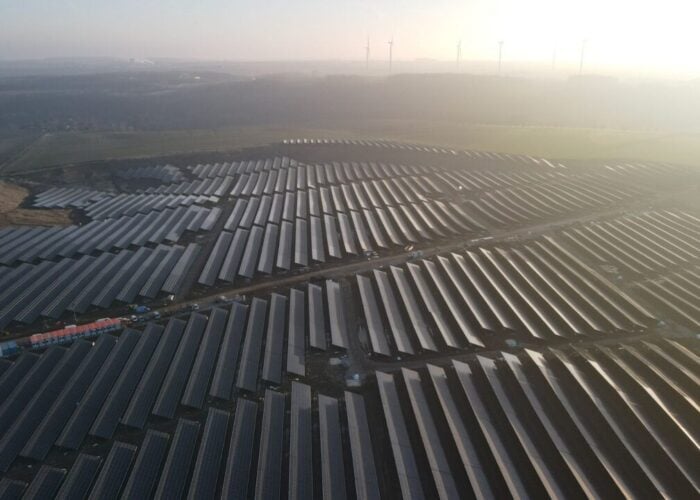
“Hybridise or die,” warned Priit Lepasepp, CEO of Sunly, opening the panel on solar and storage valuations at Solar Media’s Solar Finance & Investment Europe summit, held in London. In markets with high renewable penetration, standalone solar is increasingly exposed, and hybrid solutions combining PV and battery storage are no longer optional.
Isabel Rodriguez de Rivera, managing director at Nuveen Infrastructure, said merchant risk has become tangible. “What we are seeing now is the flip side of portfolios optimised for merchant upside,” she said. “Solar assets built with warranties and EPC contracts are no longer enough. Hybridisation with batteries or wind is essential to stabilise revenue and mitigate risk. Active revenue management is critical.”
Try Premium for just $1
- Full premium access for the first month at only $1
- Converts to an annual rate after 30 days unless cancelled
- Cancel anytime during the trial period
Premium Benefits
- Expert industry analysis and interviews
- Digital access to PV Tech Power journal
- Exclusive event discounts
Or get the full Premium subscription right away
Or continue reading this article for free
Lucas Pegoraro, country head of UK at Cubico Sustainable Investments, outlined the evolution of solar valuations over the past five years. From 2020 to 2021, low interest rates and a strong ESG agenda created a surge in capital flowing into renewables. Returns were low but competition for assets was high. By 2022 and 2023, rising inflation, supply chain pressures and the Ukraine conflict introduced volatility. Valuations plateaued by 2024 and 2025, and investors became more selective, focusing on certainty rather than potential growth.
Hybridisation is increasingly delivering that certainty. Lepasepp highlighted a Baltic project where adding a 2MWh battery lifted earnings from €84 per MWh to €260, securing 91% of annual revenue. Shashank Gupta, investment director at AMPYR Solar Europe, noted that in Germany, PV with batteries can command 30% to 40% higher prices than cleared EEG tariffs, creating a clear commercial incentive.
Cost reductions and technological advances are driving uptake. Lepasepp explained that earlier PV installations were large and space intensive, while modern plants are more efficient, requiring less land per MW. Batteries have followed a similar trajectory, moving from 2MWh containers to 8MWh units, reducing capital expenditure and improving economics.
Regulation and market structure remain key constraints. Spain, for example, has high demand for batteries but lacks regulatory clarity, slowing deployment. In the UK, oversaturation and grid congestion limit opportunities, while Italy leverages government incentives to support storage integration. Hybrid projects succeed where regulation aligns with technology and finance.
The panel also highlighted emerging opportunities for hybridisation in data centres. Excess renewable generation can charge batteries at night and discharge during peak hours, reducing grid dependence and lowering electricity costs. This model could unlock growth in regions such as Scotland, where offshore wind potential and congestion charges create a unique commercial opportunity.
Valuations now favour assets with secured land, grid connection and planning approval. Investors prioritise deliverability over potential. Pegoraro said certainty drives value. “Assets connected to the grid sooner command a premium. Investors want predictable revenue streams and active portfolio management,” he said.
The panellists agreed that standalone PV is facing increasing risk. Successful developers will integrate batteries, optimise revenue streams and engage with regulation. Lepasepp concluded, “The technology is ready, costs have fallen, and regulation is catching up. Hybridisation is the path forward. Projects that do not adapt will be left behind.”
In January 2026, Natasha Luther-Jones, a partner at law firm DLA Piper, said battery energy storage systems and solar were becoming “the perfect bedfellows” as investors increasingly backed co-located projects across Europe. Speaking to PV Tech Premium, she highlighted growing momentum behind hybrid solar and storage developments.
According to SolarPower Europe, 2024 marked the 11th consecutive year of record BESS installations in Europe, with the region expected to add a further 400GWh of capacity by 2029, representing a sixfold expansion of the sector.