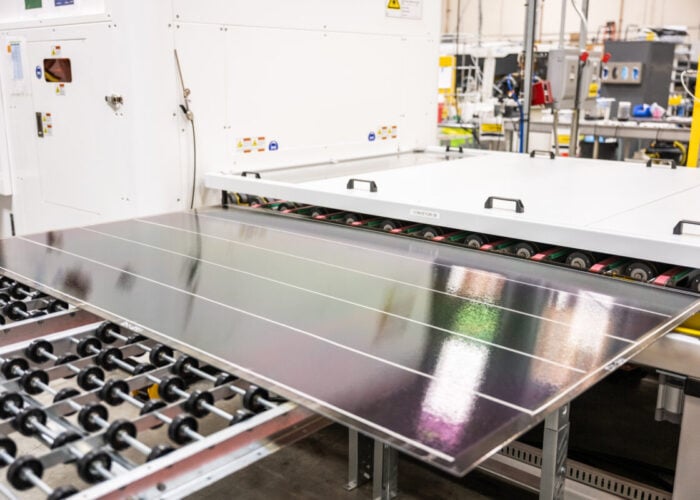
Singulus Technologies had launched the ‘SINGULAR ICP-PECVD’ platform for the development and production of high efficiency silicon solar cells, requiring passivation layers for R&D and production applications. The platform has been applied at research centers and institutes in Europe, America and Asia.
Problem
Try Premium for just $1
- Full premium access for the first month at only $1
- Converts to an annual rate after 30 days unless cancelled
- Cancel anytime during the trial period
Premium Benefits
- Expert industry analysis and interviews
- Digital access to PV Tech Power journal
- Exclusive event discounts
Or get the full Premium subscription right away
Or continue reading this article for free
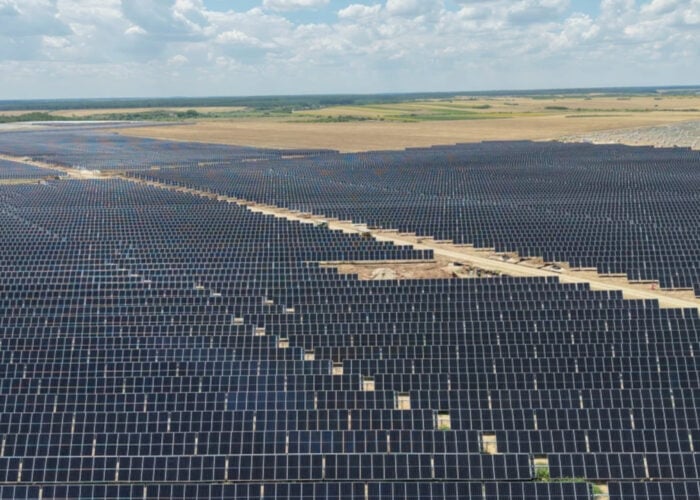
To reduce the costs of PV electricity, continuous improvements with respect to efficiency and manufacturing cost of PV cells and modules are necessary.
Solution
SINGULAR is an ICP-PECVD coating tool for crystalline silicon solar cells which is used for the mass production of silicon solar cells. The tool is based on static in-line production, which combines the advantages of in-line substrate transport and static processing. It allows the coating of complex layer systems, such as layer stacks or gradients consisting of different materials. The process variability, the small tool footprint and high reliability are said to be required for high cell efficiencies, while providing improved total cost of ownership and high uptime. The key feature of the machine is the ICP–PECVD technology. The inductively coupled plasma (ICP) excitation allows ideal control of film composition and density at high deposition rates.
Applications
Crystalline solar cell passivation layers for R&D and volume production.
Platform
The system is of a modular design, consisting of several vacuum chambers which can be customized. Due to this high flexibility, new manufacturing processes for cell efficiencies above 20% can be developed on a manufacturing platform. This is intended to guarantee a fast and easy transfer to production.
Availability
September 2011 onwards.