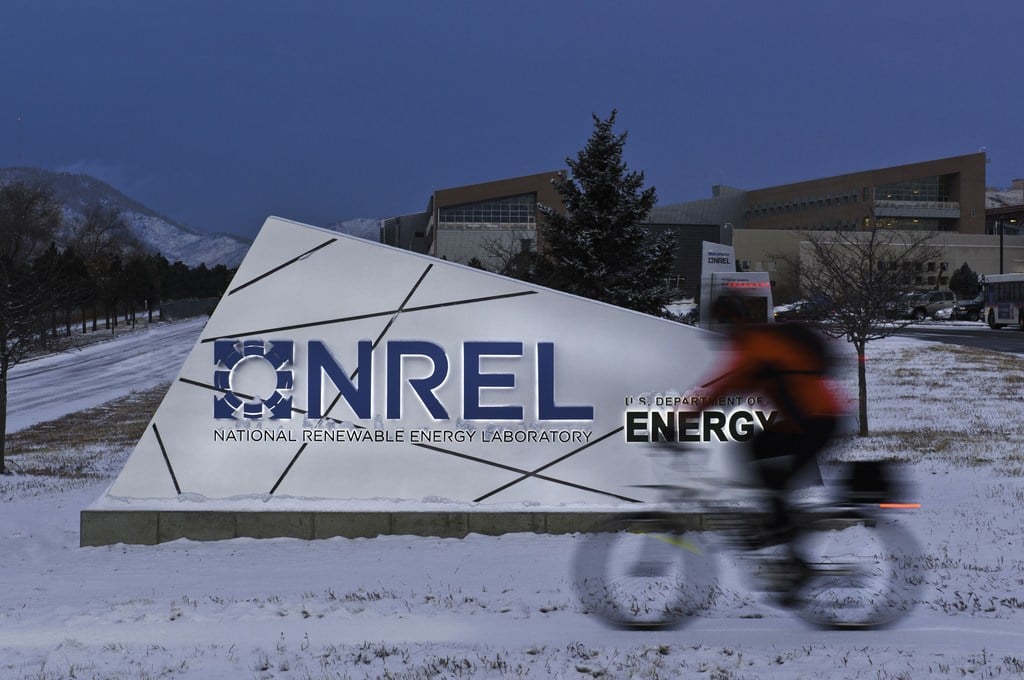
The US Department of Energy (DOE) has renamed the National Renewable Energy Laboratory (NREL) the National Laboratory of the Rockies.
A statement on the move said the new name reflected the Trump administration’s “broader vision” of the organisation’s applied energy research, which has traditionally focused on alternative and renewable energy sources.
Try Premium for just $1
- Full premium access for the first month at only $1
- Converts to an annual rate after 30 days unless cancelled
- Cancel anytime during the trial period
Premium Benefits
- Expert industry analysis and interviews
- Digital access to PV Tech Power journal
- Exclusive event discounts
Or get the full Premium subscription right away
Or continue reading this article for free
The renaming is effective immediately and will be reflected in all public communications and official correspondence, the lab’s statement said.
Assistant energy secretary Audrey Robertson said: “The energy crisis we face today is unlike the crisis that gave rise to NREL. We are no longer picking and choosing energy sources. Our highest priority is to invest in the scientific capabilities that will restore American manufacturing, drive down costs and help this country meet its soaring energy demand. The National Laboratory of the Rockies will play a vital role in those efforts.”
“For decades, this laboratory and its scientific capabilities have pushed the boundaries of what’s possible and delivered impact to the nation,” said Jud Virden, laboratory director of the National Laboratory of the Rockies. “This new name embraces a broader applied energy mission entrusted to us by the Department of Energy to deliver a more affordable and secure energy future for all.”
NREL was founded in response to the 1973 oil crisis, beginning its work in 1977 under the name Solar Energy Research Institute. In 1991, it was elevated to national laboratory status under the presidency of George H.W. Bush and renamed NREL to reflect its broader range of work around renewable energy.
NREL has already been a victim of the Trump administration’s generally anti-renewables stance, with over 100 staff slashed from its headquarters in Golden, Colorado, earlier in the year.
Several staffers at the former NREL took to LinkedIn to express their reactions to the laboratory’s change of name and remit.
One, senior scientist Craig Perkins, wrote. “RIP NREL. It’s a sad day to see renewable energy officially de-emphasised at our lab. I feel bad for all the people who came here with renewable energy as a passion and who now have to make some hard choices about their futures. On the bright side, solar power and other renewable energies will eventually prevail over the current political winds, guaranteed. It just might be elsewhere.”
Another scientist, Lance M. Wheeler, wrote: “Most of us here came specifically to further the mission of deployment of renewable energy to decrease the cost of electricity and reduce our reliance on foreign sources of energy. I hope that mission will live beyond the name change.”
He highlighted, however, that the name change was in keeping with work the laboratory was already doing in areas beyond renewable energy, such as AI: “One rationale for the name change is that our work extends beyond renewables. I’m excited to share an excellent example of that type of work where we address how we will sense and process information in the future—a significantly growing need as we automate our vehicles and build our AI infrastructure.”