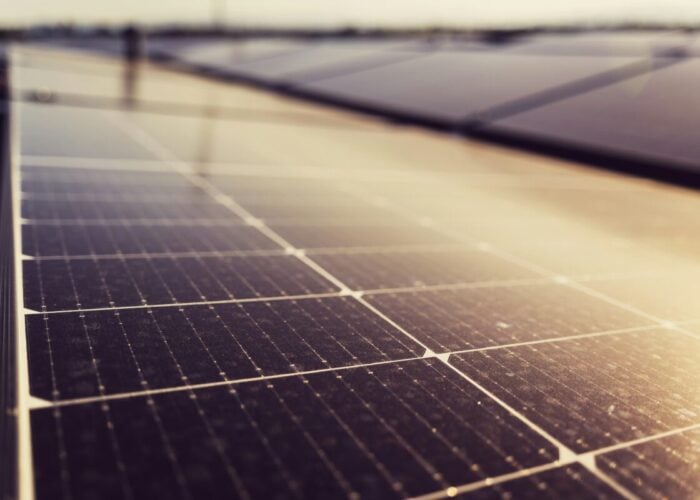
In IDC Energy Insights latest report, Technology Selection: Reducing Fire Risk in Rooftop Solar PV Systems, not only are the risks of a fire occurring on a rooftop PV solar system addressed, but so are the methods of prevention. IDC acknowledges that most owners of rooftop PV systems tend to overlook the potential fire risks as PV systems require little maintenance and don’t have moving parts. However, one of the leading risks of a fire on a rooftop system lies in the possibility for electricity to arc across an unwanted gap in the system’s electrical circuit creating an arc-fault.
“The risk of fire must be taken into account when evaluating any electrical system that operates at high voltages and high power levels, and rooftop solar PV systems are no exception,” said Jay Holman (pictured), research manager, IDC Energy Insights. “Arc-faults pose the greatest fire risk. Detecting and extinguishing arc-faults in DC PV systems will require the development of new devices called DC PV Arc-Fault Circuit Interrupters (DC PV AFCIs), designed to detect the signature of an arc-fault in the current of a PV system and stop the current from flowing through the arc-fault.”
Try Premium for just $1
- Full premium access for the first month at only $1
- Converts to an annual rate after 30 days unless cancelled
- Cancel anytime during the trial period
Premium Benefits
- Expert industry analysis and interviews
- Digital access to PV Tech Power journal
- Exclusive event discounts
Or get the full Premium subscription right away
Or continue reading this article for free
While the 2011 U.S. National Electric Code (NEC) requires for arc-fault protection on select new rooftop PV systems and vendors are cultivating technologies that meet and exceed the NEC requirement, IDC states that the efforts are being hampered by the solar PV industry not having a standard against which to certify the new devices coupled with a hindered adoption of the NEC standard by several states and jurisdictions. Consequently, IDC concedes that until all these different components come together, it could potentially be years before new PV systems installed in the U.S. have the new protections against fire risks.
The study goes into greater detail into what ways the solar PV systems can fall short and cause fires as well as explaining ways to detect and diminish any problems to prevent a fire from occurring. In addition, IDC’s study details the NEC’s 2011 additions, which were made to deal with the risk of fire in solar PV systems and the impact on how the changes on solar systems in the U.S. are evaluated.
For the full study by IDC Energy, click here.