The lower house of Japan's parliament has passed a new green bill aimed at promoting investment in solar and other renewable energy sources and weaning the country off nuclear power.
Before March’s Fukushima nuclear plant disaster, Japan was planning to ramp up its nuclear capacity to cater for 50% of its energy demand by 2030. However, the fallout from Fukushima has undermined public confidence in the safety of atomic power and created uncertainty over the future of Japan’s energy policy.
Try Premium for just $1
- Full premium access for the first month at only $1
- Converts to an annual rate after 30 days unless cancelled
- Cancel anytime during the trial period
Premium Benefits
- Expert industry analysis and interviews
- Digital access to PV Tech Power journal
- Exclusive event discounts
Or get the full Premium subscription right away
Or continue reading this article for free
And, in what is likely to be his final act in office, Prime Minister Naoto Kan is attempting to pass the green bill and stay true to his post-Fukushima pledge of overhauling Japan’s energy portfolio.
The bill's passage follows weeks of intense deliberation in Parliament. Should the upper house also approve the reforms, which requires utilities to buy any electricity from solar and other renewable sources at set rates for up to 20 years, the bill will be passed into law and come into force next July.
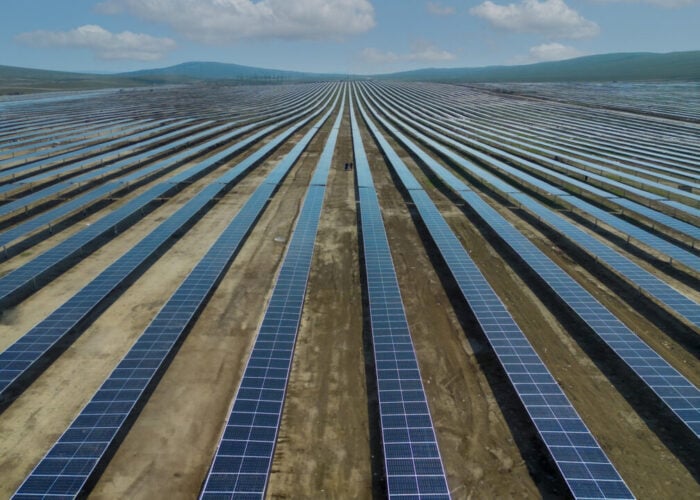
Solar is expected to be the main beneficiary and initial growth area as it can be installed quickly. On Tuesday, Trade Minister Banri Kaieda told a parliament committee that the bill was expected to help renewable capacity increase by 30GW over the next decade.
However, critics claim the bill’s impact on energy policy could be diluted because of a failure to resolve certain key details. Among these are the price paid by utilities, which will not be decided until a parliament-appointed panel meets next year.
Another concern comes in the form of Japan's recent history of short-lived governments. This instability brings with it the implied risk of a change in policy by a future administration, which will be an immediate concern for investors; the bill is due for a mandatory review after a new plan for Japan’s energy supply mix target in 2030 is finalised next year. A further mandatory review is due in 2014.
For solar, the ambitious growth targets bring with them another problem: panel supply. In 2010, Japan’s panel sales totalled 992MW, and this figure would need to grow sixfold to cater for a 10GW industry.
If domestic panel makers remain hesitant to add production lines, one possible scenario would see imports rise to fill the shortfall, according to Mitsubishi Research Institute's environment and energy research division general manager, Kazumichi Ito. Yet this would defeat the bill's objective of helping promote the development of the renewable energy industry in Japan.
“My concern is that the revised bill, which aims to promote the [renewable energy] market for an initial three-year period, now appears to have nothing to do with its original purpose of fostering the renewable energy industry in a long run,” Ito said.