LONGi launches new Hi-MO 6 HPBC module for distributed generation market

Facebook
Twitter
LinkedIn
Reddit
Email
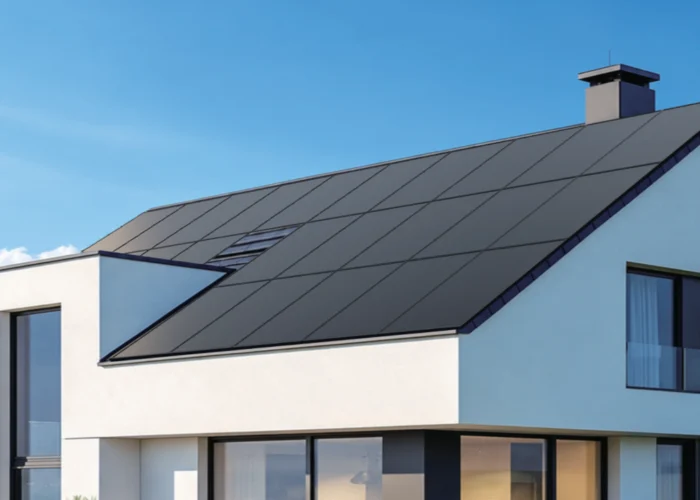
LONGi is betting on HPBC cell technology being dominant in the future. Image: LONGi

PV Tech and LONGi are co-hosting a webinar this afternoon following the launch of its new module. LONGi’s technical lead for Europe will be going into detail about the benefits of the HPBC cell technology. You can register for that event, for free, here.

Solar Module Super League (SMSL) member LONGi has launched a new PV module for the distributed generation (DG) and rooftop market.

This article requires Premium SubscriptionBasic (FREE) Subscription

Try Premium for just $1

  • Full premium access for the first month at only $1
  • Converts to an annual rate after 30 days unless cancelled
  • Cancel anytime during the trial period

Premium Benefits

  • Expert industry analysis and interviews
  • Digital access to PV Tech Power journal
  • Exclusive event discounts

Or get the full Premium subscription right away

Or continue reading this article for free

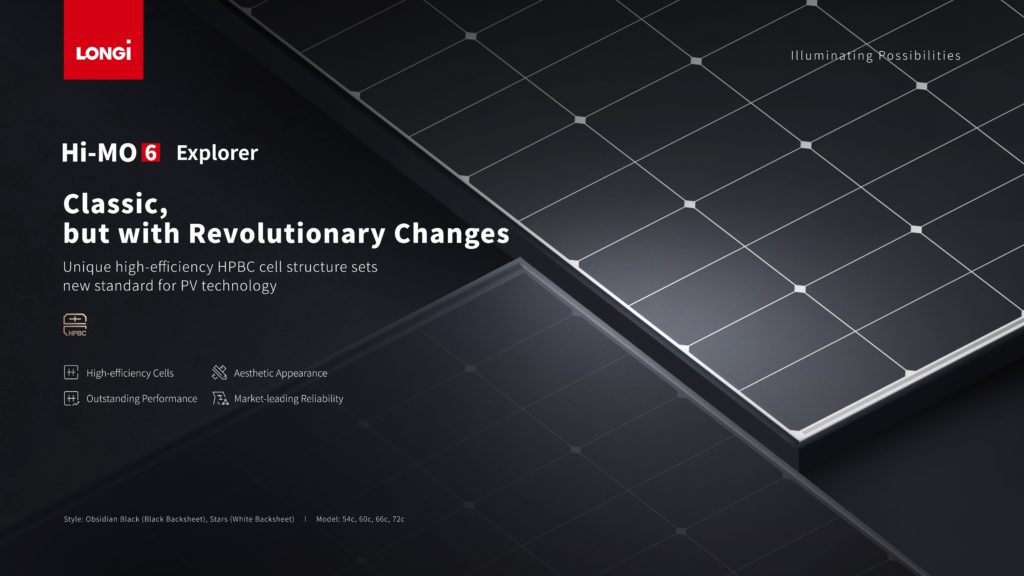
Its Hi-MO 6 PV module uses Hybrid Passivated Back Contact (HPBC) cell technology, with LONGi claiming a maximum efficiency of 22.8% in mass production.  

In August, LONGi made a point of lauding the potential of HPBC cells as it branded TOPCon a “transitionary” technology.

HPBC is a new generation of high-efficiency solar cell technology that uses front-side busbar-free design and, according to LONGi, can considerably improve the cell’s light absorption and conversion capabilities by adjusting the cell’s internal structure, resulting in higher output.

“Modules equipped with HPBC cell technology can generate a greater volume of energy under high-temperature and low-irradiation conditions and also have superior power degradation performance,” LONGi said in a statement.

The company said that, in global power generation simulations, its Hi-MO 6 modules demonstrated a significant power generation advantages over PERC products, with “an average power generation increase of up to 10% in typical scenarios”.

The new module employs back contact soldering technology, which uses the one-line soldering structure rather than a traditional Z-shaped structure, to enhance the module’s resistance to cracking, LONGi said.

The Hi-MO 6 includes four series – Explorer, Scientist, Guardian and Artist – all of which are in the standard M10 size (182mm) and are available in 72C, 66C, 60C and 54C types. “The flagship Hi-MO series modules have contributed to upgrading global energy structure,” said LONGi’s vice president Dennis She. “The Hi-MO 6 is another solid step toward promoting energy equity.”
16 June 2026
Napa, USA
PV Tech has been running PV ModuleTech Conferences since 2017. PV ModuleTech USA, on 16-17 June 2026, will be our fifth PV ModulelTech conference dedicated to the U.S. utility scale solar sector. The event will gather the key stakeholders from solar developers, solar asset owners and investors, PV manufacturing, policy-making and and all interested downstream channels and third-party entities. The goal is simple: to map out the PV module supply channels to the U.S. out to 2028 and beyond.

Read Next

June 9, 2026
Sun.store's latest PV Index found that the PV Purchasing Managers' Index (PMI) increased to 70 in May from 66 in April 2026.
June 8, 2026
US solar installer SUNation Energy and merchant cell manufacturer Suniva have agreed to merge to create an integrated platform combining US-based solar manufacturing with residential and commercial installation services.
June 8, 2026
Chinese solar tracker producer Arctech Solar signed 3GW of supply deals at the SNEC conference in Shanghai, China, last week.
June 5, 2026
The Western Australian government has allocated AU$17.8 million (US$12.7 million) in its 2026-27 State Budget to build the state's capacity to recycle solar modules and embedded batteries, under its Remade in WA programme.
June 4, 2026
The opening of this week’s SNEC show in Shanghai was marked by a shared recognition of the need for China’s PV industry to move beyond unchecked capacity expansion and brutal competition, writes Carrie Xiao.
June 4, 2026
As solar imports to the US face increasing restrictions, domestic manufacturers are racing to build upstream production capability. With 66GW of module capacity chasing just 11GW of domestic cells, the supply chain crunch is reaching a critical inflection point, write Moustafa Ramadan and Joe Hennessy.

Upcoming Events

Solar Media Events
June 16, 2026
Napa, USA
Media Partners, Solar Media Events
June 30, 2026
Sacramento, California
Media Partners, Solar Media Events
August 25, 2026
São Paulo, Brazil
Media Partners, Solar Media Events
September 1, 2026
Mexico City, Mexico
Media Partners, Solar Media Events
September 9, 2026