Meyer Burger supplying REC Group with diamond wire cutting technology

July 6, 2017
Facebook
Twitter
LinkedIn
Reddit
Email
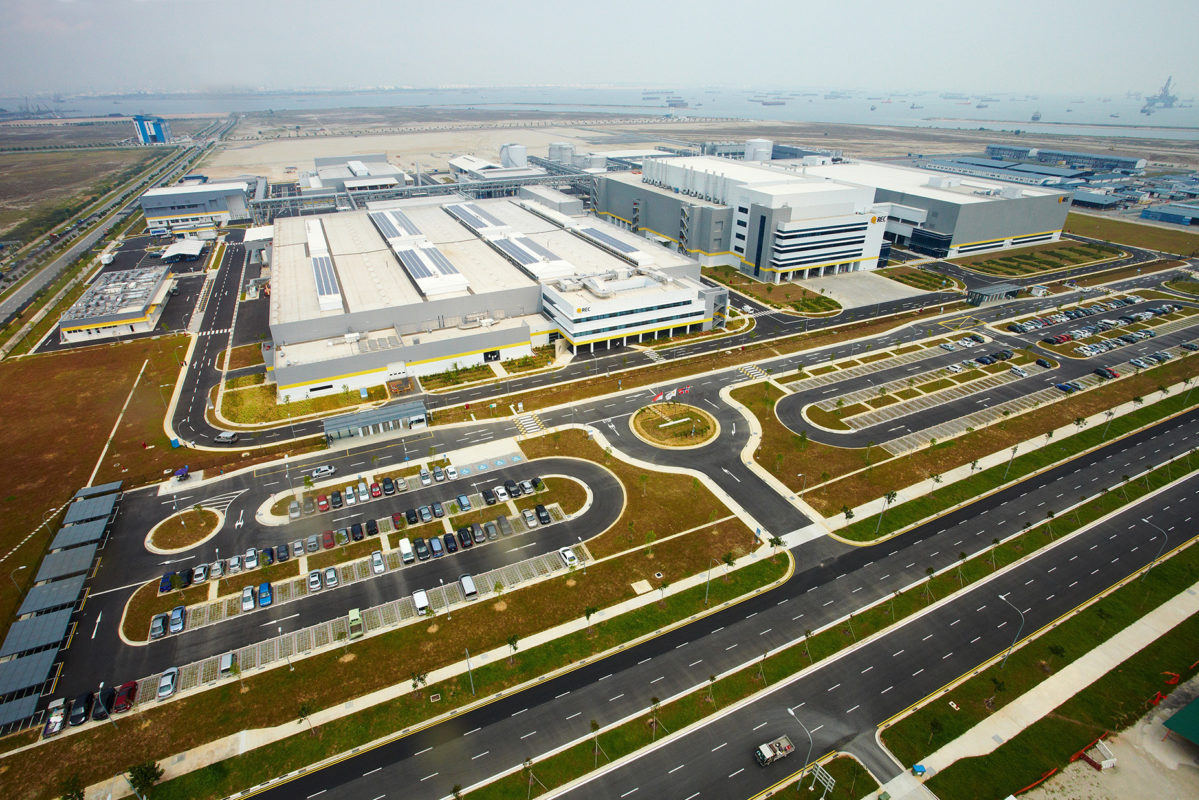
The company has around 1,500MW of module capacity in Singapore. The ingot/wafer facilities are on the left, while cell and module facilities on the right of the picture. Image: REC Group

Leading PV manufacturing equipment supplier Meyer Burger has secured a CHF 12 million (US$12.4 million) contract to supply integrated PV module manufacturer, REC Group with its DW 288 Series 3 diamond wire cutting platform.

Meyer Burger said that REC Group, which has its ingot/wafer and cell and module assembly plants located at a dedicated complex in Singapore was planning to completely migrate multicrystalline wafer production to diamond wire cutting technology, with delivery of equipment starting in the third quarter of 2017.

This article requires Premium SubscriptionBasic (FREE) Subscription

Try Premium for just $1

  • Full premium access for the first month at only $1
  • Converts to an annual rate after 30 days unless cancelled
  • Cancel anytime during the trial period

Premium Benefits

  • Expert industry analysis and interviews
  • Digital access to PV Tech Power journal
  • Exclusive event discounts

Or get the full Premium subscription right away

Or continue reading this article for free

Hans Brändle, CEO of Meyer Burger Technology Ltd said, “This important order confirms our excellent long-term relationship with REC and once more demonstrates that Meyer Burger’s DW 288 Series 3 diamond wire cutting technology remains the industry-leading solution for the cost-effective production of solar wafers. The product is highly attractive to customers in both the mono-crystalline as well as the multi-crystalline wafer markets.”

The contract also includes installation and commissioning as well as service support and on-site training. 

The move to diamond wire cutting of all its multicrystalline wafers will require REC Group to select wafer texturing technology to complement the wire cutting, often referred to as ‘Black Silicon’ technology. REC Group is also transitioning all production to PERC (Passivated Emitter Rear Cell) and half-cut cell technology. The company has around 1,500MW of module capacity in Singapore.

Steve O’Neil, CEO of REC Group added, “As an industry leader for high-power multi-crystalline solar panels for many years, our success is also based on cutting-edge and cost effective manufacturing technology. Choosing Meyer Burger and their outstanding diamond wire cutting technology enables us to continue to provide high-quality solar panels with a strong reliability at a competitive price.”
13 October 2026
San Francisco Bay Area, USA
PV Tech has been running an annual PV CellTech Conference since 2016. PV CellTech USA, on 13-14 October 2026 is our third PV CellTech conference dedicated to the U.S. manufacturing sector. The events in 2023, 2024 and 2025 were a sell out success and 2026 will once again gather the key stakeholders from PV manufacturing, equipment/materials, policy-making and strategy, capital equipment investment and all interested downstream channels and third-party entities. The goal is simple: to map out PV manufacturing in the U.S. out to 2030 and beyond.
9 March 2027
Location To Be Confirmed
PV CellTech Global will gather the key stakeholders from PV manufacturing, equipment/materials, policy-making and strategy, capital equipment investment and all interested downstream channels and third-party entities. Join us in Q1 of 2027

Read Next

February 6, 2026
Chinese solar PV manufacturer Aiko Solar will license a raft of solar cell technology patents from Singapore-based manufacturer Maxeon.
February 5, 2026
Vietnam is the cheapest country to produce fully domestic solar modules outside of China, according to a report from the International Renewable Energy Agency (IRENA).
February 5, 2026
Explainer: Two new studies offer fresh insights into the performance of TOPCon solar modules, including a new degradation mode related to encapsulants.
February 4, 2026
US authorities have hit back at a WTO ruling that subsidies for domestically produced solar and other clean energy components discriminate against Chinese firms.
February 2, 2026
India’s Union Budget 2026-27 reinforces government support for renewables through duty exemptions and infrastructure spending.
January 29, 2026
The cost of Chinese solar module manufacturing will rise in the first half of 2026, though prices may fall again before the end of the year.

Upcoming Events

Upcoming Webinars
February 18, 2026
9am PST / 5pm GMT
Solar Media Events
March 24, 2026
Dallas, Texas
Solar Media Events
April 15, 2026
Milan, Italy
Solar Media Events
June 16, 2026
Napa, USA
Solar Media Events
October 13, 2026
San Francisco Bay Area, USA