January 2026 delivered another strong performance for solar energy generation in Australia’s National Electricity Market (NEM), with both utility-scale and rooftop solar maintaining the momentum established during December’s record-breaking month.
Analysis of data sourced from Open Electricity (formerly OpenNEM) reveals continued growth in utility-scale solar output alongside sustained rooftop solar generation. However, pricing dynamics remained volatile throughout the month, highlighting ongoing grid integration challenges during Australia’s peak summer period.
Try Premium for just $1
- Full premium access for the first month at only $1
- Converts to an annual rate after 30 days unless cancelled
- Cancel anytime during the trial period
Premium Benefits
- Expert industry analysis and interviews
- Digital access to PV Tech Power journal
- Exclusive event discounts
Or get the full Premium subscription right away
Or continue reading this article for free
The month delivered a combined solar generation of 5,698GWh, representing a 17.8% increase from January 2025’s 5,039GWh.
Extended daylight hours, optimal irradiance conditions and continued capacity additions drove this substantial year-over-year growth, contributing to the broader renewable energy transformation that has seen clean energy conquer coal in Australia’s electricity mix.
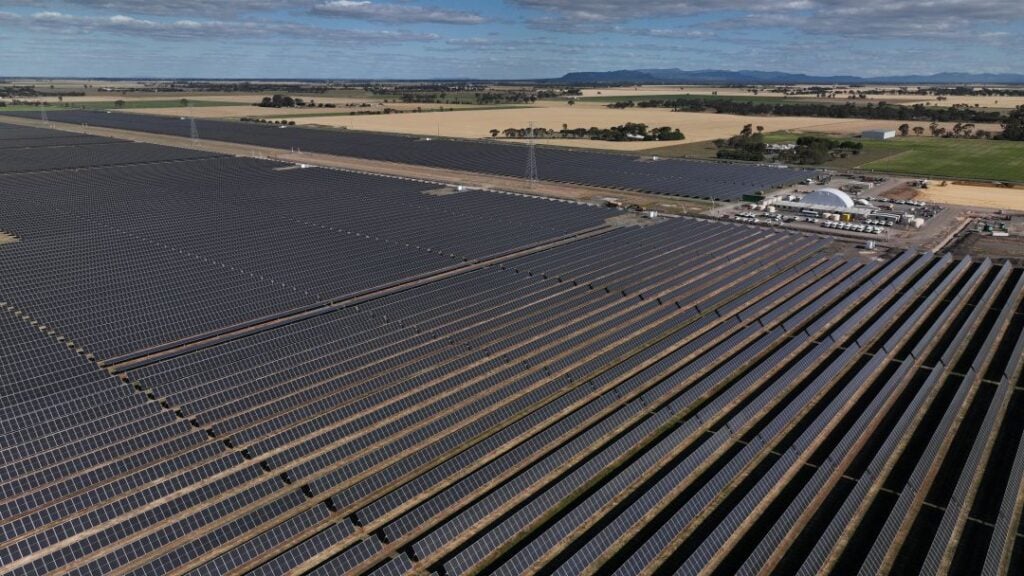
Utility-scale solar reached a new January record of 2,234GWh, marking a 16.4% increase from January 2025’s 1,919GWh. This performance also represented a 5.2% increase from December 2025’s 2,124GWh, demonstrating the segment’s ability to maintain strong output levels during consecutive peak summer months.
Rooftop solar generated 3,464GWh in January 2026, an 11% increase from January 2025’s 3,120GWh. However, this represented a 3.2% decrease from December 2025’s record 3,577GWh, reflecting typical seasonal variations as January progresses through the summer.
The data reveals a shifting dynamic between the two segments. Utility-scale solar accounted for 39.2% of total solar output in January 2026, compared to rooftop solar’s 60.8%, representing a narrowing of the gap from December’s 37.3% to 62.7% split.
This 1.55:1 ratio indicates the growing contribution of utility-scale installations to Australia’s solar generation mix, supporting the renewable energy momentum that has fundamentally reshaped the NEM’s generation profile.
When viewed across the broader generation cycle, January 2026’s performance demonstrates remarkable growth from the winter trough.
Utility-scale solar generation increased by 117.3% from June 2025’s 1,028.4GWh, while rooftop solar grew by 139.6% over the same period, rising from 1,446GWh to 3,464GWh.
Daily generation patterns reveal consistent performance
Daily generation patterns throughout January 2026 showcased the reliability of both solar segments during peak summer conditions.
Utility-scale solar output ranged from 52GWh on 11 January to 90GWh on 6 January, reflecting a 73.1% spread. The segment demonstrated consistent performance above 70GWh on 12 days throughout the month, with particularly strong output during the first week when favourable weather conditions prevailed.
Rooftop solar exhibited greater daily variation, spanning from 88GWh on 11 January to 132GWh on 6 January, representing a 50.0% spread. The segment maintained output above 110GWh on 18 days, demonstrating the distributed network’s capacity to deliver substantial generation during optimal conditions.
The highest combined solar output occurred on 6 January, when utility-scale and rooftop solar collectively generated 222GWh. This performance matched December’s peak daily output, highlighting the sustained capacity of both segments under favourable summer conditions and reinforcing solar energy’s role in Australia’s historic renewable energy transition.
Conversely, the lowest combined output was recorded on 11 January, when utility-scale solar generated 52GWh and rooftop solar produced 88GWh, resulting in a total of 140GWh.
This represented the impact of weather variability on solar performance, even during the peak generation season.
Pricing volatility continues to challenge market dynamics
The pricing environment in January 2026 remained highly volatile, with significant disparities between the utility-scale and rooftop solar segments continuing to highlight grid integration challenges as Australia’s electricity system adapts to unprecedented levels of renewable energy penetration.
Utility-scale solar prices ranged from AU$1.23/MWh (US$0.86/MWh) on 1 January to AU$85.98/MWh on 10 January, indicating a more stable pricing environment than in previous months. The segment experienced relatively few extreme pricing events, with prices remaining above zero throughout most of the month.
Rooftop solar faced considerably more volatile pricing conditions, with prices spanning from AU$-35.21/MWh on 1 January to AU$136.99/MWh on 26 January.
This AU$172.20/MWh range significantly exceeded utility-scale solar’s AU$84.75/MWh range, underscoring the ongoing challenges of integrating distributed generation into the grid amid rapid renewable energy expansion.
Negative pricing affected rooftop solar on two occasions in January 2026: 1 January (AU$-35.21/MWh) and 11 January (AU$-0.03/MWh). These events reflected periods of oversupply and grid constraints, particularly during low-demand periods typical of the holiday season and weekends.
The most significant price spike occurred on 26 January, when rooftop solar reached AU$136.99/MWh while utility-scale solar achieved AU$50.66/MWh. This divergence highlighted the different market dynamics affecting each segment, with rooftop solar more susceptible to localised grid constraints and demand variations.
Price volatility was particularly pronounced during the final week of January, with both segments experiencing elevated pricing on 26, 27 and 30 January. These events coincided with increased electricity demand, as Australia Day celebrations and return-to-work patterns influenced consumption.
Market implications and outlook
January 2026’s performance reinforces the critical role of solar energy in Australia’s electricity system, with combined solar generation accounting for an increasingly significant share of total NEM output.
The continued growth in utility-scale solar capacity, coupled with sustained rooftop solar performance, demonstrates the sector’s maturation and reliability within the broader context of Australia’s renewable energy transformation that has fundamentally altered the competitive landscape between clean energy and traditional fossil fuel generation.
However, the persistent pricing volatility, particularly affecting rooftop solar, highlights the ongoing need for grid infrastructure investment and market mechanism reforms.
Indeed, the frequency of negative pricing events and extreme price fluctuations underscores the challenges of managing high renewable energy penetration during peak generation periods, even as clean energy sources are displacing coal-fired generation.
The narrowing gap between utility-scale and rooftop solar generation shares suggests a rebalancing of Australia’s solar landscape, with large-scale installations playing an increasingly important role alongside distributed generation.
This trend may contribute to improved grid stability and reduced pricing volatility as utility-scale installations offer greater controllability and grid services capability, supporting the market’s adaptation to the new renewable energy paradigm.
You can explore previous solar generation performance in our NEM Data Spotlight series, with all entries available to PV Tech Premium subscribers.