The Czech Senate has approved controversial laws to end subsidies for renewable energy and to extend a tax levied on solar power plants, following a vote on Friday.
The move has been widely expected since the motion was successfully passed in the lower house of parliament of the Czech Republic in mid-August.
Try Premium for just $1
- Full premium access for the first month at only $1
- Converts to an annual rate after 30 days unless cancelled
- Cancel anytime during the trial period
Premium Benefits
- Expert industry analysis and interviews
- Digital access to PV Tech Power journal
- Exclusive event discounts
Or get the full Premium subscription right away
Or continue reading this article for free
Renewable energy facilities that begin operation after 31 December 2013 will not be eligible to receive the feed-in tariff (FiT), or any other subsidy payments. This includes small and residential systems under 30kW, which were the last form of state-supported PV installation. The new laws do not make any provision for net metering for self-consumption.
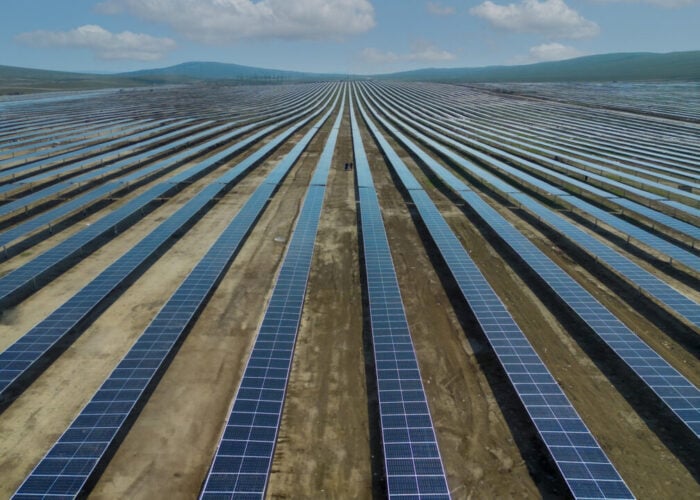
Owners of solar power plants installed since 2010 will now be required to pay a 10% tax for the full life of each power station. The tax was originally planned to be levied at 26%.
The cutting of subsidies and the levying of the 10% tax rate has been proposed in reaction to inflated consumer energy prices, which the Czech PV industry argues is a consequence of mismanagement of feed-in tariff rate setting as opposed to wrongdoing on the part of the solar power industry.
The Czech solar power industry has been vocal in its opposition to the measures, accusing successive governments and the Czech mainstream media of orchestrating a smear campaign over several years. The changes to the law now require approval from Czech president Milos Zeman.
Speaking to PV-Tech recently, Martin Sedlak at the Alliance for Energy Self-Sufficiency said the legislation went against the spirit of the original Renewables Support Act under which the FiT was first introduced and a 15-year legally guaranteed payback period.
“…in the Czech Republic a situation has arisen that is in conflict not only with the Renewables Support Act but also with the findings of the Constitutional Court, as the 15-year payback period guaranteed by law will be eliminated.
“On top of that, the government has in no way justified this controversial change: its report on the matter contains a mere two sentences instead of presenting convincing calculations,” he added.
“The introduction of the 10% solar tax to be paid over the entire service life of photovoltaic panels poses a threat to assets having a total value of nearly CZK150 billion (US$777.4 million). Banks estimate that up to 30% of solar businesses may go bankrupt. The risk of solar power plant operators going bankrupt may have an impact on the banking sector, as banks provided loans to help fund solar power projects.”
The two industry advocacy groups, CZEPHO and the Alliance for Energy Self-Sufficiency have formed RESolar, a non-profit collective aimed at combating the new laws and bringing down recycling and other operating costs for PV owners.