US utility Duke Energy will ramp up spending by billions of dollars to meet its renewable generation goals and accelerate coal plant retirements.
The company now expects its current five-year capital plan to increase by about US$2 billion to approximately US$58 billion. Beyond that, its 2025 to 2029 capital strategy will be in the range of US$65 billion to $75 billion as the company accelerates decarbonisation efforts.
Try Premium for just $1
- Full premium access for the first month at only $1
- Converts to an annual rate after 30 days unless cancelled
- Cancel anytime during the trial period
Premium Benefits
- Expert industry analysis and interviews
- Digital access to PV Tech Power journal
- Exclusive event discounts
Or get the full Premium subscription right away
Or continue reading this article for free
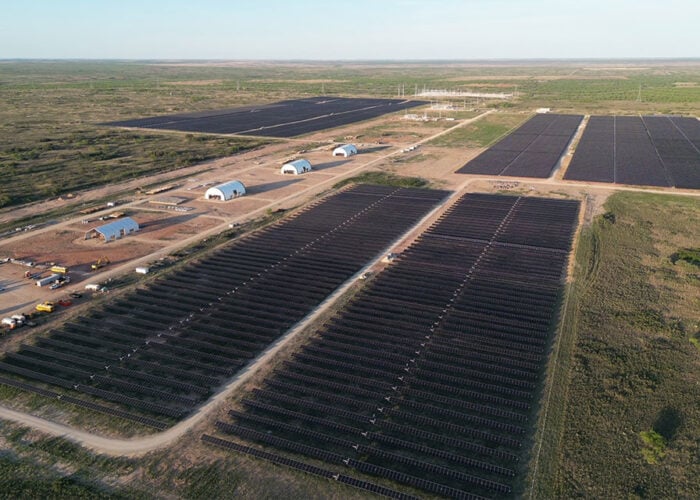
It is hoped the additional funding will enable Duke to double its renewable portfolio to 16GW by 2025, retire all its coal-only generation units by 2030 in the Carolinas and add more than 11GW of energy storage by 2050.
“We are enthusiastic about the prospect of scaling up our clean energy efforts, driving economic growth in our states and growing our business as we collaborate with stakeholders to develop smart energy policy and solutions for the future,” said Duke Energy CEO Lynn Good.
The announcement comes a month after Duke filed its integrated resource plan for the Carolinas, detailing six potential resource portfolios for the next 15 years. The base scenario – which includes no carbon policy drivers – projects total solar capacity of 8,650MW by 2035, while the three most ambitious models in terms of solar development reveal the utility could own a solar portfolio in excess of 16GW by that date.
Duke’s solar expansion plans are part of a wider trend among US utilities that are decarbonising their power supplies thanks to the cost declines of renewables and state policies that require targets to be met. Recent months have seen utilities such CenterPoint Energy, Ameren and Vistra announce gigawatts of additional renewables capacity.
With solar PV and onshore wind found to be the cheapest sources of new-build generation for at least two-thirds of the global population, the economic case for green energy has become undeniable. While Duke was hit by a US$1.6 billion expense related to the cancellation of the Atlantic Coast Pipeline, the company said its clean energy transition provides the capability to grow earnings at the upper end of its current long-term adjusted EPS growth rate of 4-6% until 2024.
“The growth we're already seeing, as well as the clean energy policies across our jurisdictions, allows us to stretch our capital plan's runway and greatly expand our investments in our generation fleet and grid, which in turn will deliver significant value to our investors and the communities that we serve,” Steve Young, Duke Energy CFO, said.