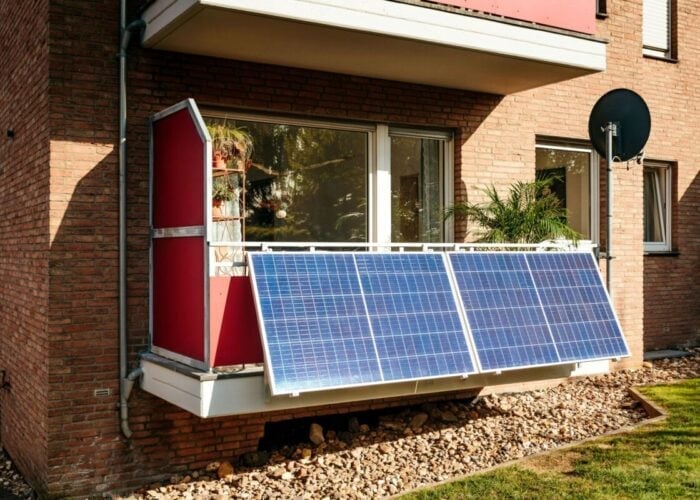
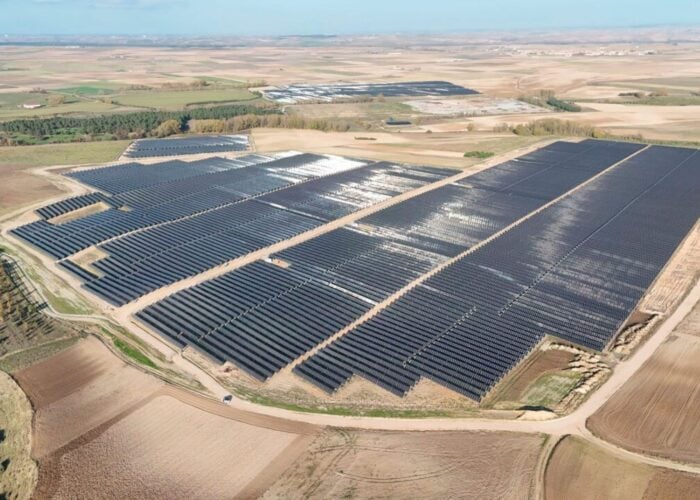
The chief technology officer of Indian manufacturer and installer, Tata Power Solar, has said commercial rooftop solar will reach grid parity before any other solar segment in India, and will be the cheapest form of energy for customers by 2024.
Commercial rooftop achieving grid parity in India earlier than other segments, “is something to take note of”, said Arul Shanmugasundaram in a webinar today hosted by analyst firm, Bridge to India, in the run up to India’s largest solar industry conference, Intersolar India, being held in Mumbai next week.
Try Premium for just $1
- Full premium access for the first month at only $1
- Converts to an annual rate after 30 days unless cancelled
- Cancel anytime during the trial period
Premium Benefits
- Expert industry analysis and interviews
- Digital access to PV Tech Power journal
- Exclusive event discounts
Or get the full Premium subscription right away
Or continue reading this article for free
The topic under discussion was a report published by Tata and Bridge to India on the evolution of solar in India.
According to the report, commercial rooftop solar installations will reach cost parity with imported coal next year, reaching complete parity for both the cost of generation (levelised cost of electricity, or LCOE) and also to end users (levelised cost of power, or LCOP) by 2024.
The report estimates that the LCOE for commercial solar generation will be INR9.5 (US$0.15) per unit and the LCOP INR9.7 (US$0.16) by next year. The rooftops are predicted to be 10-500kW in size.
The report’s best case scenario predicts that by 2024 the cost of energy for commercial rooftop solar customers would be INR6.7 per unit and INR6.6 at generation. This would put commercial rooftop generation almost on par with the cost of generating energy from 5MW-3GW scale solar power plants, which is INR6.4 (US$0.10).
However, the cost of energy for customers from 5MW to 3GW solar plants would be much higher, at INR7.6-7.9 (US(US$0.12-0.13).
The employment generation for 1GW of commercial rooftops is estimated to be around 26,500 jobs, with a fast deployment time and low maintenance required. “It is important we are generating not only energy but also jobs,” said Shanmugasundaram.
Engelmeier added the reason commercial rooftops are not driving parity is that the “ecosystem is not there yet”, but commercial rooftops will help to build a self-sustaining solar market, he added.
Although governments will look to gigawatt-scale solar power plants to make the most difference with political clout, Engelmeier argues that “the way we can reach transformation is not individual parts of government – but making a substantial market”.
The report Shanmugasundaram referred to states 31-41GW of commercial rooftop solar is predicted to be deployed by 2024.
Shanmugasundaram also said that natural gas prices are predicted to be “significantly higher than solar” due to the fixed 25-year price commitment for solar generation, “you will not get that from any fossil fuels, if you want assurance of price, people will pick solar.”
Solar “gives some price stability for the future”, said Shanmugasundaram.
Shanmugasundaram said as long as the right scale of centralised solar and distributed solar is used, solar “can meet power needs efficiently on an economic scale”.