The Moroccan government has announced plans to build a 30,000MT “green polysilicon” production facility, in partnership with Moroccan renewable energy firm GPM Holding.
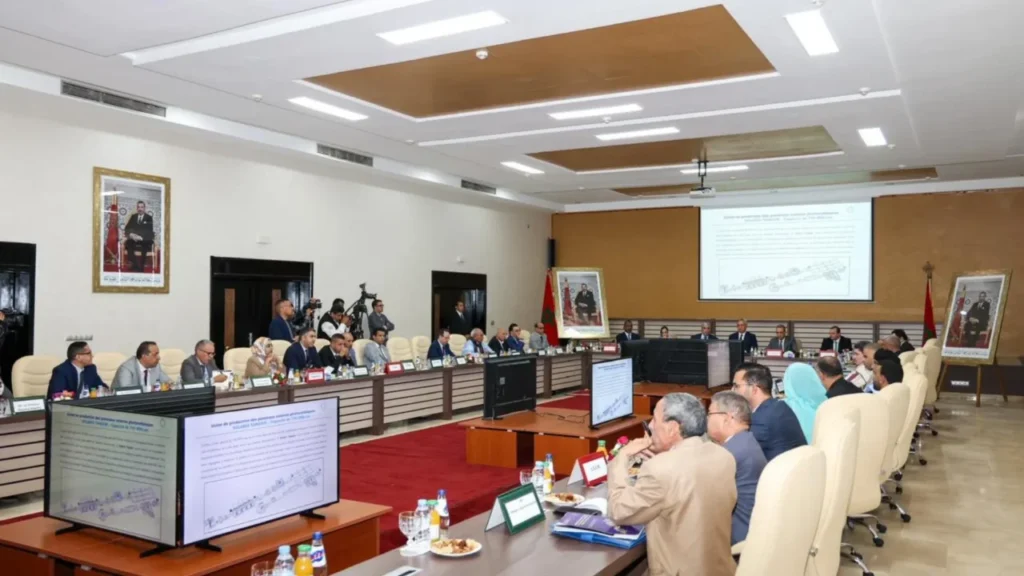
The Ministry of Investment, Convergence and the Evaluation of Public Policies (MICEPP) announced the deal over the weekend (22 November) to build Morocco’s first polysilicon production facility in the El Ouatia industrial zone, near the southern city of Tan-Tan.
Try Premium for just $1
- Full premium access for the first month at only $1
- Converts to an annual rate after 30 days unless cancelled
- Cancel anytime during the trial period
Premium Benefits
- Expert industry analysis and interviews
- Digital access to PV Tech Power journal
- Exclusive event discounts
Or get the full Premium subscription right away
Or continue reading this article for free
The ministry said the plant will represent 8 billion Dirhams (US$863 million) in investment and should generate around 3,500 direct and indirect jobs. In an announcement, the government said the prospective plant “will further strengthen Morocco’s leadership in renewable energy and foster the development of related industrial value chains, particularly in solar panel component manufacturing.”
No further details were given on the project’s construction timeline, but the ministry said that it expected to export 85% of the polysilicon produced at the site.
GPM’s website lists PV module manufacturing, project development and solar plant maintenance services among its areas of activity.
The new plant could be a strategically significant development in the global solar supply chain. Increased scrutiny on China’s dominance of the silicon-based solar supply chain has put pressure on governments and industry to diversify their raw material sources; protectionist policies in the US, most notably the Section 232 investigation into polysilicon imports and incentives to avoid Chinese products, combine with the EU’s Net Zero Industry Act (NZIA) criteria for public procurement to create greater demand for non-Chinese supply.
A polysilicon plant in Morocco could target the emerging solar manufacturing sector in the Middle East, India or any potential reshoring taking place in the US or EU. Currently, Moroccan products would not fall foul of the US’ foreign entity of concern (FEOC) restrictions, though the global Section 232 investigation could still complicate matters.
In August, a Chinese-backed firm secured US$250 million from the World Bank to support a polysilicon plant in Oman. Some industry insiders have speculated that the Middle East could become the next target in US solar tariff actions, given the expansion of largely Chinese-backed upstream manufacturing capacity in the region.
The Chinese polysilicon market itself has been struggling over the last year, as leading players continue to operate with massive overcapacity and stockpiled inventory. In its most recent financial results, major player Daqo New Energy said it had reached a “healthy” inventory level and had managed to sustain profits due to an increase in the average selling price of polysilicon. Beijing stepped in earlier this year to apparently reduce the cutthroat competition in the polysilicon sector and increase selling prices.