Industry: Irish solar needs feed-in tariffs and more auctions

Facebook
Twitter
LinkedIn
Reddit
Email
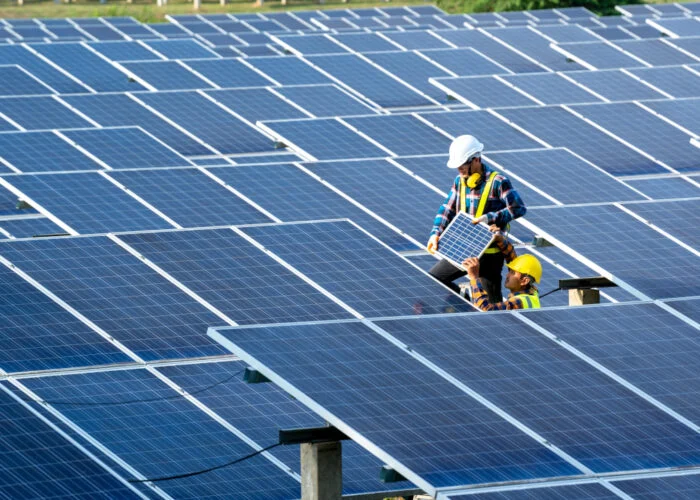
Image credit: Henrique Craveiro / Unsplash

Limiting solar’s share in the Renewable Electricity Support Scheme (RESS) to 10% is “disappointing”, the Irish Solar Energy Association (ISEA) has said, whilst welcoming the ambition shown in decarbonisation.

Whilst efforts to create a space for solar in the first auction of the scheme are a step in the right direction, limiting it to 10% is “disappointing”, David Maguire, chairman of the ISEA said in a speech addressing the Joint Committee on Climate Action last week.

This article requires Premium SubscriptionBasic (FREE) Subscription

Try Premium for just $1

  • Full premium access for the first month at only $1
  • Converts to an annual rate after 30 days unless cancelled
  • Cancel anytime during the trial period

Premium Benefits

  • Expert industry analysis and interviews
  • Digital access to PV Tech Power journal
  • Exclusive event discounts

Or get the full Premium subscription right away

Or continue reading this article for free

Details of Ireland’s RESS were unveiled earlier this month, having first secured governmental approval in July 2018. It is designed to help the country reach 70% renewable energy by 2030, a goal the ISEA is welcoming for its ambition, but warned won’t be achievable without a major shift across all sectors. Currently, Ireland is running at 86% fossil fuels for its energy, making it a challenging target.

See here to read the story in full as published by sister title Solar Power Portal

The prospects and challenges of solar's new era in Europe and beyond will take centre stage at Solar Media's Solar Finance & Investment Europe (London, 5-6 February) and Large Scale Solar Europe 2020 (Lisbon, on 31 March-1 April 2020).

3 November 2026
Málaga, Spain
Understanding PV module supply to the European market in 2027. PV ModuleTech Europe 2026 is a two-day conference that tackles these challenges directly, with an agenda that addresses all aspects of module supplier selection; product availability, technology offerings, traceability of supply-chain, factory auditing, module testing and reliability, and company bankability.

Read Next

July 14, 2026
German solar and wind developer SoWiTec has announced insolvency due to excessive debt.
July 13, 2026
Renewables are the lowest-cost source of new energy generation in the US, despite increasing costs, according to Lazard.
Premium
July 13, 2026
David Moser of Becquerel Institute Italia talks about the complex challenges that AI brings to the PV value chain.
July 13, 2026
The Turkish government has launched a new tender seeking 900MW of new solar PV capacity and 1.5GW of new wind capacity.
Sponsored
July 13, 2026
Dylan Middleton and Ruiqi Hua of JA discuss the importance of traceability, decarbonisation and circularity in PV module manufacturing.
July 13, 2026
Avaada Electro has commissioned the first 3GW production line at its 6GW N-type TOPCon solar cell manufacturing facility in Butibori, Nagpur.

Upcoming Events

Solar Media Events
October 13, 2026
San Francisco Bay Area, USA
Solar Media Events
November 3, 2026
Málaga, Spain
Solar Media Events
November 24, 2026
Warsaw, Poland
Solar Media Events
April 20, 2027
Istanbul, Türkiye