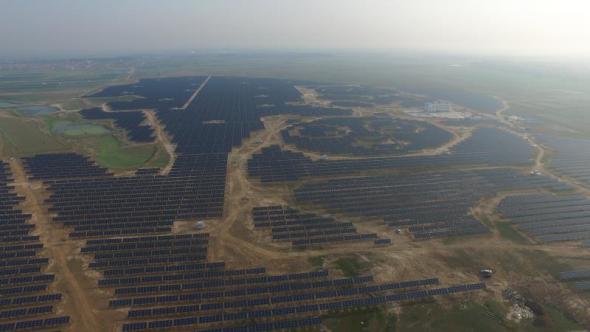
The Chinese government should increase its 2020 solar target from 110 to 200GW, according to the China National Renewable Energy Centre (CNREC).
The think tank is the main advisor to the government’s National Energy Administration (NEA), which would be ultimately responsible for acting on the recommendation. In August, the continuing boom of installations saw the country edge past its existing 2020 target.
Try Premium for just $1
- Full premium access for the first month at only $1
- Converts to an annual rate after 30 days unless cancelled
- Cancel anytime during the trial period
Premium Benefits
- Expert industry analysis and interviews
- Digital access to PV Tech Power journal
- Exclusive event discounts
Or get the full Premium subscription right away
Or continue reading this article for free
CNREC also recommended increases to wind and bioenergy targets and a halt to the approval of new coal power capacity.
Frank Haugwitz, of the Asia Europe Clean Energy Advisory (AECEA), which highlighted the recommendation in a briefing note, considers the target to be achievable.
“The recommended ‘new’ solar PV target in AECEA’s opinion will be realized, if not exceeded by approx. 15-20%,” he wrote.
“Overall, China is in the midst of its own energy transition, a process which will last for years and decades to come. In this context, obviously the utilization of locally available renewable energy resources will play a significant role, due to that over the past years sentiments towards RE have changed. China’s president Xi Jinping’s call for an energy revolution in the summer of 2014, an overdue, but fundamental power sector reform finally initiated in March 2015, a thoroughly revised version of the Renewable Energy Portfolio (RPS) effective since early 2016, the introduction of a voluntary domestic carbon emission trading scheme in July 2017 among a host of other initiatives and policies all designed to make this grand energy transition happen.
“Finally, it remains to be seen to which extent China’s National Energy Administration will follow CNREC’s proposed recommendations. In AECEA’s view, they certainly will be taken into consideration and shall serve as the reference when drafting new policies,” added Haugwitz.