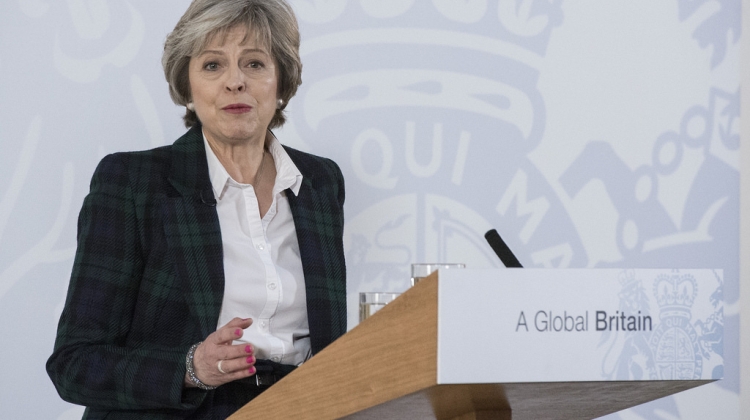
UK Prime Minister Theresa May has said she wants to maintain “broad energy co-operation” with the European Union (EU) post-Brexit.
Delivering a landmark speech on Friday afternoon, May revealed how she intended to shape the UK’s future economic relationship with the EU after the nation formally leaves.
Try Premium for just $1
- Full premium access for the first month at only $1
- Converts to an annual rate after 30 days unless cancelled
- Cancel anytime during the trial period
Premium Benefits
- Expert industry analysis and interviews
- Digital access to PV Tech Power journal
- Exclusive event discounts
Or get the full Premium subscription right away
Or continue reading this article for free
The PM highlighted several key areas and sectors in which the UK maintains a close link with the EU, naming energy alongside transport, law and innovation.
She said her government wanted to maintain “broad energy co-operation” with the EU.
“This includes protecting the single electricity market across Ireland and Northern Ireland – and exploring options for the UK’s continued participation in the EU’s internal energy market,” she said, also stating that it would be “of benefit” for the UK to have a “close association with Euratom”.
However, May’s stance would seemingly fly against what most commentators consider viable. Only last month a group of prominent politicians said that the government’s desire to leave the customs union would take the existing energy relationship “off the table”.

The UK has a number of interconnectors with mainland Europe with others also in development. These allow it access to the continent’s internal energy market which supports the development of renewable capacity by allowing excess generation to be traded with international counterparts.
A panel discussion at an event in central London last month saw the future of the UK’s energy relationship with the EU discussed by senior figures from the likes of National Grid, E.On UK and RWE.
Sara Vaughan, political and regulatory affairs director at E.On UK, said it was important for the energy sector for the UK to stay “close to what we’ve already got”.
“[One of the] greatest issues is uncertainty…we want to maintain regulatory alignment at the very least,” she said.