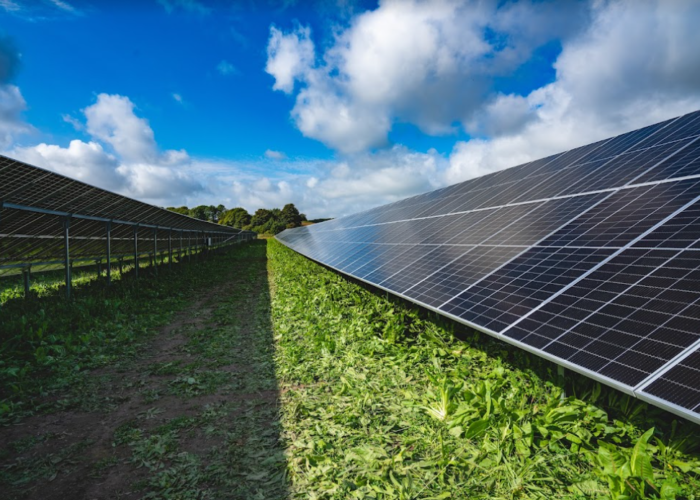
Solar developer Masdar has agreed loans from several global lenders for a 100MW solar PV project in the city of Sherabad, Uzbekistan.
Called the Nur Navoir Solar project, it is the country’s first fully-financed independent solar project, according to the developer, and will generate roughly 258.2 gWhs of electricity per year when it comes online.
Try Premium for just $1
- Full premium access for the first month at only $1
- Converts to an annual rate after 30 days unless cancelled
- Cancel anytime during the trial period
Premium Benefits
- Expert industry analysis and interviews
- Digital access to PV Tech Power journal
- Exclusive event discounts
Or get the full Premium subscription right away
Or continue reading this article for free
Masdar established Nur Navoi FE LLC (NNS) as the local project company to deliver and operate the PV plant.
Uzbekistan’s Ministry of Investments and Foreign Trade (MIFT), the International Finance Corporation (IFC), Asian Development Bank (ADB), the World Bank Group (WBG) and the European Bank for Reconstruction and Development (EBRD) all signed the loan agreement this week that will contribute to Uzbekistan’s growth as a serious solar energy market. ADB and NNS signed a loan agreement of up to US$17.5million to the project, while the European Bank for Construction and Development will hand over an equity bridge loan of up to US$60 million.
ADB’s vice-president for private sector operations, Ashok Lavasa, said the “landmark” agreement would help the government reach its target of 5GW of renewable energy by 2030.
Uzbekistan’s Ministry of Energy has also unveiled plans for a second solar PV project in Sherabad, which the ADB committed to sponsoring in early February as part of a wider push to develop 1GW of solar in the country.
The tender for the second project will be formally launched in early 2021.
Both facilities are to be contracted to supply power for 25 years to National Electric Grids of Uzbekistan.
Uzbekistan currently relies largely on fossil fuels, notably natural gas, to meet its energy requirements. Hydropower, the country’s predominant source of renewable energy, makes up just 2% of its primary energy supply.
However, the Uzbek government has launched several tenders this year to develop the renewable energy sector to diversify the country’s energy mix and attract private investment. The government has also been working with the IFC to roll out the structuring and tendering of up to 900MW of solar PV through private-public-partnerships (PPPs).
Mohamed Jameel Al Ramahi, chief executive officer of Masdar, said the new solar project will “serve as a benchmark for the country as it looks to transform its energy sector and drive sustainable recovery.”