The US National Institute of Standards and Technology (NIST) has unveiled, it claims, the country’s first zero net-energy residential test facility, which is located at its campus in Gaithersburg, Maryland. The institute invited local, federal and state officials to mark the occasion by attending a ribbon-cutting ceremony.
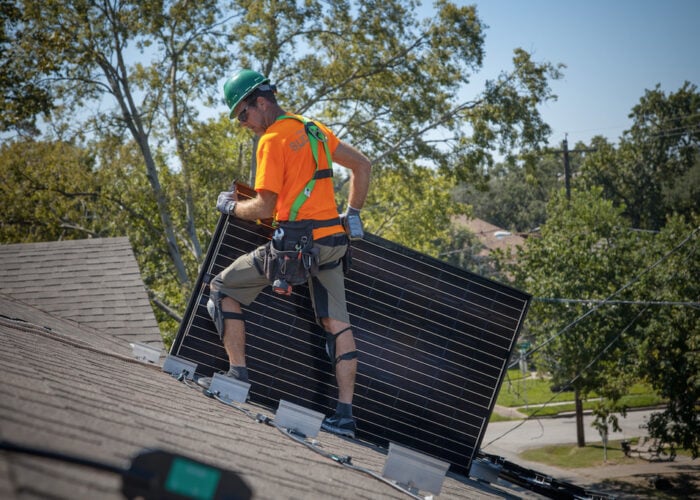
It is hoped that the facility, which makes use of solar PV and solar water heating systems, will help the US housing industry to develop guidelines for the development of self-sufficient homes in the future. It will also be used as a testing facility for new and existing energy efficient technologies and eventually, for the commercialization of cutting-edge clean energy technologies.
Unlock unlimited access for 12 whole months of distinctive global analysis
Photovoltaics International is now included.
- Regular insight and analysis of the industry’s biggest developments
- In-depth interviews with the industry’s leading figures
- Unlimited digital access to the PV Tech Power journal catalogue
- Unlimited digital access to the Photovoltaics International journal catalogue
- Access to more than 1,000 technical papers
- Discounts on Solar Media’s portfolio of events, in-person and virtual
In the short term, the facility will be used for research into residential self-sufficient homes as reported by our sister site Design Build Solar. The building, which looks like a standard American home, has four bedrooms and three bathrooms over two storeys. Scientists at NIST will use computer simulations and mechanical controls to mimic the activities of a four-person household over an entire year. It will run efficient appliances and lighting that are set to turn on and off at pre-determined times. All energy will be sourced directly from the home.
Funded by the American Recovery and Reinvestment Act, the facility was designed and developed by NIST in collaboration with the Department of Energy’s Building America Program and Building Science Corp, an architecture and consulting company.