UK-based energy supplier Octopus Energy has announced an investment of “nearly” US$1 billion into California’s clean energy sector, including a solar PV and battery energy storage system (BESS) project that will begin commercial operation by July.
Octopus did not specify the capacity of the solar-plus-storage project, nor how much of the total investment will go towards the facility, and PV Tech has asked the company for details on these points. The US is experiencing a boom in new BESS additions, with the country adding more new BESS capacity in the first three quarters of 2025 than the entirety of 2024.
Try Premium for just $1
- Full premium access for the first month at only $1
- Converts to an annual rate after 30 days unless cancelled
- Cancel anytime during the trial period
Premium Benefits
- Expert industry analysis and interviews
- Digital access to PV Tech Power journal
- Exclusive event discounts
Or get the full Premium subscription right away
Or continue reading this article for free
Much of this growth has been in the residential sector, in particular, with figures from Wood Mackenzie showing that the attachment rate of solar and BESS projects in the residential sector increasing from 6% at the start of 2020 to 25% at the start of 2024. As the scale of the new Octopus project is unknown, it is unclear if this project will contribute to this trend.
Octopus did, however, note that its California investment would also go towards two carbon removal companies and heat batteries as it looks to invest in what it called “next-gen innovation” in the energy transition.
“Octopus and California are both leading the way in clean energy innovation,” said Octopus Energy Generation CEO Zoisa North-Bond. “We’re excited to expand Octopus internationally, backing the booming US clean tech sector while bringing innovation, growth and returns to the UK.”
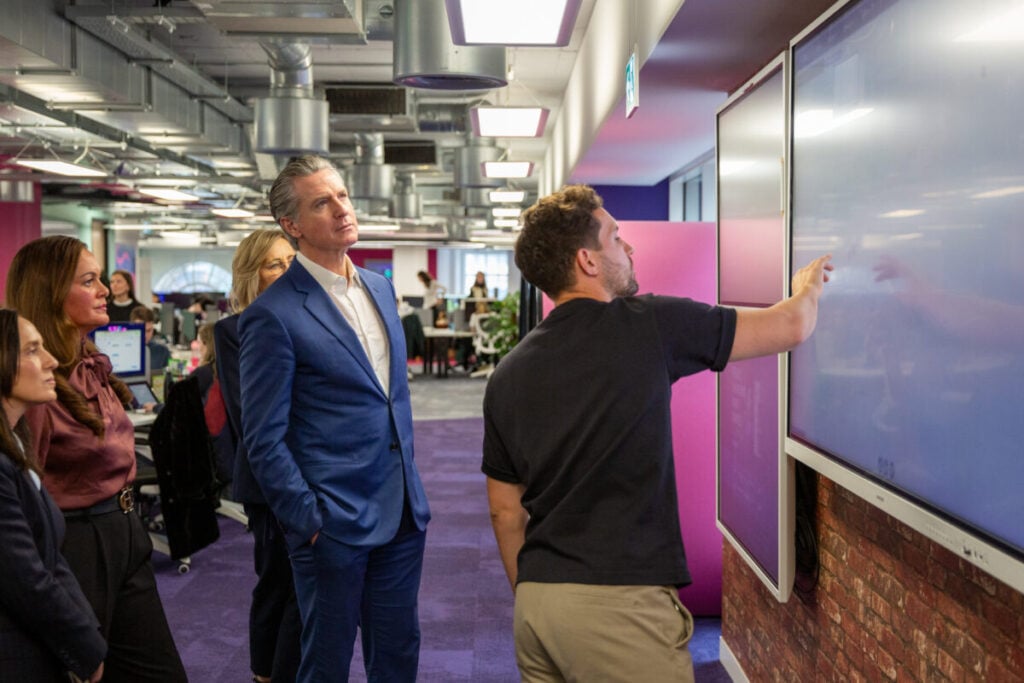
The announcement coincided with California governor Gavin Newsome’s visit to Octopus’ UK headquarters yesterday, and is the latest in a series of international agreements signed by the UK-based company. In January, it signed a deal with UAE state-owned renewable energy developer Masdar, and entered the Chinese market through a joint venture with PCG Power.
After five editions of Large Scale Solar USA, the event becomes SolarPLUS USA to mirror where the market is heading. The 2026 edition, held in Dallas, Texas, on 24-25 March, will bring together developers, investors and utilities to discuss managing hybrid assets, multi-state pipelines, power demand increase from data centres and AI as well as the co-location of solar PV with energy storage in a complex grid. For more details and how to attend the event, visit the website here.