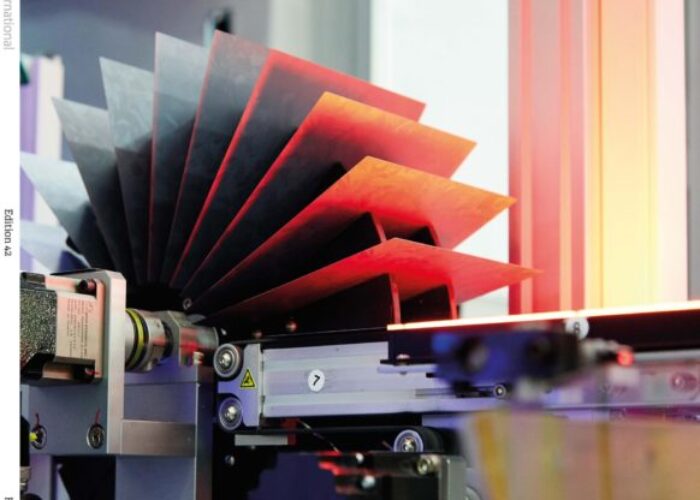
The silicon PV industry has predominantly used silicon wafers sliced by a steel wire, with silicon carbide particles (slurry wire – SW) as an abrasive and polyethylene glycol as a coolant. Low yield, high total thickness variation (TTV), significant material waste and short wire lifetime (and thus high downtime) of SW cutting technology have prompted the wafer slicing industry to develop an alternative technology. Researchers have developed diamond wire (DW) cutting technology for slicing the silicon and demonstrated that it overcomes the drawbacks of SW cutting technology. Although the DW cutting technology has been demonstrated for slicing wafers, the wafer surface is different after the conventional acidic texturing in a silicon solar cell process. It is therefore important to improve the existing process or to develop a new process, in order to produce a homogeneous texturization on DW-cut wafers. In this work, a systematic approach has been pursued to improve the existing process by using an additional etchant (a texture additive) in the acidic mixture. Different etch depths and the corresponding mean reflectance were studied. Optical and morphological studies on DW-cut wafers processed with and without a texture additive have been carried out and interpreted in terms of electrical performance.
The application of electrically conductive adhesives (ECAs) is a promising alternative to the soldering process for cell interconnection in today’s solar module production. ECAs provide an environmentally friendly solution and offer several other advantages over the conventional solder interconnection technology, such as lower processing temperature, higher mechanical flexibility and replacement of toxic lead. When it is proposed to switch from soldering to adhesive technology in a critical process such as the production of solar cell strings, it is necessary to perform a thorough preliminary analysis of the properties of the materials involved, the material compatibilities and the long-term stability of the interconnections within the PV modules.
PV manufacturing capacity expansion announcements in 2018 were significantly impacted by major policy changes mid-year in China. This paper looks in detail at the contrasting developments in the first half of the year, compared with the second half. Attention will also be given to the regional site selection changes as well as to the advanced manufacturing trends emerging in 2018. Finally, after five years of tracking capacity expansion plans, an overview of cumulative expansions, coupled to global solar demand and to capacity trends specifically in China, will be provided.
Ever since the manufacturing of PV modules began suffering from a huge price decline, the reduction of the production cost has been a task of high priority. Digitalization is a subsequent further development of the automation of today’s PV cell and module manufacturing processes and can help to decrease production costs. A central concept of digitalization is the digital twin, which represents the properties and behaviours of physical assets, materials, processes or eventually the entire production line (the so-called smart fab). Different cases of its use are presented in this paper, along with a discussion of the corresponding applications of such digital twins. Finally, a smart fab for PV production is described.
This article reveals the top-10 module suppliers of 2018, based purely on own-brand shipped module MWp-dc volumes. For the past few years, we have sought to compile the top-10 module supplier list before the end of January (or at the latest before the Chinese new year). In practice, with the first two weeks of the year being a reset from any prior-year shipment rush or inventory clear-out, we end up having a couple of weeks to get the top-10 module supplier rankings done.
Solar cell production in 2018 represented change on many fronts, but may be remembered as a year during which Chinese-owned companies made further strategic moves as part of the current Beijing mandate to position the country as a high-tech manufacturing global powerhouse. This article explains how this is having a dramatic impact on solar cell manufacturing outside the control of leading Chinese-funded companies, and what this really means in terms of solar cell technologies and industry-wide technology roadmaps during 2019.
With a recent spate of new solar cell records announced for PERC-based architectures pushing conversion efficiencies past 24%, it is a good time to reflect on the pioneering work at SolarWorld – the first to commercialise and ramp PERC to volume production. A special in-depth paper from former members of SolarWorld’s R&D and manufacturing team should be a compelling read and a leading reference paper in the future. Adding to the PERC-based theme is the paper from ISC Konstanz, providing further real world insight into achieving manufacturability of nPERT cells with conversion efficiencies approaching 23%.
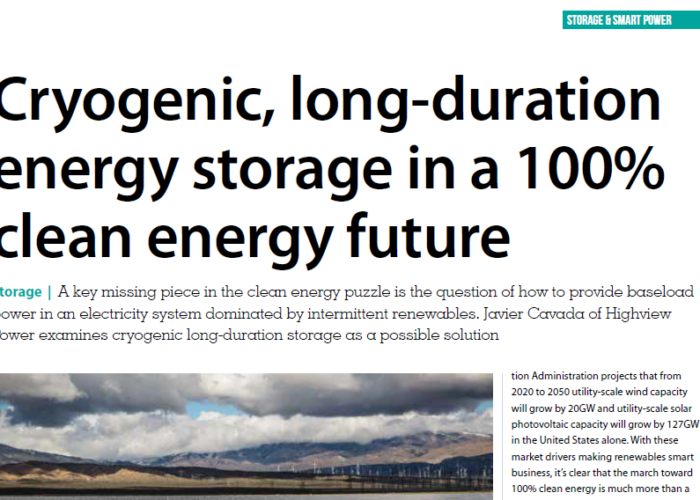
A key missing piece in the clean energy puzzle is the question of how to provide baseload power in an electricity system dominated by intermittent renewables. Javier Cavada of Highview Power examines cryogenic long-duration storage as a possible solution.
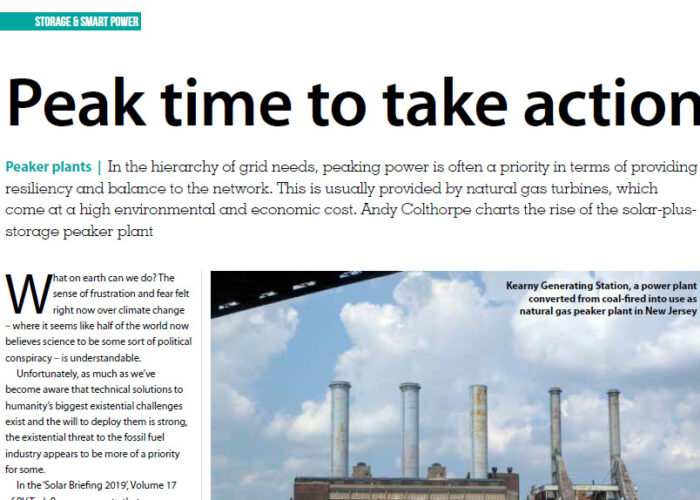
In the hierarchy of grid needs, peaking power is often a priority in terms of providing resiliency and balance to the network. This is usually provided by natural gas turbines, which come at a high environmental and economic cost. Andy Colthorpe charts the rise of the solar-plusstorage peaker plant.
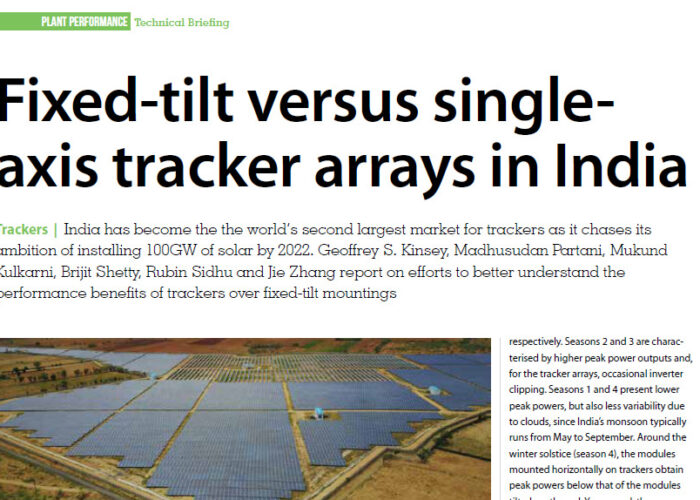
India has become the world’s second largest market for trackers as it chases its ambition of installing 100GW of solar by 2022. Geoffrey S. Kinsey, Madhusudan Partani, Mukund Kulkarni, Brijit Shetty, Rubin Sidhu and Jie Zhang report on efforts to better understand the performance benefits of trackers over fixed-tilt mountings