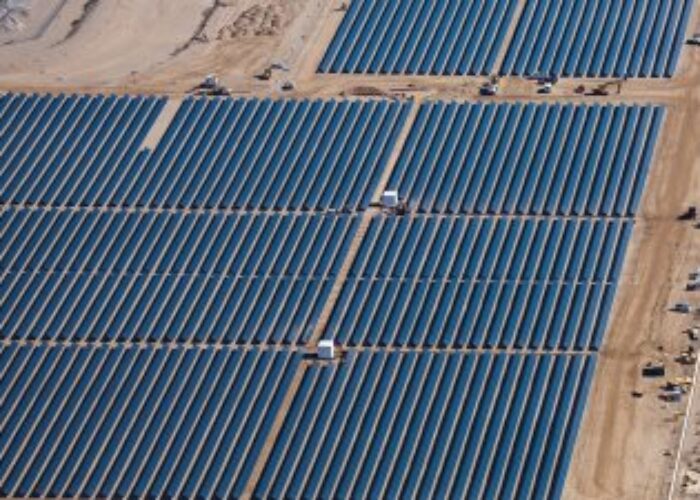
Solar currently represents less than 0.5% of global electricity generation. However, as renewable electricity gains importance in the US$1 trillion global electricity market, we forecast solar photovoltaic shipments to rise at a compound annual growth rate of 50% for the next four years. We expect an increasing number of countries to promote solar energy as the cost gap between solar and fossil fuel-generated electricity closes. This paper provides an overview of what to expect from the PV market in 2010.
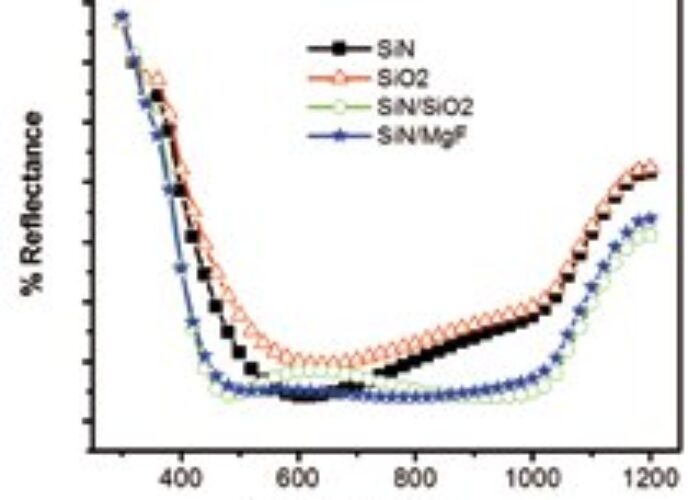
The key to delivering highly efficient solar cells is to absorb as much light as possible from the solar spectrum and convert it effectively into electrical energy. Anti-reflective coatings have served as agents for reducing reflective losses and improving bulk and surface passivation thus enhancing both of the parameters – short circuit current and open circuit voltage of a solar cell. Simulation studies show that an SiN/MgF dual-layer anti-reflective coating is best for a bare cell. This paper takes a closer look at how this coating can reduce the reflectance for a broad range of wavelengths and thus enhance the quantum efficiency of the cell in the blue and red region of the solar spectrum.
The sixth edition of Photovoltaics International was published in November 2009 and includes a special BIPV focus. In addition, the Thin Film section offers a comparison of different ceramic Al-doped ZnO target materials by Fraunhofer IST, and Q-Cells unveils its production technology roadmap for boosting cell efficiences in Cell Processing.
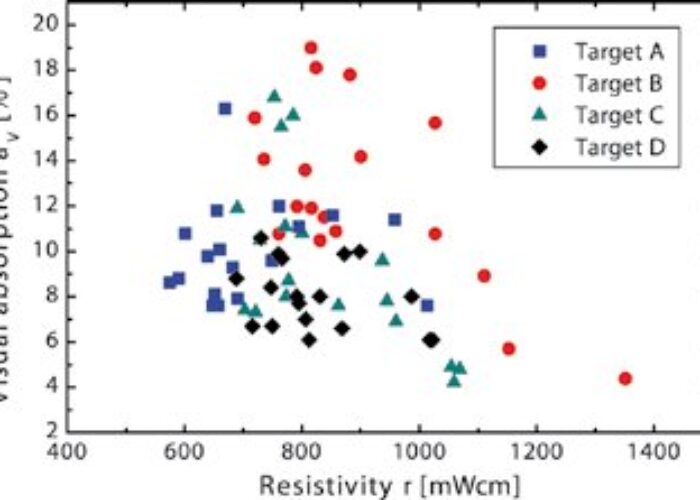
Highly conductive transparent films are of significant interest in the field of thin-film photovoltaics. ZnO-based films in particular have attracted much interest due to the low cost of materials with good film properties for CIGS and a-Si/µc-Si solar modules. Investigations have been ongoing at Fraunhofer IST into ceramic ZnO:Al2O3 targets from different manufacturers. This paper presents a comparison of target material, sputter characteristics and film properties of ZnO:Al. Sputter characteristics are in this case determined by voltage and current data showing arcing rates at different power loads and process pressures. ZnO:Al films are deposited by DC magnetron sputtering with various deposition parameters (e.g oxygen flow, total pressure, sputtering power and substrate temperature) and investigated with respect to optical and electrical properties. A correlation between film properties, sputter characteristics and target material can therefore be determined. As it appears that arcing has the biggest influence on film properties, the ceramic target material can be optimized for minimal arcing.
The fifth edition of Photovoltaics International was published in August 2009. This issue grants a first look at SolarWorld’s new U.S. facilities, IMEC tackles inline processing of thinner c-Si wafers in Cell Processing and our PV Modules section reveals a new method of EVA encapsulant cross-link density measurement by BP Solar.
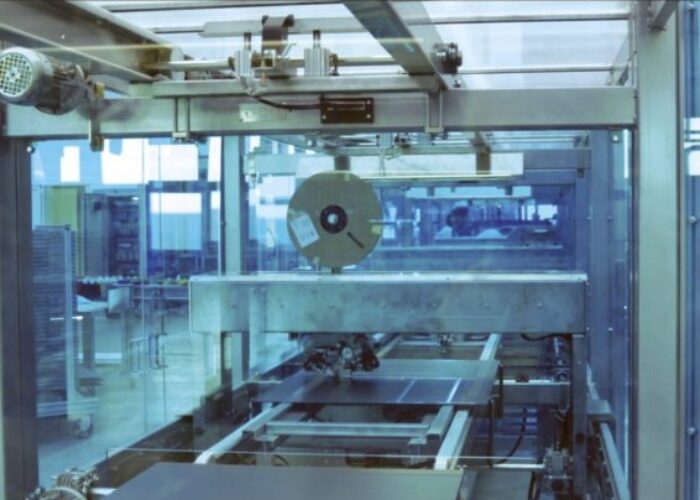
This paper presents a strategy for improving c-Si factory productivity and efficiency via software, focusing on software systems that improve yield and reduce cost. Specifically, the role of automation software systems and example areas where they can provide impact will be discussed. Key requirements of these software systems will then be identified that guarantee reusability, reconfigurability and extensibility, and thus high and continuing ROI. Case studies will then be presented illustrating how Advanced Process Control (APC) software has been successfully applied in the semiconductor and FPD industries to improve productivity and efficiency. The paper concludes with a roadmap for automation software implementation to support PV factory productivity and efficiency improvements.
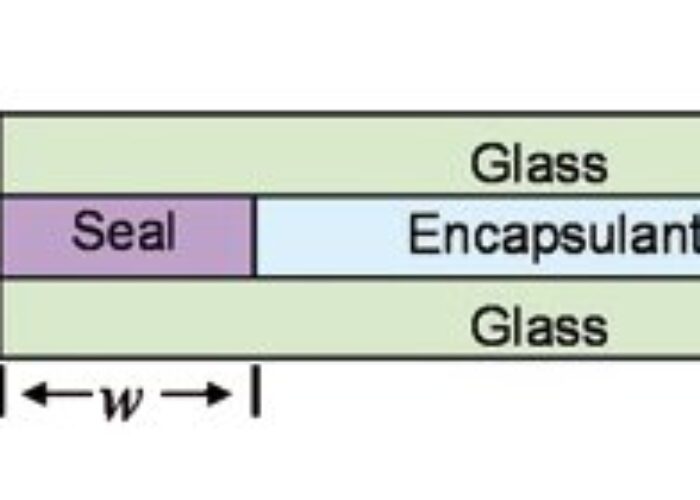
Outside of the challenges of fabricating state-of-the-art photovoltaic devices, further care must be taken to package them such that they can withstand environmental conditions for an accepted lifetime of 20-plus years. Moisture ingress is a big adversary to hermetic packaging. The diffusion of water through barriers and edge seals can be minimized by careful choice of materials and package/barrier architecture. However, at present, there exist no solutions for extremely water-sensitive materials for flexible applications. Presented in the following is a review of the physics of permeation, the means of measuring permeation, current architectural strategies for semi-hermetic packages, and a brief evaluation of some common encapsulant materials.
Lowering the cost of production of solar cells requires higher throughputs and higher production yields for thinner and more fragile silicon wafers, and inline processing could hold the key. However, current processes used in production do not enable full inline processing and often require a substantial amount of handling between process stations as the throughputs per station and tray requirements differ greatly. It will take many years before a full inline process flow is available and if it comes, wafers will most likely be positioned on a single tray throughout all process stations. This paper will discuss the current processing methods for all individual process steps and will provide an outlook on inline processing in view of the three cost reduction strategies: thinner wafers, higher throughput, and higher efficiency cell designs.
Among the various thin-film solar module options available, CIGS is especially interesting as it exhibits the highest efficiency potential. These chalcopyrite-based solar cells are manufactured on glass or flexible substrates using various thin-film coating methods for each layer. The central CIGS absorber layer is deposited by co-evaporation, selenization of elemental layers, and other methods. In order to achieve highest quality and reproducibility, the absorber properties must be properly monitored and characterized. In this contribution we shed some light on the most important analysis methods used for CIGS solar cell research, development, and production such as x-ray fluorescence, surface analysis, and Raman spectroscopy.
SolarWorld USA’s two main manufacturing facilities in Camarillo, CA, and Hillsboro, OR, represent the past, present, and future of crystalline-silicon solar photovoltaic manufacturing in the United States. The Southern California site, which sits in a small industrial park across from a verdant expanse of strawberry fields, was home to one of the world’s first (and at one time the largest) solar factories in the late 1970s, a historic campus that has changed corporate hands several times, from Arco Solar to Siemens Solar (1990) to Shell Solar (2001) and finally to SolarWorld (2006) over the three decades since its inception. This paper provides a look inside the factory doors.