REC adds its first mono-module to product offering for Japanese residential market

Facebook
Twitter
LinkedIn
Reddit
Email
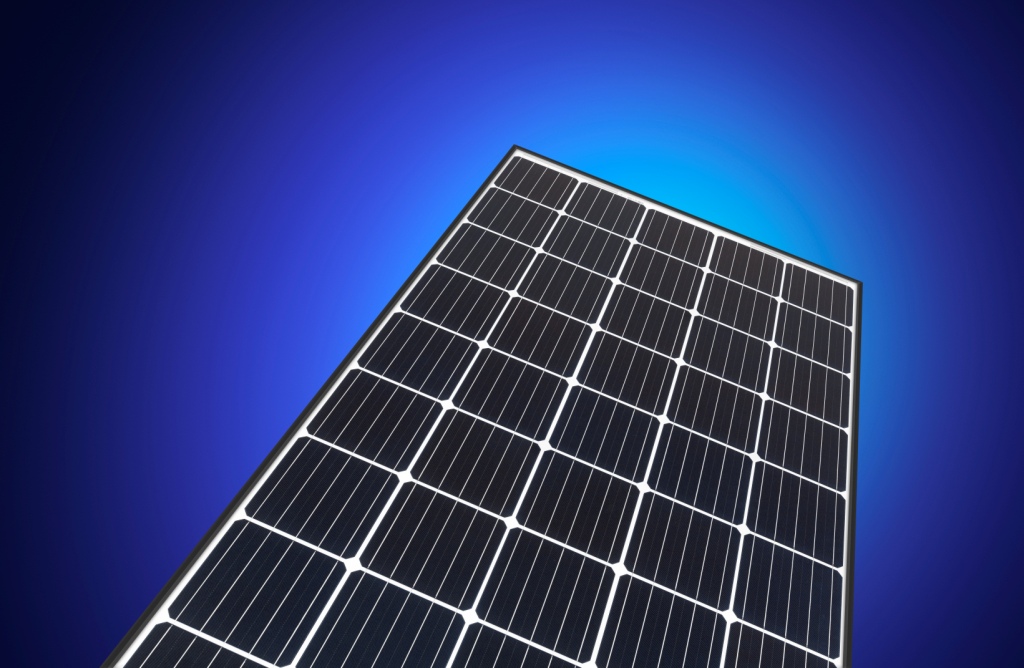
The new REC Peak Energy 2S Mono 50 BLK panel comes in power outputs of 240W, 245W and 250W in 5 strings of 10 cells with a 5 busbar cell.

Norway headquartered integrated PV module manufacturer REC Group has launched its first product using monocrystalline solar cells, a compact 50-cell module, specifically designed for the Japanese residential market.

The new REC Peak Energy 2S Mono 50 BLK panel comes in power outputs of 240W, 245W and 250W in 5 strings of 10 cells with a 5 busbar cell. 

This article requires Premium SubscriptionBasic (FREE) Subscription

Try Premium for just $1

  • Full premium access for the first month at only $1
  • Converts to an annual rate after 30 days unless cancelled
  • Cancel anytime during the trial period

Premium Benefits

  • Expert industry analysis and interviews
  • Digital access to PV Tech Power journal
  • Exclusive event discounts

Or get the full Premium subscription right away

Or continue reading this article for free

“With our new 50-cell panel, we demonstrate our commitment to the Japanese market with tailored and high-power products,” said Ushio Okuyama, Representative Director for Japan at REC Group. “The REC Peak Energy 2S Mono 50 BLK addresses the needs of our customers in Japan who demand innovative design combined with high panel efficiency. Furthermore, REC is renowned in Japan as a highly trusted European brand with high product quality, which is a strong extra benefit for our customers in this competitive market.”

The new module is also claimed to be free from potential-induced degradation (PID), avoiding performance losses under harsh climate conditions, such as high heat or humidity.
Read Next

September 3, 2026
PERC, TOPCon or HJT? In the fourth of five articles this week, Moustafa Ramadan and Joe Hennessy of PV Tech Research examine emerging technology trends in US solar cell and module manufacturing.
Premium
September 3, 2026
Heterojunction is emerging as the n-type technology of choice as US PV manufacturers seek to minimise IP-related risks.
September 2, 2026
In the third part of this week’s series exploring the US solar supply chain, we track how quickly announced manufacturing capacity is translating into real production.
September 1, 2026
US module production is at a near saturation point, but significant capacity gaps persist further up the supply chain, writes head of PV Tech Research, Moustafa Ramadan.
August 31, 2026
Head of PV Tech Research, Moustafa Ramadan, kicks off a five-part series tracing the evolution and future of the US solar manufacturing supply chain.
August 28, 2026
Importing solar modules to the US will “no longer make any economic sense” under new Section 232 tariffs for polysilicon-based products, according to Intertek CEA.

Upcoming Events

Solar Media Events
October 13, 2026
San Francisco Bay Area, USA
Solar Media Events
November 3, 2026
Málaga, Spain
Solar Media Events
November 24, 2026
Warsaw, Poland
Solar Media Events
February 2, 2027
London, UK