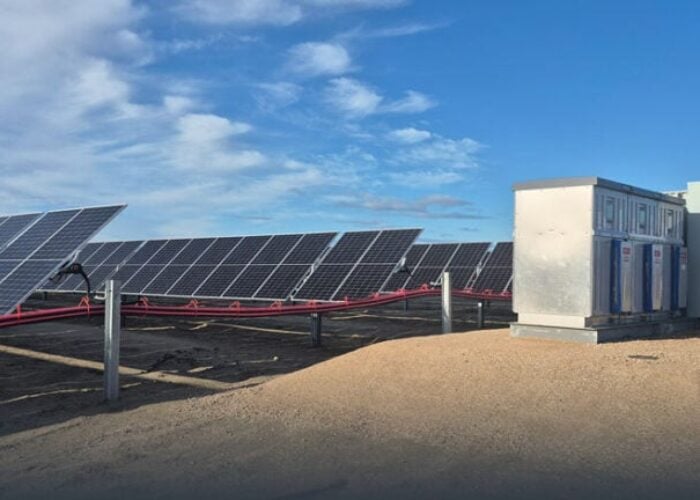
ElectraNet, a South Australian transmission operator, has revealed that renewables supplied 100% of South Australia’s electricity demand for 27% of 2024, roughly 99 days.
Detailed within the organisation’s 2025 Transmission Annual Planning Report (TAPR), which provides an overview of the energy landscape in South Australia, solar PV and wind generation have been playing a major role in meeting electricity demand, which has also created several unique challenges for the state.
Try Premium for just $1
- Full premium access for the first month at only $1
- Converts to an annual rate after 30 days unless cancelled
- Cancel anytime during the trial period
Premium Benefits
- Expert industry analysis and interviews
- Digital access to PV Tech Power journal
- Exclusive event discounts
Or get the full Premium subscription right away
Or continue reading this article for free
According to the ElectraNet, wind and solar energy supplied 100% of the state’s electricity demand for at least part of the day on 299 days of the year in 2024. In addition to this, 74% of South Australian consumption was met through renewable energy output.
For reference, the organisation said South Australia’s current average grid demand is approximately 1,300MW and peak demand is about 3,300MW.
South Australia’s renewable energy prowess has been well documented by PV Tech over the past year. For instance, the state ran on over 100% renewable energy from 26 August to 1 September, as the country transitioned from winter to spring.
During this period, rooftop solar PV generated 21.1% of the 102.2% figure, around 56GWh generated over the week at an average price of AU$52.02/MWh (US$33). Utility-scale solar provided 3.9% of the overall mix, around 10.4GWh, at an average price of -AU$30.96/MWh
ElectraNet CEO Simon Emms said South Australia’s energy transition is accelerating, and so is the need for a transmission network that can keep pace with today’s reality.
“Industries are choosing to invest here because of the strength of our renewables and grid. Projects are scaling up faster. Expectations are higher. And our transmission network must rise to meet this moment,” Emms said.
In our recent NEM data spotlight, available for PV Tech Premium subscribers, you can find out more about utility-scale and rooftop solar PV generation in the National Electricity Market (NEM) for May 2025.
Challenges could provide an opportunity for energy storage
South Australia’s growth in its renewable energy sector has also seen it target running on 100% wind and solar PV by 2027. However, challenges must be addressed to ensure the healthy operation of the grid and participation of assets in the NEM.
For instance, South Australia has become known for its negative pricing events. Negative pricing, which occurs when generation from the state’s fleet of solar PV peaks and creates a surplus in the middle of the day, means that project and portfolio owners essentially need to pay people to take their energy.
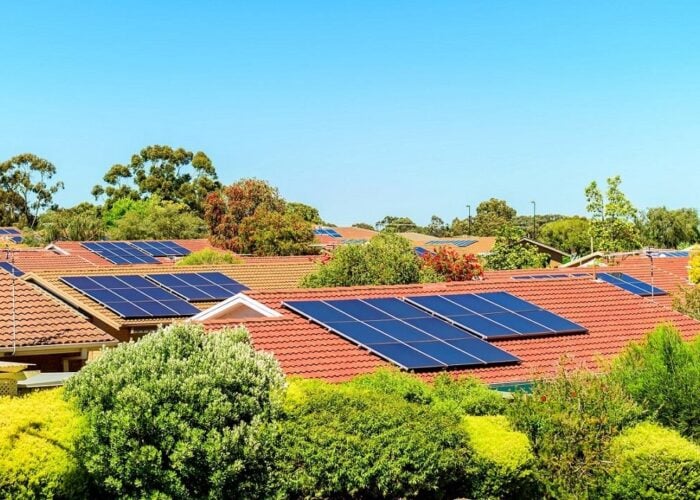
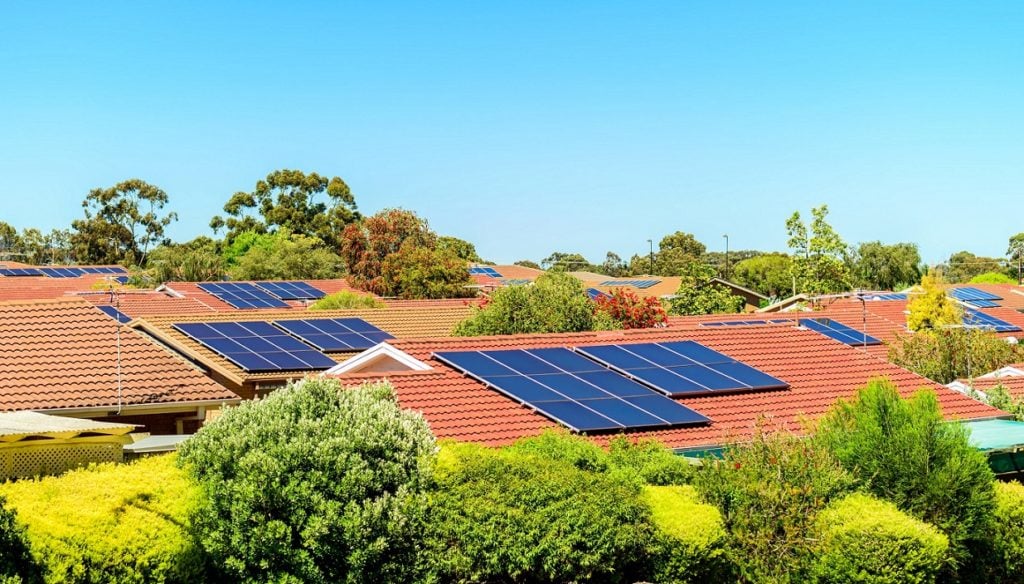
This is combined with the extensive coverage of rooftop solar PV systems in South Australia, with an estimated 50% of all homes being equipped. Although this is a positive for renewable energy uptake, it does pose questions about investing and profitability in utility-scale projects in the state.
ElectraNet said 90% of transmission connection points to the South Australia Power Networks distribution network have experienced times when this has occurred.
A technology that could benefit from this is energy storage, specifically battery energy storage systems (BESS). As reported on our sister site Energy-Storage.news earlier this year, Tim Buckley, founder and director of the think tank Climate Energy Finance, said the negative pricing phenomenon could be mitigated by using energy storage to time-shift renewable energy generation into the evening peak.
ElectraNet said in its report that this opportunity has resulted in nearly 4,000MW of energy storage systems seeking to connect to the grid.