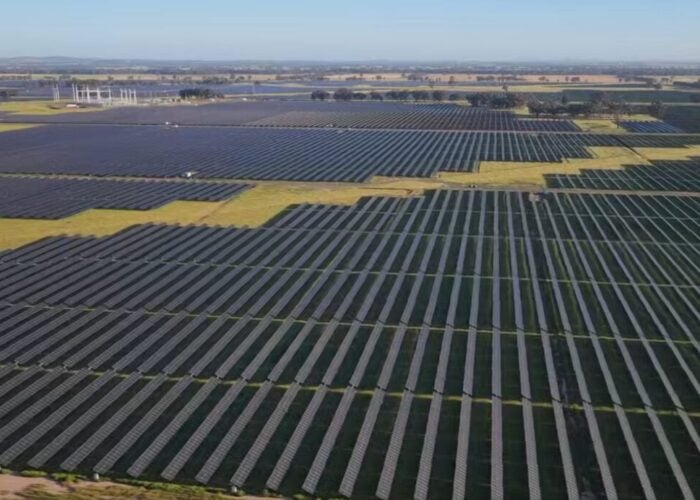
A new report analysing water scarcity in the power sector identifies PV as a major solution for avoiding water-related conflict.
“There are cost effective things that the power sector can do that would conserve water that will also reduce the amount of greenhouse gas emissions,” said Paul Faeth, director of energy, water and climate at the CNA think tank's Institute for Public Research.
Try Premium for just $1
- Full premium access for the first month at only $1
- Converts to an annual rate after 30 days unless cancelled
- Cancel anytime during the trial period
Premium Benefits
- Expert industry analysis and interviews
- Digital access to PV Tech Power journal
- Exclusive event discounts
Or get the full Premium subscription right away
Or continue reading this article for free
The first solution the report proposes is energy efficiency, moving from coal to natural gas, and using PV and wind.
Faeth says he is “very surprised” that water conservation is not “part of the sales pitch” for PV. The prices for solar are also “dropping dramatically”, making it a cost effective resolution to water scarcity, he added.
“Water conservation is a key benefit of PV and an interest in a very near term, high priority issue,” said Faeth.
For power generation to remain safe and stable, masses of water is required: an estimated 40% of all freshwater withdrawal in the US is used for thermal cooling.
As water access becomes strained by energy demand, economic and population growth and climate change, CNA released the report ‘A clash of competing necessities’, scrutinising water use in the power sector.
Thermal power generation is heavily dependent on water use, plants have to power down, or completely shut down in drought and heat waves, which Faeth describes as a “growing concern”.
The report found that for water removed for processes such as thermal cooling and put back into the local environment, or ‘withdrawal’, coal with carbon capture and storage (CSS) came out top, using 4.3 cubic metres of water for every MWh.
Nuclear is a close second using 4.2, coal alone uses 2.3, natural gas 1, wind uses zero, and PV uses 0.1 cubic metres per MWh.
“PV uses a small, tiny amount for washing the panels once in a while, but none for generation”, said Faeth.
For ‘consumption’ of water, whereby water is completely removed from the local environment, CCS uses 3.2 cubic metres per MWh, nuclear 2.5, coal 1.9, natural gas 0.7 – and again wind uses zero and PV uses 0.1.
Currently, policy for water conservation for the power sector and energy efficiency “doesn’t exist”, according to Faeth.
Water concerns “for policy makers and for many people are also a higher priority than climate change,” he said, adding that in drought it “doesn’t matter what the cause of drought is you still have to respond, and if you can respond in a way that is cost effective and mitigates emissions, such as using wind and PV, then that is a real plus.”
The report uses figures from the US Energy Information Administration (EIA), and the National Renewable Energy Laboratory (NREL), focusing on China, India, France and Texas as case studies, as there are already challenges on power generation and water scarcity in the regions.
China has high agriculture demand (second only to the US), and relies heavily on coal which requires water for cooling, already experiencing blackouts from a lack of water for cooling.
Already India uses 1.3 billion cubic metres of water a year, with predictions this could be 7 billion by 2040. “You have to wonder if that is even possible,” said Faeth.
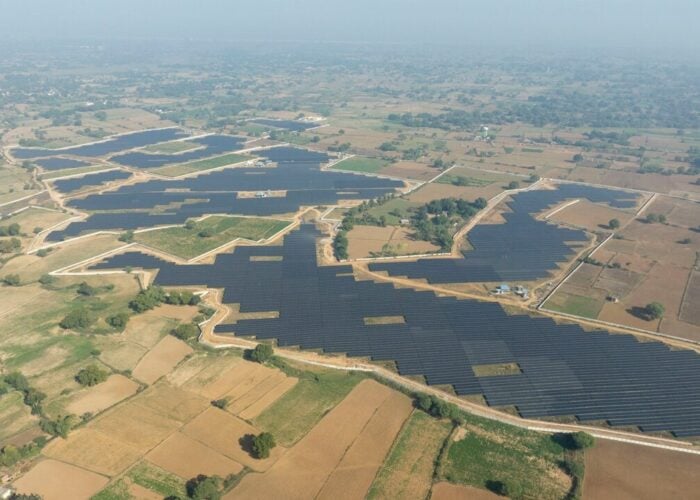
Solar is inexpensive in India and a cost effective way to reduce water conflict added Faeth, explaining that if water is taken from agriculture, which many are dependent on in India, it would be “politically untenable”.
“It just wouldn’t work, [India] has to start doing something else to avoid water competition that is already happening and we expect to get worse.”
In India 52% of the population live in water scarce areas, with 73% of electricity generation located in water stressed areas, with frequent blackouts. Currently 79% of newly built capacity is scheduled for construction where the water supply is under threat.
The report also says in 2009, France used 64% of its (withdrawn) water for thermal cooling, due to its 80% nuclear energy generation, proposing a unique threat to energy security during droughts.
In 2003 a heat wave in France lost 4GW of nuclear and hydro energy, causing France to restrict its electricity exports, causing a knock on effect of energy insecurity for its European importers.
Energy demand is expected to grow by 28% by the 2040s. Although less than other countries, France’s reliance on nuclear means even modest growth is a worry for water scarcity.
Texas is currently suffering from drought, and has already had to take water from farmers to avoid blackouts; the case is now in court in the US.
The report found Texas is likely to meet water and energy demand from new PV, wind, natural gas and energy efficiency, despite the challenges proposed by drought – but the state needs to avoid new coal generation.
Texas is now “looking to do more wind and PV, not particularly for climate change mitigation but because these strategies can save water”, said Faeth.