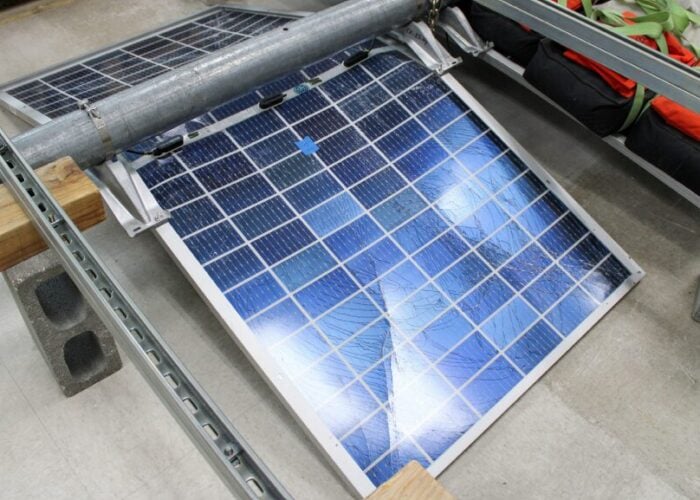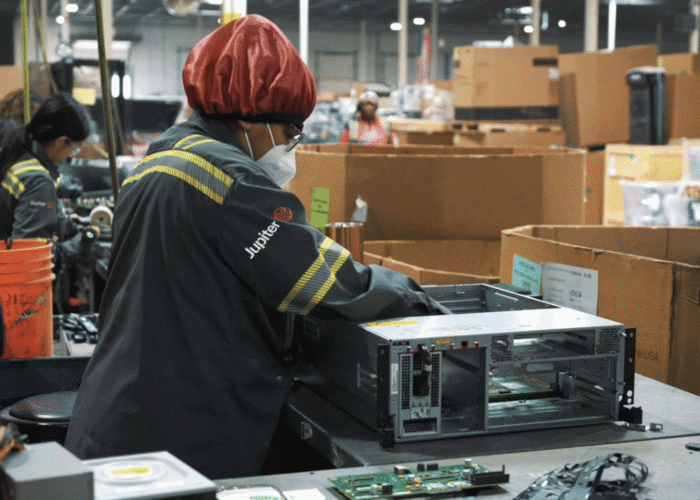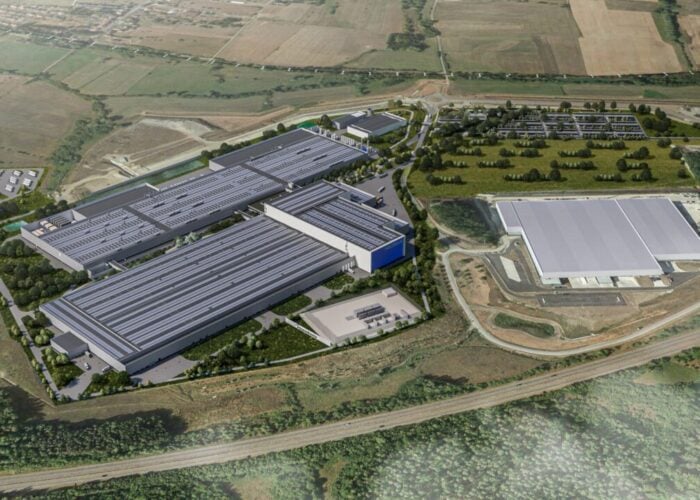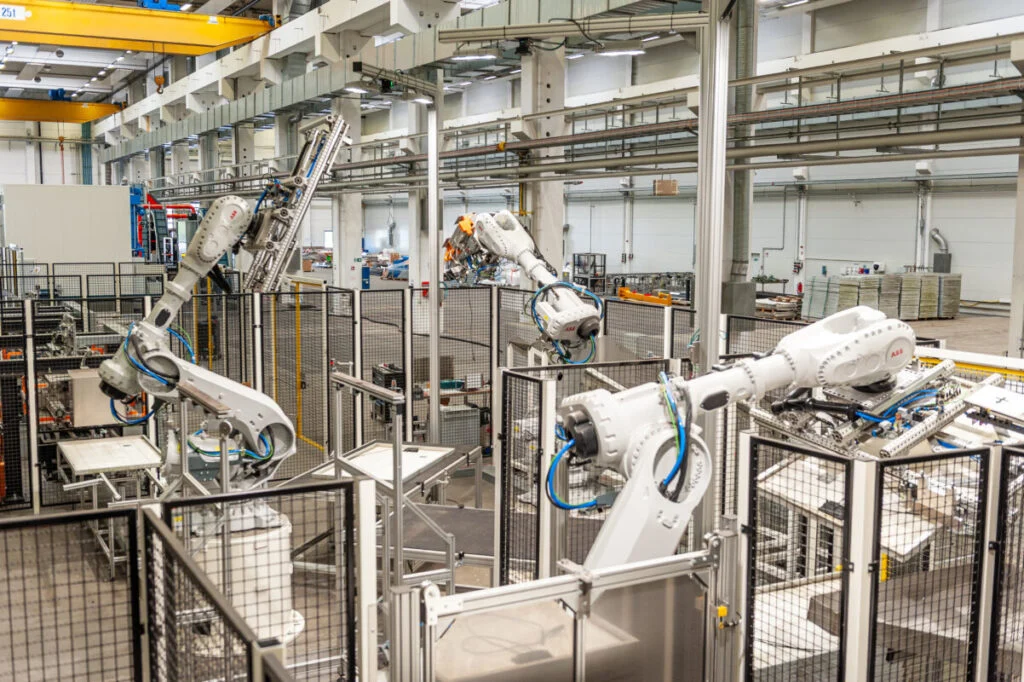
German solar module recycling company Solar Materials has officially opened its second industrial recycling line at its Magdeburg site, doubling its annual processing capacity to 28,000 metric tons.
The expansion increases the company’s capacity from 14,000 to 28,000 metric tons of solar modules per year and strengthens its industrial operations in Saxony-Anhalt.
Try Premium for just $1
- Full premium access for the first month at only $1
- Converts to an annual rate after 30 days unless cancelled
- Cancel anytime during the trial period
Premium Benefits
- Expert industry analysis and interviews
- Digital access to PV Tech Power journal
- Exclusive event discounts
Or get the full Premium subscription right away
Or continue reading this article for free
The new line expands Solar Materials’ ability to process different types of solar modules, with a particular focus on glass-glass modules. The company processes end-of-life modules sourced from across Europe.
Solar Materials said it also expects to nearly double its workforce as operations expand, from more than 70 employees currently to more than 130.
“With this expansion, we are doubling our capacity in Europe and responding to the growing volumes of end-of-life solar modules in EU member states, especially in Germany. At the same time, we are lowering decommissioning and recycling costs for our customers, financed by the near-complete recovery of all raw materials,” said Jan-Philipp Mai, co-Founder and CEO of Solar Materials.
Alongside its capacity expansion, Solar Materials said it would continue to invest in research and development, including work on next-generation solar cell technologies such as perovskite.
The company said the Magdeburg expansion provides a foundation for further growth in Germany and across Europe as demand for industrial-scale solar module recycling increases.
Rising volumes of end-of-life PV modules
The investment comes as Europe prepares for a growing volume of decommissioned solar modules. According to the company, nearly 1 million metric tons of modules will reach end of life annually across Europe from 2030 onward.
Recycling solar modules can also help recover materials such as silver and silicon, reducing reliance on imports and returning secondary raw materials to European supply chains.
Speaking previously to PV Tech Premium, Mai said some utility-scale installations are being replaced after just 10-15 years as developers upgrade to higher-efficiency modules and integrate battery storage [subscription required].
He also cited quality-related failures among modules installed during Europe’s first major solar deployment phase between 2010 and 2015 as a growing source of recycling volumes.
In separate comments earlier this year to PV Tech Premium, Mai said that the growth of recycling has created “a completely new business case” [subscription required] for investors in solar projects.
A study published by the Fraunhofer Centre for Silicon Photovoltaics (CSP) in October 2026 estimated that Germany could generate more than 600,000 metric tons of solar PV waste by 2030, representing a significant source of recoverable materials, particularly aluminium and silver.
Germany had approximately 5.35 million metric tons of PV modules installed by 2023, containing an estimated 660,000 metric tons of aluminium and 3,900 metric tons of silver. These figures have increased since 2023 and are expected to nearly double by 2030 as Germany pursues its solar deployment targets.
Speaking previously to PV Tech Premium, Professor Yansong Shen, tenured professor of metallurgical engineering at the University of New South Wales (UNSW), warned that maintaining current solar module production rates could exhaust the world’s available silver resources [subscription required] within five years, potentially threatening the availability of the metal for future solar panel manufacturing.
In recent years, several companies worldwide have stepped up investments in solar panel recycling, seeking to recover valuable materials and address the growing volume of end-of-life PV modules.
In the US, Solar Panel Recycling (SPR) has expanded its operations with a fifth facility in California, while Solarcycle has partnered with real estate company Prologis to recycle end-of-life solar assets across its US portfolio. In Europe, Italian manufacturer Ecoprogetti has deployed a recycling plant in northern Italy, while Comstock Metals has started continuous operations at its solar panel recycling facility in Nevada.