Japanese solar cell and module manufacturer Toyo has reported revenues of US$129 million in the third quarter of this year, a 9.2% quarter-on-quarter increase and a 4.8% year-on-year decrease.
The manufacturer posted its latest revenues yesterday, which includes third party revenues of US$112.1 million—up 57.3% year-on-year—and a gross margin of 16.6%—down from 31.3% in the same quarter of last year.
Try Premium for just $1
- Full premium access for the first month at only $1
- Converts to an annual rate after 30 days unless cancelled
- Cancel anytime during the trial period
Premium Benefits
- Expert industry analysis and interviews
- Digital access to PV Tech Power journal
- Exclusive event discounts
Or get the full Premium subscription right away
Or continue reading this article for free
These mixed financial results are reflected in the company’s product shipments; Toyo announced that it delivered 277.4MW of modules in the third quarter of this year, more than the company delivered in the first half of 2026, but its cell shipments stood at just 634.7MW, which compares unfavourably to the 2.6GW of cells sold in the first half of the year. The decline in year-on-year revenues in the third quarter also compares to an 87.6% year-on-year increase in revenues in the first half of this year, as both financial growth and cell shipments have slowed.
While Toyo did not comment on the reasons for these mixed results, its chairman and CEO Takahiko Onozuka emphasised the company’s renewed focus on US manufacturing, and its value within the “challenging trade environment” in the US at present.
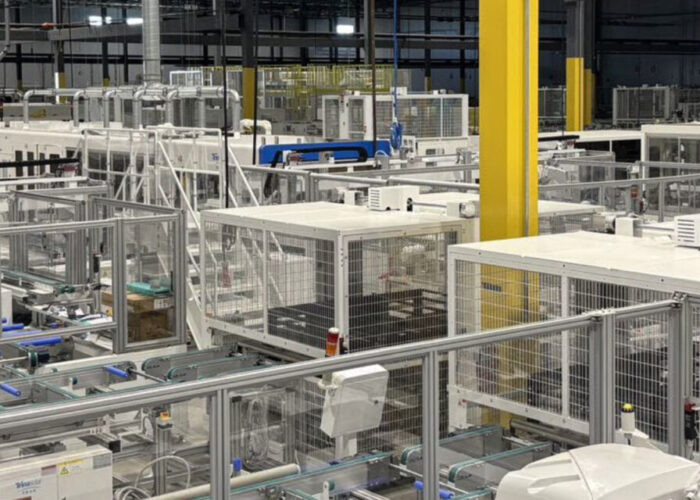
“With our second solar module line in the Houston area now operational, third-party revenue up 57.3% and nine-month total revenue up 42% year-over-year, we are strengthening our domestic production base to meet the growing demand from US customers,” said Onozuka, making reference to the expansion work that was completed at the Texas facility last month.
“We are also actively exploring opportunities to manufacture wafers in the US, as part of building a more integrated domestic supply chain,” Onozuka added.
His comments follow the publication of figures from PV Tech Research, which show that the US’ domestic wafer manufacturing capacity significantly lags behind that of modules; earlier this year, head of PV Tech Research Moustafa Ramadan described wafer manufacturing as a “critical capacity bottleneck” as part of a five-part series of blogs for PV Tech.
CBP releases Ethiopian cells, DoC investigation ongoing
Toyo also noted that solar cells shipped from its Ethiopian manufacturing facility to the US were detained by Customs and Border Protection (CBP) over the summer, but that these cells have since been released. The company added that a separate Department of Commerce (DoC) investigation into solar cells produced in Ethiopia is ongoing, and that it is “providing complete documentation relating to its supply chain” as part of the investigation.
The DoC and Toyo are also in discussions over what the latter calls an “offset agreement” to enable Toyo to import the components necessary to build out its US manufacturing base, following the introduction of new trade restrictions under Section 232 of the 1962 Trade Expansion Act, without incurring financial penalties.
These ongoing investigations and negotiations demonstrate the complex policy environments that manufacturers must contend with, and the potential impacts on a company’s bottom line are clear; last year, fellow manufacturer Maxeon posted a 90% decline in module shipments following a series of disputes with the US CBP.
The uncertain US policy environment was a leading topic of conversation at this year’s PV CellTech USA event, hosted in San Franscisco by PV Tech in October, where attendees described the policy environment as “ever evolving”.