Singapore is set to introduce measures aimed at meeting “significant shifts” in the energy sector, including investment in research for integration of solar, cutting times for grid connection and the creation of a US$25 million fund for energy storage projects.
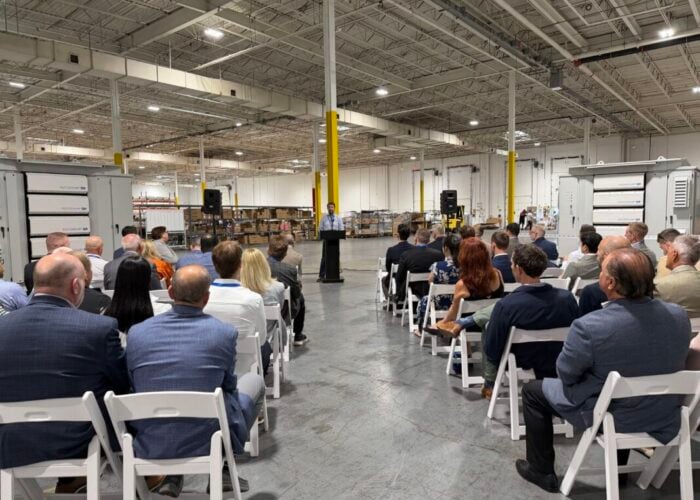
Singapore’s second minister, S Iswaran, gave a speech this morning at Singapore International Energy Week (SIEW). He talked about two main developments that have been recent “game changers” in energy, the first being “the success in extracting unconventional gas and oil”, the other, “the rise of renewable energy”. The minister went on to describe a number of initiatives being taken in Singapore to deal with both of these developments, including cutting waiting times for grid connection of solar and allowing for further deregulation of the electricity industry. The government will also invest in training programmes for electricity sector workers, establishing the US$20 million Energy Training Fund (ETF).
Try Premium for just $1
- Full premium access for the first month at only $1
- Converts to an annual rate after 30 days unless cancelled
- Cancel anytime during the trial period
Premium Benefits
- Expert industry analysis and interviews
- Digital access to PV Tech Power journal
- Exclusive event discounts
Or get the full Premium subscription right away
Or continue reading this article for free
Iswaran said that balancing the growing demand for energy with supply is a challenge that is felt more acutely in Asia than anywhere else on the planet. The theme for this year’s SIEW is “Building Energy Connections”, and the minister said that this year discussions could begin to take place on the establishment of an ‘Asian Gas Trading Hub’. While the earlier portion of Iswaran’s speech focused on liquefied natural gas (LNG) and pilot studies of the Trans ASEAN Gas Pipeline and the ASEAN Power Grid (APG), he went on to concentrate on renewable energy sources, and their potential, announcing the strategic measures being taken by the government to speed the growth and integration of renewables.
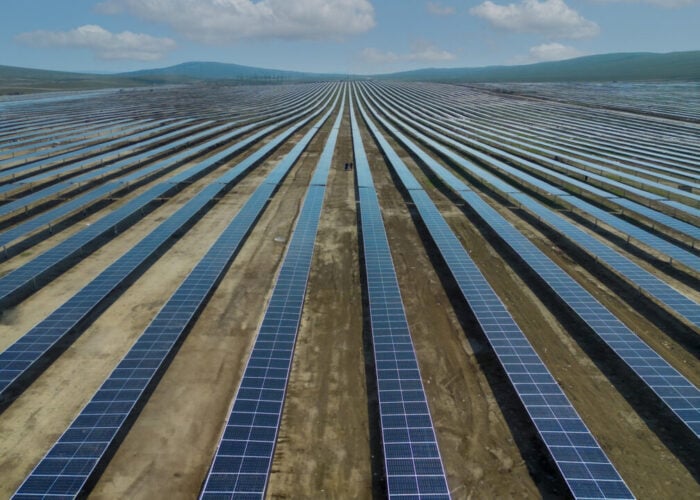
According to the minister, Singapore’s efforts to diversify its energy mix with more renewables are lead by a focus on solar energy. He echoed the sentiments of a speech a year ago, when he described solar as “the most viable source of renewable energy for Singapore”. The country’s first aggregated tender for solar projects across a variety of scales and locations is expected to be launched early next year, under the SolarNova programme. SolarNova aggregates demand for solar across government buildings and spaces to “yield cost savings from economies of scale”, Iswaran said.
Additionally, the government has also “enhanced” the regulatory framework to allow for the integration of greater penetration of renewables – reducing the time taken for a solar project to connect to the grid down to seven working days from 27, “eased administrative requirements on PV system owners” and set up an information portal for solar licensing and technical requirements.
Iswaran also talked up his government’s efforts to invest in research and development (R&D) and demonstration of improving the integration of variable solar resources – which he referred to frequently as “intermittent” – as well as improving overall grid stability. This has included schemes for competitive R&D into smart grids, energy analysis and control systems.
Singapore’s Energy Market Authority (EMA), the body which oversees the country’s energy sector under the authority of the Ministry of Trade and Industry, will establish a US$25 million programme for energy storage. Iswaran called energy storage “an emerging area that has the potential to help manage solar intermittency”. The new Energy Storage Programme under the national Energy Innovation Challenge – which is in total a US$300 million initiative spanning 2011 to 2015 – will be used to “develop technologies that enhance the overall stability and resilience of the power system”, Iswaran said.
“The funds will support the development and integration of large scale, cost-effective systems for Singapore’s power system. This will help meet domestic needs as well as generate economic opportunities through the development of exportable solutions and capabilities,” he said.
Discussions of other areas of renewable energy such as governing and finance, are expected to continue at SIEW’s various other strands, including Renewables@SIEW, which will host a number of conferences and exhibitions.
Iswaran finished his speech with mentions of a number of other significant changes in the energy sector. In common with Japan, where a long-talked about “unbundling” of the electricity market could finally take place in 2016, steps are expected to be taken in Singapore to foster greater competitiveness in the retail electricity market. Large-scale electricity users of up to 2MWh in Singapore will be able to negotiate on their electricity tariffs from July next year.