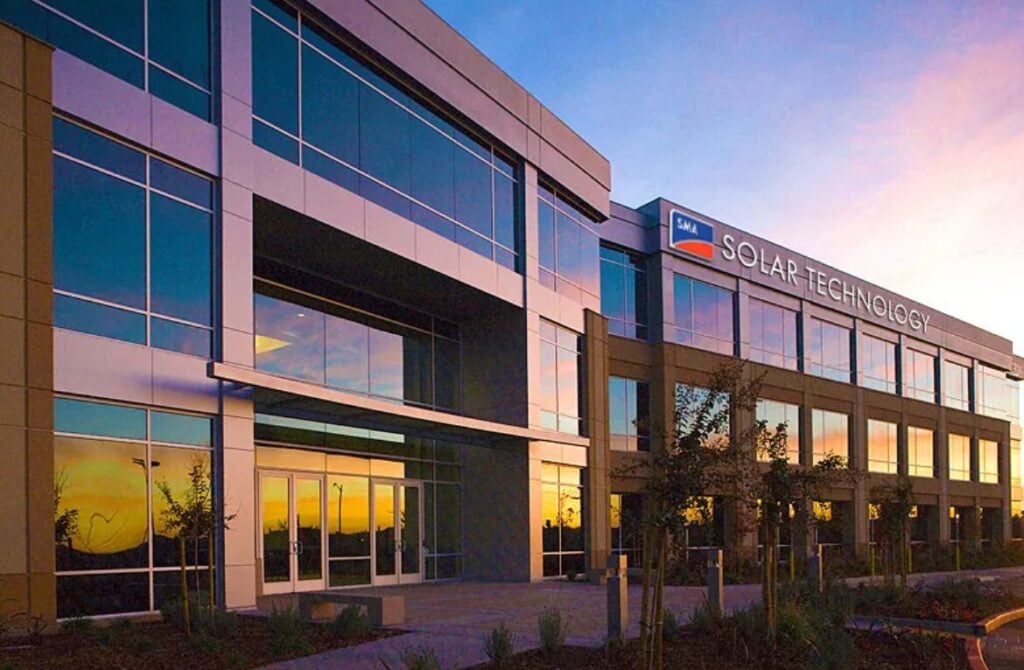
German solar inverter producer SMA Solar has raised its full-year 2026 financial guidance following its preliminary Q2 financial results.
Based on preliminary calculations, SMA’s Q2 2026 revenues will be €345.7 million (US$395 million), compared with €357.1 million in the same period 2025. Its forecast EBITDA increased to €64.7 million (US$74 million), up from €44 million predicted by analysts and the €15.5 million negative EBITDA recorded in Q2 2025.
Try Premium for just $1
- Full premium access for the first month at only $1
- Converts to an annual rate after 30 days unless cancelled
- Cancel anytime during the trial period
Premium Benefits
- Expert industry analysis and interviews
- Digital access to PV Tech Power journal
- Exclusive event discounts
Or get the full Premium subscription right away
Or continue reading this article for free
As a result, SMA Solar has increased its full-year earnings and revenue guidance for 2026, which it said “reflects an overall improvement in market conditions, continued positive operating performance in the second half of the year and more favourable foreign exchange developments than originally anticipated.”
It now expects revenue to be between €1,625 million and €1,725 million (previously between €1,475 million and €1,675 million) and EBITDA between €180 million and €230 million (previously €50 million to €180 million).
On a company basis, SMA said the improved EBITDA for Q2 came from refunded International Emergency Economic Powers Act (IEEPA) tariffs in the US, which were deemed unlawful earlier in the year. This is expected to provide a particular bump to the company’s large scale sector, as most of the affected products were from that business.
SMA said it was also able to sell some inventory which it previously thought to be “unsaleable” after “buyers were identified on the secondary market”.
Despite this improved guidance, SMA Solar’s financial results have been less than ideal of late. In Q1 2026 it recorded a €1.6 million (US$1.86 million) net loss, apparently due to deferred tax expenses. However, beneath this headline figure, the company’s earnings and sales increased in Q1. It adjusted its guidance into the top third of its expected range in Q1, before officially increasing the expected figures in Q2.
The politics and trade considerations around solar inverter manufacturers are shifting, particularly in the US and EU. Both are in the process of restricting or banning Chinese products to parts of their markets, after recognising the strategic importance of digital inverters in renewable energy systems and the cyber security vulnerabilities the products can contain.
PV Tech recently published a blog from cybersecurity expert Uri Sadot on the effects that the EU’s cybersecurity laws will have on the solar sector.