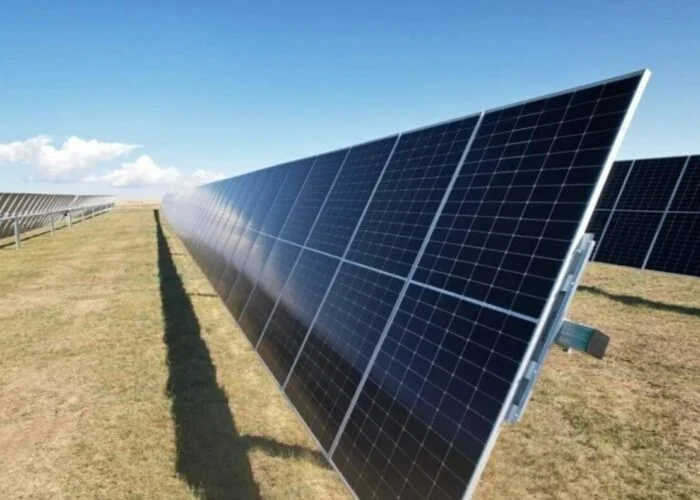
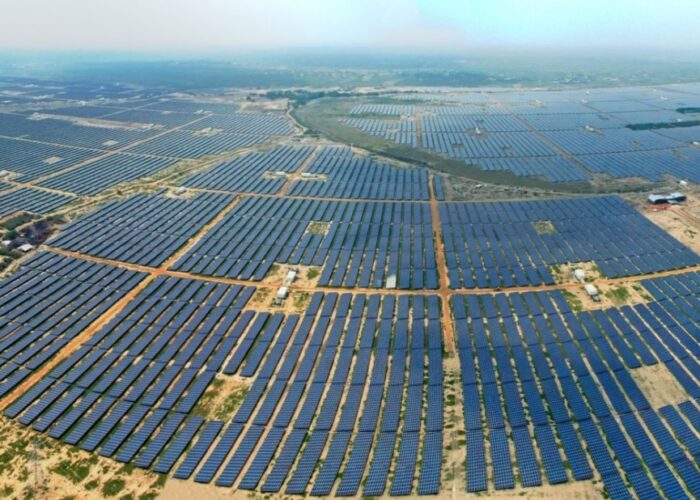
Japanese CIS thin-film manufacturer, Solar Frontier, is to acquire the entire US project pipeline of Gestamp Solar in what the company said marked its first step towards becoming a significant global downstream player.
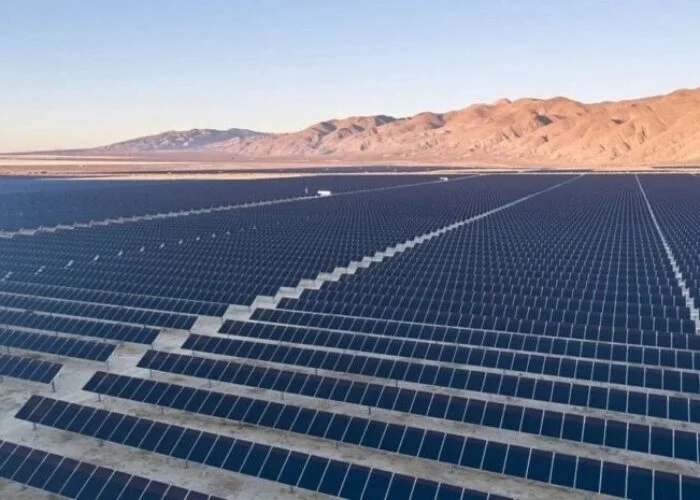
The company has agreed to buy 280MW of utility-scale projects that the North America team of Gestamp has been developing in California, giving it a toehold from which it said it hopes to move into other markets in the Americas and further afield.
Try Premium for just $1
- Full premium access for the first month at only $1
- Converts to an annual rate after 30 days unless cancelled
- Cancel anytime during the trial period
Premium Benefits
- Expert industry analysis and interviews
- Digital access to PV Tech Power journal
- Exclusive event discounts
Or get the full Premium subscription right away
Or continue reading this article for free
Solar Frontier had already talked up the US as its brightest hope for expansion into markets outside of Japan as a downstream player.
Its chief executive, Atsuhiko Hirano, said in a statement on the deal: “The US downstream expansion is part of Solar Frontier’s growth strategy to accelerate our business in key global markets through 2015 and beyond.”
Speaking to PV Tech ahead of confirmation of the deal, Charles Pimentel, the chief operating officer of Solar Frontier Americas, added: “This is kind of the entré, or the first shot across the bow if you will, in terms of going global. And we've chosen the US, because the markets are stable, they're long-term, they make sense. So this is the first place where we've decided to begin to go downstream, leveraging both our experience in Japan with build-own-transfer [project work], but also leveraging the performance of our modules versus crystalline.”
The pipeline acquired from Gestamp constitutes 10 projects, six of which Solar Frontier said already had power purchase agreements and would be completed by the end of 2016.
Pimentel said the deal would effectively see the two companies come together as a vertically integrated player, with Gestamp’s development team joining up with Solar Frontier to execute the projects they have already been working on through the development phase.
“In the US there was a consensus that we, Solar Frontier, and anyone in the US would compete much more effectively if we’re vertically integrated. They're not vertically integrated, and we weren't vertically either. There was a belief by both parties that a vertically integrated company is going to be much more competitive.”
Pimentel said Gestamp was already familiar with Solar Frontier’s CIS modules, having worked with the Japanese company to evaluate the long-term performance of its equipment.
He said Solar Frontier had been encouraged to make its first big play outside of its Japan stronghold partly because of the growing confidence it had in the performance of its modules versus crystalline silicon counterparts.
“The efficiency is lower, but the performance is higher in terms of kilowatt-hours per kilowatt-peak installed. And so the way the discussion goes with our clients typically revolves around what's the added performance [from our modules] versus a typical crystalline module; most of the crystalline modules create the same kWh or MWh at the end of the year. With ours, you'll typically see anywhere from 3-8% more depending on the location.
“We're confident of our returns and we're beginning to see some daylight at the end of the tunnel for the long-term investors to concur with that anticipated over-production and so we see the returns being higher for our module, which gave us the impetus to go ahead and do this move downstream in the US first.”
Pimentel said the deal with Gestamp was “absolutely just the starting point for our expansion into North America and ultimately into the Americas”. He continued: “This is a modest start, but if you know anything about Solar Frontier, this is consistent with the way we approach business all over the world. We don't go out and purchase gigawatt pipelines; we approach from a calculated standpoint and we make our moves very carefully so as not to add undue risk.”
After the US, Pimentel said Solar Frontier had its eye on markets in Central and Latin America, including Mexico.
“As far as our approach into 2016 and 17 goes, we hold a lot of promise for Central and Latin America. And we think our module has an enormous amount of benefit that can be brought to those markets because of its performance in such high irradiance arenas.”
Solar Frontier has already mooted plans to build a new fab for its modules in the US. Pimentel said that project was still at a feasibility stage, with a final decision on that depending on how much “commercial traction” the company could create in finding “off-take” for its modules in the US and beyond.