New Zealand solar developer Lightyears has secured NZ$174 million (US$102 million) from Japanese construction group Obayashi and Australian lender Infradebt to accelerate its solar PV build-out.
The company said the funding will support delivery of more than 300MW of utility-scale solar and battery storage infrastructure over the next five years.
Try Premium for just $1
- Full premium access for the first month at only $1
- Converts to an annual rate after 30 days unless cancelled
- Cancel anytime during the trial period
Premium Benefits
- Expert industry analysis and interviews
- Digital access to PV Tech Power journal
- Exclusive event discounts
Or get the full Premium subscription right away
Or continue reading this article for free
It adds Japanese and Australian capital to a New Zealand solar market that is drawing growing interest from overseas investors, including UAE developer Masdar, which last week signed an agreement to explore up to NZ$1 billion of solar, wind and battery storage investment in the country.
Obayashi plans to invest NZ$74 million and will take a 90% stake in a new company, LYOC1, which will hold solar projects. Lightyears said Obayashi will invest in stages as each project reaches development milestones. Infradebt is providing a NZ$100 million lending facility for the wider Lightyears platform.
Lightyears has not said which projects will sit within LYOC1, how its 300MW pipeline is split between solar and battery storage, or the terms and pricing of the Infradebt facility.
“Obayashi and Infradebt are ideal partners to support the next phase of growth for the Lightyears energy platform,” said Matt Shanks, managing director and co-founder of Lightyears.
The equity comes from a construction group already active in New Zealand’s power sector. Tokyo-listed Obayashi completed the purchase of a 50% stake in Eastland Generation in 2024, and the company’s 49MW TOPP2 geothermal plant at Kawerau opened in March this year.
Infradebt is a returning lender. The Australian renewable energy financier first worked with Lightyears in 2025, its first New Zealand transaction, when it refinanced debt previously provided by the government-backed New Zealand Green Investment Finance, which is being wound down. Lightyears reported a 27MW portfolio across five solar plants at the time.
“New Zealand is a market we like, and we intend to be here for the long term,” said Chin-Lee Yu, co-founder and investment director of Infradebt.
Regional solar plants under construction
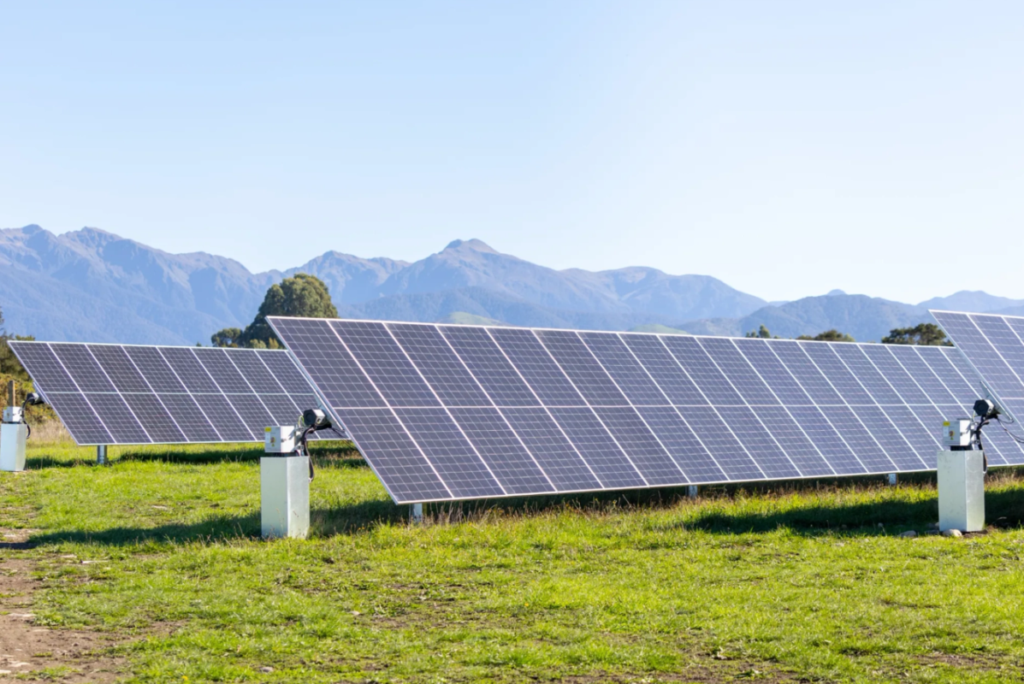
Lightyears develops, builds and operates solar plants connected to regional distribution networks. The company describes its sites as dual-use, with farming continuing alongside generation in a form of development better known as agrivoltaics, or agriPV.
Its 14MW Reefton solar plant on the West Coast is nearing completion. Construction is also under way on the 15MW Te Aho o te Rā solar PV plant near Kuratau in the central North Island, a joint venture with eight local Māori land trusts, incorporations and related investment entities.
Work has also started at a 6MW site in Ashburton, which will connect to the local Electricity Ashburton network.
“This funding lets us add new generation in the regions that need it,” Shanks said.
The deal comes at a busy time for New Zealand solar. Government figures show solar generation rose 56% year-on-year to a record 242GWh in the second quarter of 2026, overtaking coal over a rolling 12-month period for the first time. Renewables supplied 92% of electricity in the quarter.
Larger plants are also coming online. Last month, Prime Minister Christopher Luxon opened the 168MWdc Kōwhai Park plant at Christchurch Airport, now the South Island’s largest solar PV plant. In July, Harmony Energy and Igneo Infrastructure Partners energised the 202MWp Tauhei plant in Waikato, the country’s largest.
Local developers are raising capital too. Lodestone Energy raised NZ$75 million through an initial public offering and began trading on the NZX in October, in what its advisers described as the exchange’s first listing built entirely around utility-scale solar.