Energy storage is likely to be a near future “game changer” for Australia and could make the country the world leader in solar-plus-storage, a new report claims.
The Climate Council, a non-profit organisation formed after the dissolution of the country’s Climate Commission, issued “Powerful Potential: Battery Storage for Renewable Energy and Electric Cars” yesterday.
Try Premium for just $1
- Full premium access for the first month at only $1
- Converts to an annual rate after 30 days unless cancelled
- Cancel anytime during the trial period
Premium Benefits
- Expert industry analysis and interviews
- Digital access to PV Tech Power journal
- Exclusive event discounts
Or get the full Premium subscription right away
Or continue reading this article for free
According to the council, which was crowd-funded back into existence after its abolition by former prime minister Tony Abbott, Australian households are likely to keep installing batteries either for existing solar installations, or new ones, driven by high electricity prices. The commercial opportunity this presents will also lead to increased competition between suppliers, accelerating the fall in costs. Climate Council also considered the synergistic effect of the EV market on stationary storage prices and vice versa, claiming that electric cars could be cost-competitive with petrol and diesel within 20 years.
Among the headline findings are a claim that it could cost a similar amount to install energy storage in the Australian home as it will be to remain fully dependent on the grid by 2018. Climate Council also quoted International Renewable Energy Agency (IRENA) statistics explaining that adding 4kWh of storage to a 5kWh PV system can double onsite self-consumption from 30% to 60%.
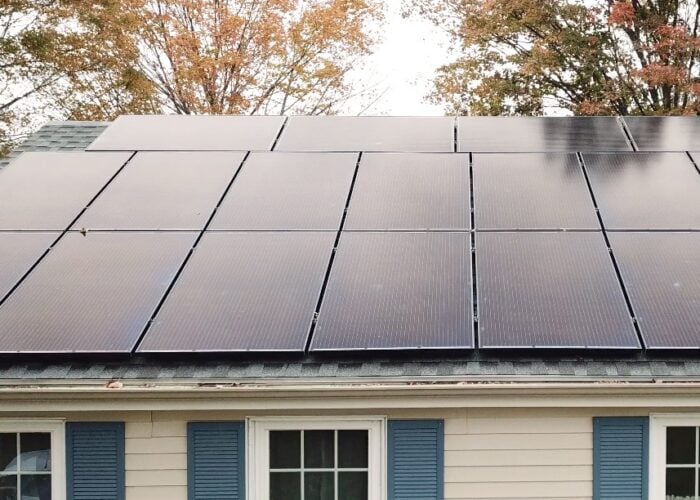
Over 1.4 million Australian households already have rooftop PV installed, with system size averaging 4.5kW and payback time is still less than 10 years – Climate Council quoted a survey which even said the average payback time for 700 households interviewed was as little as three years and two months, with PV already reaching grid parity in every regional capital of the country expect Canberra.
Adding a battery in some parts of the country puts the total system payback time up to between six and 12 years at present, which Climate Council claims could fall to eight years by 2020 and six years by 2030. The city council of Adelaide is trying to push this process along a little, offering a rebate of up to AUS$5,000 for energy storage batteries, AUS$5,000 for solar PV, AUS$5,000 for energy efficiency upgrades to apartments, AUS$500 per EV charge controller and AUS$1,000 for LED lighting.
The research published by the Climate Council uses a variety of statistics from other sources and some of the group’s own research to reinforce an argument that has already been quite well discussed within industry circles, but its publication is also an attempt to send out a message on the expected positive impact of energy storage to the wider Australian public.
“Australians are forging a people-led renewables revolution,” McKenzie said.
For the full version of this story, visit PV Tech Storage.