SolarPark Korea passes PID tests with 0.1% power degradation

October 10, 2012
Facebook
Twitter
LinkedIn
Reddit
Email

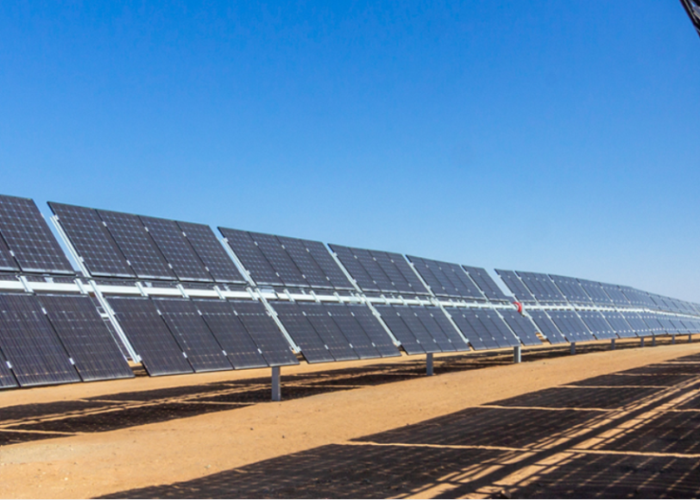
Major Korean PV module manufacturer, SolarPark Korea has had two 60 cell mono-crystalline and three multi-crystalline modules pass the Potential Induced Degradation (PID) test, conducted at Photovoltaic Institute Berlin (PI Berlin) and certified by TÜV-SUD.

PI Berlin exposed the modules to 1,000 volts of bias voltage for 96 hours at a temperature of 60°C and relative humidity of 85%, resulting in a ‘Quality Categorization A’ indicating a measurement of less than 0.1% power output degradation.

This article requires Premium SubscriptionBasic (FREE) Subscription

Try Premium for just $1

  • Full premium access for the first month at only $1
  • Converts to an annual rate after 30 days unless cancelled
  • Cancel anytime during the trial period

Premium Benefits

  • Expert industry analysis and interviews
  • Digital access to PV Tech Power journal
  • Exclusive event discounts

Or get the full Premium subscription right away

Or continue reading this article for free

“Knowing that this test was becoming an important issue, our quality lab conducted several internal PID tests on modules to ensure good results,” noted Hyunwoo Park, CEO of SolarPark Korea. “Our modules were able to achieve this through our 100% automated production, which only leaves room for perfection and consistent high quality. Customers know that we stand by our quality and that we are reliable.”
Read Next

January 27, 2026
Texas-based IPP Catalyze has secured tax equity financing from RBC Community Investments to support its 100MW solar project portfolio across the US. 
January 27, 2026
French renewables developer TSE Energy will build a 500MW portfolio of agrivoltaics projects on cooperatively-owned French farmland.
January 27, 2026
Enery has secured over US$297 million to develop its renewable energy portfolio across Czechia, Slovakia, Bulgaria and Slovenia.
Premium
January 27, 2026
For the past two years, China’s PV manufacturers have been locked in a cycle of intense competition and price wars.
January 27, 2026
Australia’s federal government has released a consultation paper detailing information on the proposed Solar Sharer Offer (SSO). 
January 27, 2026
Researchers from the University of New South Wales (UNSW), Australia, have directly observed how silicon solar cells can self-repair UV damage under sunlight.

Upcoming Events

Solar Media Events
February 3, 2026
London, UK
Solar Media Events
March 24, 2026
Dallas, Texas
Solar Media Events
April 15, 2026
Milan, Italy
Solar Media Events
June 16, 2026
Napa, USA
Solar Media Events
October 13, 2026
San Francisco Bay Area, USA